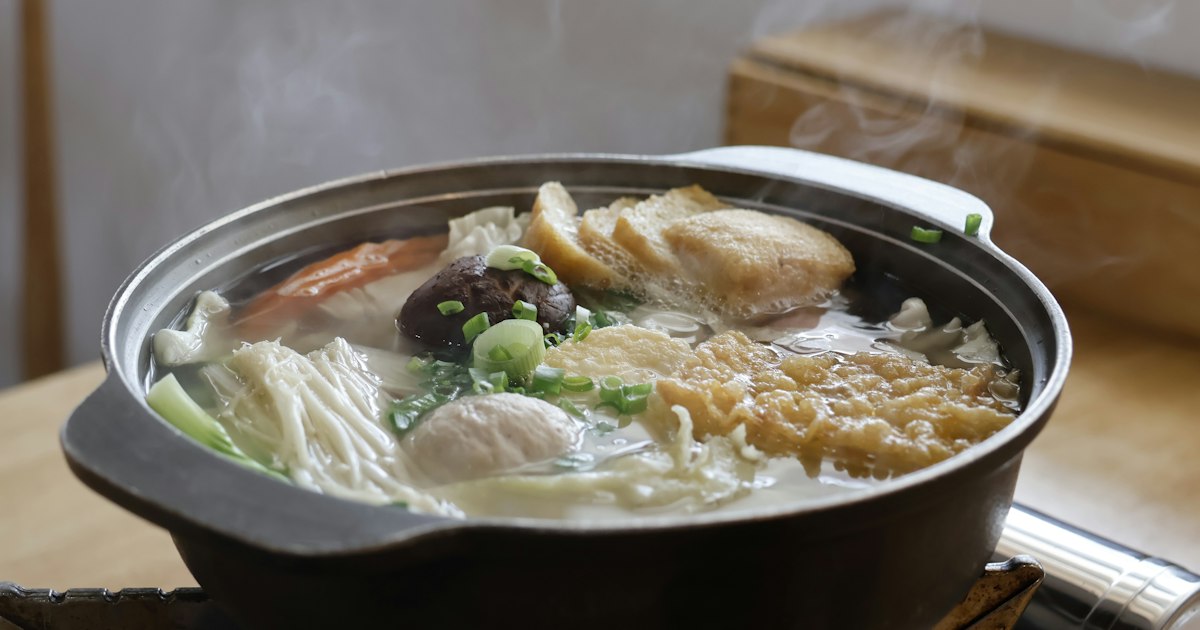
Chanko nabe is the stew that built sumo. It’s the communal hot pot eaten by wrestlers in training, and while it was never designed for tourists, it has become one of Tokyo’s most satisfying cold-weather meals — a bubbling pot of chicken, fish, tofu, and vegetables shared at the table, usually within walking distance of the sport’s spiritual home. If you’re curious what a 150kg athlete eats to build strength (not just bulk, despite the stereotype), this guide covers what chanko actually is, where to eat it in Tokyo, and how to avoid the tourist-trap version.
What Is Chanko Nabe, Exactly?
Chanko is less a single recipe than a category. At its core it’s a one-pot stew simmered at the table in a shared broth — usually shoyu (soy sauce), miso, or a clear shio (salt) base — packed with chicken meatballs or thigh meat, fish, tofu, mushrooms, cabbage, and other vegetables. Each sumo stable (heya) has its own house version, often passed down by the stable’s cooks, who are frequently retired wrestlers themselves.
Two details surprise most first-timers. First, chanko is deliberately protein- and vegetable-heavy rather than just calorie-dense; wrestlers gain mass through volume eating and training, not through the stew alone. Second, chicken is the traditional main protein specifically because chickens stand on two legs — the idea of a wrestler “going down on all fours” (as a four-legged animal would) is considered bad luck before a match, so pork and beef were historically avoided in stable kitchens, though many restaurants now offer them anyway.
Why Sumo Wrestlers Eat It — and Why You Should Try It
In a sumo stable, chanko isn’t just dinner, it’s a daily ritual tied to rank. Junior wrestlers wake before dawn to train on empty stomachs, then cook and serve chanko to their seniors before eating themselves — often two enormous meals a day totaling several thousand calories, followed by a nap that helps convert the meal into mass. For visitors, the appeal is simpler: it’s a warming, communal, genuinely delicious hot pot, mild enough for most palates, and eating it near the sport’s home turf adds an atmosphere you can’t get from a random izakaya menu.
Ryogoku: Tokyo’s Chanko Nabe Neighborhood
Nearly every serious chanko restaurant in Tokyo clusters around Ryogoku, the sumo district on the east side of the Sumida River, home to Ryogoku Kokugikan (the national sumo stadium) and dozens of active stables. Many restaurants here are run by retired wrestlers, and some occupy former stable buildings — a few even keep the dohyo (clay ring) intact as a dining room centerpiece. For a full walking guide to the neighborhood, its stables, and the stadium itself, see our Ryogoku sumo district guide, which pairs well with this article if you want to combine a stadium visit with dinner.
Ryogoku Station is served by both the JR Sobu Line (a few minutes from Akihabara) and the Toei Oedo Line, making it an easy add-on to a day that includes Akihabara or Ueno. If you’re coming from Ueno, the bargain shopping streets of Ameyoko Market are about 15–20 minutes away by train, so an afternoon of shopping followed by chanko for dinner is a realistic combo.
Where to Eat: Budget, Mid-Range, and Splurge Options
Chanko restaurants in Ryogoku span a wide price range depending on whether you go for a quick lunch set or a full multi-course dinner.
- Budget (lunch, roughly ¥1,300–2,000): Most chanko restaurants offer a weekday lunch teishoku — a single-serving pot with rice, pickles, and miso soup. This is the cheapest way to try chanko and doesn’t require a reservation. Lunch service typically runs from around 11:30 to 14:00.
- Mid-range (dinner course, roughly ¥4,000–6,500 per person): Restaurants like Chanko Kirishima and Tomoegata offer set dinner courses with a shared pot plus several side dishes (sashimi, grilled fish, rice, dessert). Portions are meant for sharing, so groups of 2–4 get the best value.
- Splurge (roughly ¥7,000–10,000+ per person): A handful of restaurants occupy former stable buildings with a preserved dohyo — Yoshiba, in a converted Miyagino-beya building, is the best-known example. Expect a cover charge or higher course minimum for the atmosphere, plus premium ingredient upgrades like crab or wagyu additions to the pot.
Kawasaki, one of the oldest chanko restaurants in the area (dating to the 1930s), is worth seeking out for a more old-school, less touristy atmosphere, though it keeps shorter hours and is often closed on Sundays — call ahead or check current hours before making the trip.
Best Time to Visit: Tournament Season vs. Off-Season
Tokyo hosts three of Japan’s six annual Grand Sumo tournaments (honbasho) at Ryogoku Kokugikan — in January, May, and September, each running about two weeks. During these windows, Ryogoku is at its liveliest: wrestlers in yukata walk between stables and the stadium, restaurants get busy with a mix of fans and tourists, and same-day walk-in seating becomes unreliable, especially for dinner. If your trip lines up with a tournament, book chanko dinner reservations at least a few days ahead.
Outside tournament months, the neighborhood is quieter and restaurants are easier to walk into without a reservation, though you’ll see fewer wrestlers on the street. Chanko itself is a year-round dish, but as a hot pot it’s most enjoyable — and most restaurants are busiest — from autumn through early spring (roughly October to March).
Common Mistakes to Avoid
- Showing up without a reservation on a weekend or during a tournament. The best-known restaurants seat 30–60 people and fill up fast; a phone reservation (many hotel concierges will call for you) or an online booking a day or two ahead avoids disappointment.
- Ordering a la carte when a course is better value. Set courses almost always work out cheaper than piecing together the same components individually, and they’re designed to showcase the restaurant’s specific broth style.
- Going alone and ordering the full pot. Chanko is built for sharing; solo diners should stick to the lunch teishoku rather than a multi-person hot pot portion.
- Skipping the rice at the end. Many restaurants offer zosui — rice simmered in the leftover broth to make a light porridge — as a final course. It’s often not automatic, so ask if it’s included or available as an add-on.
Practical Tips for Your Visit
Most chanko restaurants accept credit cards, but smaller, older establishments may be cash-only or card-only above a certain amount, so carry some cash as backup. If you’re arriving with luggage on a same-day trip — say, heading to Ryogoku right after a shinkansen arrival — Tokyo Station and most major stations have coin lockers; our guide to coin lockers in Japan covers sizes, prices, and locator apps so you’re not carrying a suitcase into a hot pot dinner.
If chanko whets your appetite for other regional Tokyo specialties, Tsukishima’s griddle-cooked monjayaki is another neighborhood built almost entirely around one dish, and makes a good comparison trip if you have an extra evening in the city.