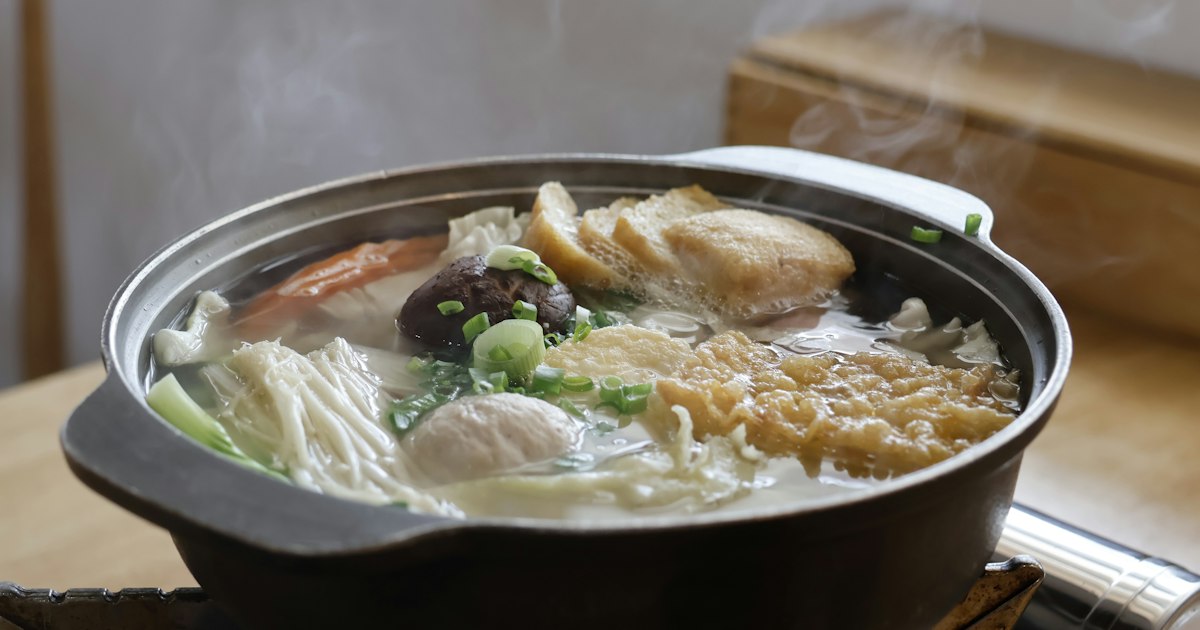
Walk into any Japanese hot pot restaurant menu and you’ll usually see both shabu-shabu and sukiyaki listed side by side, often at similar prices, which makes the choice confusing if you’ve never tried either. Both involve thinly sliced beef, a simmering pot at your table, and a communal, slow-paced meal — but the broth, the dipping sauces, and even the table etiquette are completely different. Here’s what actually separates them, what to expect price-wise, and where to try each style without wasting a meal on a tourist trap.
The Core Difference: Broth vs. Sauce-Simmered
Shabu-shabu (“swish-swish,” named for the sound of the meat moving through the pot) is cooked in a light, clear broth — usually kombu (kelp) dashi, sometimes with a chicken or pork base. You swish paper-thin slices of beef or pork through the hot broth for just a few seconds until they turn pale pink, then dip them into one of two sauces: ponzu (citrus-soy) or goma dare (sesame sauce). Vegetables and tofu cook in the same pot and get scooped out with the broth.
Sukiyaki is richer and sweeter. The meat and vegetables are cooked directly in a shallow iron pan with warishita, a mixture of soy sauce, sugar, and mirin, which caramelizes slightly against the hot pan. Instead of a dipping sauce, each piece is dipped in a small bowl of raw beaten egg before eating — the egg cools the food and adds a silky, custard-like coating. Sukiyaki is noticeably sweeter and more filling than shabu-shabu, which stays light and clean-tasting even after a full meal.
What You’ll Actually Pay
Price depends heavily on the beef grade, since both dishes live or die on thinly sliced meat quality:
- Budget (¥1,500–3,000 per person): Chain restaurants like Shabuyo, Nabezo, or On-Yasai offer all-you-can-eat shabu-shabu with pork and standard beef, often with unlimited vegetables and a soft-drink bar. Good for a filling meal but not a wagyu experience.
- Mid-range (¥4,000–7,000 per person): Set courses at dedicated shabu-shabu or sukiyaki restaurants using Japanese Black (kuroge wagyu) beef, usually including appetizers, a set amount of meat, vegetables, and a rice or noodle finish (zosui or udon cooked in the leftover broth).
- Splurge (¥10,000–25,000+ per person): Restaurants specializing in A5 wagyu, such as long-established sukiyaki houses in Tokyo’s Ginza or Kyoto’s Gion, where marbled beef is sliced tableside. This is the category where sukiyaki historically shines, since the dish was originally developed as a showcase for premium beef in the Meiji era.
Note that many restaurants charge per-person minimums for hot pot (often requiring at least two diners), and some add a table charge (otoshi or seki-ryo) of a few hundred yen even before you order.
Which One Should You Order?
If you’re watching calories, want a lighter meal, or are traveling with vegetarians who can pick around the meat easily, shabu-shabu is the more flexible choice — the clear broth lets vegetable and mushroom flavors come through, and ponzu cuts through richness well in summer. If you want a heartier, more indulgent meal that feels distinctly “special occasion,” sukiyaki is the better pick, especially in colder months when the sweet, rich sauce feels comforting. Many first-time visitors are unsure about eating raw egg — it’s pasteurized to a food-safety standard in Japan and is standard practice, but if you’d rather skip it, just ask for the egg on the side or omit it; the restaurant won’t blink.
Common Mistakes First-Timers Make
- Overcooking the shabu-shabu beef. Because the slices are so thin, 5–10 seconds in the broth is enough. Leaving it in longer, the way you might cook chicken, turns it gray and chewy.
- Drinking the sukiyaki sauce straight. Warishita is intensely salty-sweet on its own — it’s meant to coat the food, not be sipped like soup.
- Skipping the ending course. After the meat and vegetables are gone, ask for zosui (rice simmered in the broth) or udon noodles to finish the pot — it’s often not automatically included and needs to be ordered separately, but it’s the best part of the meal since it absorbs all the concentrated flavor.
- Booking a table for one. Because pots are shared, many traditional shabu-shabu and sukiyaki restaurants require a minimum of two people, and some don’t accommodate solo diners at all — check before you go if you’re traveling alone.
Best Time to Go
Hot pot is technically available year-round in Japan (many restaurants run air conditioning specifically so they can serve it in summer), but it’s considered a winter dish, and menus, seasonal vegetables, and set courses are richest from November through March. If you’re visiting Nagano for the snow monkeys at Jigokudani or heading up to Karuizawa in the cooler months, a sukiyaki or shabu-shabu dinner afterward is a natural pairing with the cold-weather scenery. Reservations are strongly recommended for dinner at any well-reviewed shabu-shabu or sukiyaki restaurant, especially on weekends — walk-ins often face 30–60 minute waits or turned-away service once the pots are fully booked.
Other Japanese Hot Pot Styles Worth Knowing
Shabu-shabu and sukiyaki are the two most internationally famous nabe (hot pot) styles, but they’re part of a much larger family. If you enjoy the format, look out for chanko nabe, the protein-heavy stew sumo wrestlers eat to bulk up — you can read our full guide to chanko nabe and where to eat it, and if you’re near Tokyo’s sumo stadium, our Ryogoku neighborhood guide lists specific chanko restaurants near the arena. Regional hot pots like Hokkaido’s ishikari nabe (salmon and miso) and Yonezawa’s beef-focused pots are also worth seeking out if you’re traveling outside the major cities.
Where to Try Both in One Trip
Tokyo has dedicated restaurants for each style in nearly every major district, so it’s easy to try shabu-shabu one night and sukiyaki the next without much planning. If you’re building out a food-focused itinerary, pair a hot pot dinner with a visit to a neighborhood known for casual eating and shopping, like Kichijoji, which has a good mix of mid-range restaurants and a relaxed, local atmosphere away from the more tourist-heavy central wards. Most restaurants open for dinner around 17:00–17:30 and stop taking last orders between 21:30 and 22:00, so plan to arrive on the earlier side if you want a relaxed pace rather than rushing through the final rice course.