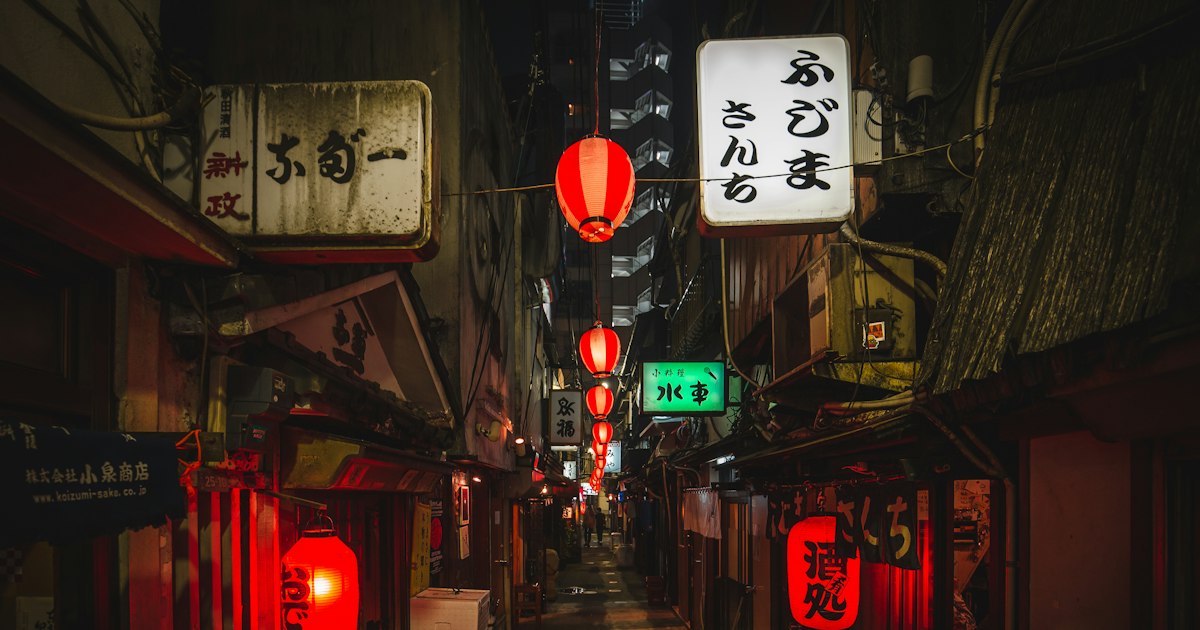
Photo by Denys Nevozhai on Unsplash
Ten minutes from Tokyo Station by subway, Kagurazaka feels like it belongs to a different city entirely. Stone-paved alleys wind past lantern-lit ryotei that once hosted geisha parties, while the main slope is lined with French bakeries, wine bars, and bistros left over from a wave of French residents who settled here decades ago. It’s one of the few Tokyo neighborhoods where “old Edo” and “Little Paris” sit on the same block, and it rewards slow walking far more than a checklist of sights.
Where Kagurazaka Is and How to Get There
Kagurazaka sits in Shinjuku ward, just west of Iidabashi. The easiest approach is Kagurazaka Station on the Tozai Line — take Exit 1 and you’ll step out directly onto Kagurazaka-dori, the main slope. Alternatively, Iidabashi Station (served by the JR Chuo-Sobu Line, Tozai Line, Yurakucho Line, Namboku Line, and Toei Oedo Line) is a 5-minute walk from the base of the hill via the West Exit, and gives you a chance to pass Canal Café, a boathouse-style café overlooking the old Edo Castle moat, on the way.
The whole area is compact — you can walk from the bottom of Kagurazaka-dori to Akagi Shrine at the top in about 15 minutes, with the real charm in the side alleys branching off along the way. There’s no admission fee for wandering the neighborhood itself.
A Former Geisha District Hidden Down Cobblestone Alleys
Kagurazaka was one of Tokyo’s recognized hanamachi (geisha districts) from the Meiji era through the postwar boom, and a small geisha association still operates here today, though sightings are rare and mostly limited to evening hours near the traditional restaurants. The best place to feel that history is Hyogo Yokocho, a narrow stone-paved lane just off the main street lined with black-fenced ryotei and old inns — it looks almost exactly as it did decades ago. A second alley, Kakurenbo Yokocho (“hide-and-seek alley”), is equally atmospheric and named for how easily people used to lose each other in its bends.
Most of the ryotei down these alleys are reservation-only, sometimes requiring an introduction from an existing customer, so don’t expect to walk in. Treat them as photogenic backdrops for an evening stroll rather than restaurants to try on a whim. For a neighborhood with a similarly strong subcultural identity but a completely different flavor, Koenji’s vintage and punk scene makes an interesting contrast on the same trip.
Little France: Why This Neighborhood Has So Many French Cafes
Kagurazaka’s French connection isn’t marketing — it’s demographic. The Institut français du Japon–Tokyo and the Lycée français international de Tokyo (a French international school) are both based here, which drew a real community of French expats to the neighborhood starting in the 1960s–70s. Bakeries, bistros, and wine bars followed, and locals now half-jokingly call the area “Little Paris” or “Puchi Paris.”
The best-known spot is Le Bretagne, a Breton galette (buckwheat crêpe) restaurant that’s been serving cider and savory galettes for decades — a galette lunch set runs roughly ¥1,800–2,500. Smaller boulangeries along the backstreets sell croissants and pain au chocolat for ¥350–500, and it’s easy to put together a picnic-style breakfast for under ¥1,000 before continuing uphill.
Where to Eat and Drink, by Budget
- Budget (under ¥1,500): A bowl of soba or udon at one of the small noodle counters near the station, or a bakery pastry and coffee eaten on a bench near Akagi Shrine.
- Mid-range (¥3,000–6,000): A French bistro dinner with a glass of wine, or a galette set at Le Bretagne with cider. Many bistros are tiny (10–15 seats), so arrive right at opening (usually 11:30am or 6pm) if you don’t have a reservation.
- Splurge (¥30,000+): Ishikawa, a three-Michelin-starred kaiseki restaurant tucked down one of Kagurazaka’s alleys, is one of Tokyo’s hardest reservations to get — book months ahead, ideally through a hotel concierge, as English-language walk-in booking isn’t realistic.
For a lower-key evening, standing bars aren’t really a Kagurazaka specialty, but if that kind of casual drinking culture appeals to you, it’s worth knowing how it works elsewhere in the city — see our guide to tachinomi standing bar etiquette.
Akagi Shrine and the Top of the Hill
At the top of Kagurazaka-dori sits Akagi Shrine, a centuries-old shrine that got an unusual 2010 renovation by architect Kengo Kuma — the main hall keeps its traditional form, but the shrine office is now a glass-walled modern structure, with a small café (Akagi Café) inside serving coffee and light meals from around 11am to 8pm. It’s a good, quiet spot to rest before heading back down through the alleys.
Partway up the main street, Zenkokuji Temple (enshrining Bishamonten) is the neighborhood’s spiritual anchor and worth a quick look even for non-worshippers — it sits right on the main road so there’s no detour required.
Best Time to Visit and Local Festivals
Kagurazaka is pleasant year-round and doesn’t have a must-see cherry blossom or foliage moment the way many Tokyo spots do — its appeal is architectural and atmospheric rather than seasonal. That said, a light rain actually improves the experience, since it darkens the cobblestones and makes the alley lanterns glow more visibly. Early evening (around sunset) is the best single window: shops are still open, restaurant lanterns are lit, and the alleys empty out of daytime foot traffic.
In late July, Kagurazaka hosts its own Awa Odori dance festival, a smaller sister event to the famous original in Tokushima — dancers in traditional costume move up and down the main slope over several evenings. If you’re interested in the dance tradition itself, our guide to Tokushima’s original Awa Odori explains the steps and how visitors can join in.
Common Mistakes to Avoid
- Only visiting during the day. Kagurazaka’s alleys look pleasant in daylight but come alive at dusk, when lanterns are lit and the ryotei atmosphere is strongest.
- Expecting to walk into a ryotei. Most traditional restaurants in Hyogo Yokocho are reservation-only, and some are introduction-only. Admire them from outside unless you’ve booked ahead.
- Forgetting it’s a real street, not a pedestrian zone. Kagurazaka-dori carries car traffic, and its direction of flow changes over the course of the day to manage the narrow slope — look both ways even where it feels quiet.
- Skipping reservations at Le Bretagne on weekends. It’s small and popular with both tourists and long-time residents; weekend lunch service fills up fast.
- Rushing through in under an hour. The point of Kagurazaka is the side alleys, not the main road — budget at least 90 minutes to actually duck into Hyogo Yokocho and Kakurenbo Yokocho rather than just walking up and down the slope.
Pair a Kagurazaka afternoon with nearby Iidabashi or a longer day in Shinjuku, and it works well as a half-day add-on rather than a standalone destination — compact, walkable, and unlike anywhere else in central Tokyo.