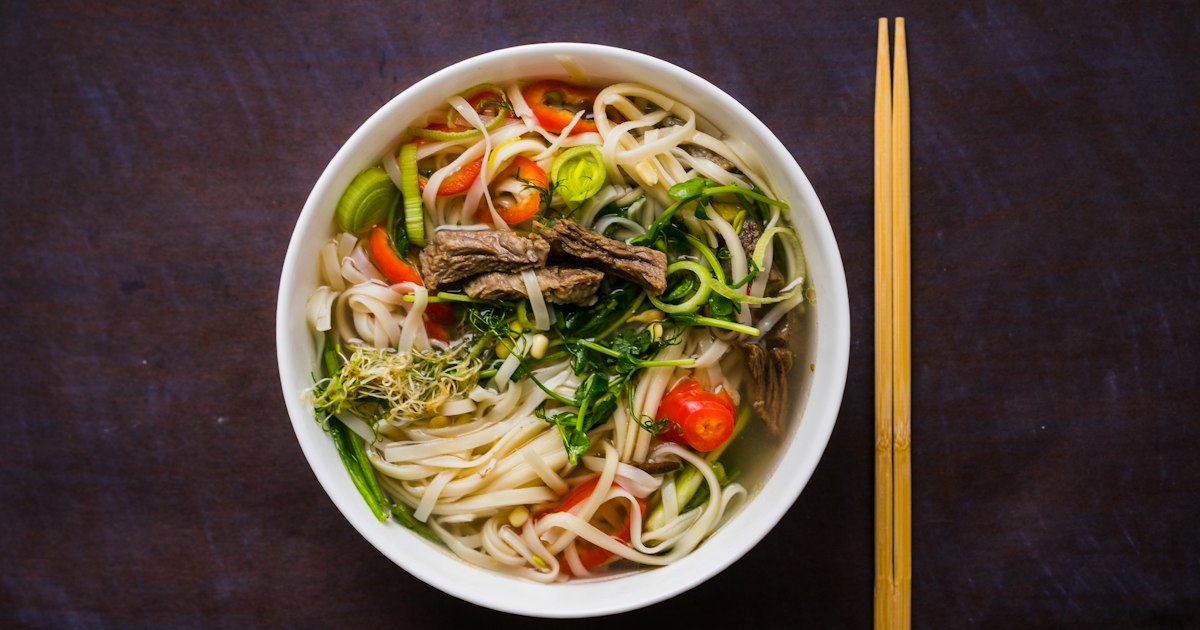
Photo by Kirill Tonkikh on Unsplash
Most visitors to Japan know udon as the thick, chewy noodle served in big bowls of hot broth. Inaniwa udon breaks that mold entirely: it’s flat, thin, almost translucent, and so smooth that it practically slides down your throat. It’s one of the country’s most distinctive regional noodles, and unless you make a point of seeking it out, you can spend weeks in Japan without ever encountering it. Here’s what makes it different, where it actually comes from, and how to track down a good bowl — or a box to take home.
What Makes Inaniwa Udon Different
Most udon is made by rolling out dough and cutting it into strands with a knife. Inaniwa udon is made more like somen: the dough is kneaded, rested, coiled around rods, and hand-stretched (a technique called tenobe) over the course of several days, with repeated resting periods in between. While it’s being stretched, the noodle is gently flattened by hand rather than cut, which gives it its signature ribbon-like cross-section. It’s then dried slowly, a process that typically takes three to four days from start to finish.
The result is a noodle with a springy, slightly chewy bite and an unusually smooth, slippery texture (what the Japanese call good nodogoshi, or “throat-feel”). It’s often grouped with Sanuki udon (Kagawa) and Mizusawa udon (Gunma) as one of Japan’s “three great udon,” though which third noodle makes the list varies depending on who you ask.
Where Inaniwa Udon Comes From
The noodle takes its name from Inaniwa, a small district now absorbed into Yuzawa City in southern Akita Prefecture. Production there dates back to the mid-1600s, and the noodle became a prized gift sent to the shogunate and feudal lords — it was expensive to make by hand and didn’t travel in large quantities, which kept it a specialty item for centuries rather than an everyday food. The most famous producer, Sato Yosuke, has been making it in Yuzawa since 1860 and still runs its original shop there, alongside a handful of other long-established makers like Kanbun Gonendo.
Today Yuzawa has a small tourism infrastructure built around the noodle, including facilities where you can watch the stretching process and eat freshly made noodles on-site. It’s a worthwhile detour if you’re interested in food craft, but it does require some planning to reach (more on that below).
How to Order It: Hot, Cold, and With What
Inaniwa udon is traditionally served cold (hiyashi or zaru style) with a dipping sauce, especially in summer — the chilled noodle’s texture is the whole point, and this is the version most restaurants consider the classic preparation. Toppings are usually minimal: grated ginger, chopped scallion, myoga, and sometimes a raw egg yolk stirred into the dipping sauce. Some shops also serve it with a sesame-based dipping sauce, traditionally ground fresh in a suribachi mortar for a nuttier, thicker dip than the standard soy-based tsuyu.
In colder months, you’ll also find it served hot in broth (kake or nikomi style), sometimes with duck, chicken, or mountain vegetables. It’s worth trying both if you have the chance, since the texture reads very differently warm versus chilled.
Where to Try It
Akita City is the easiest base, since it’s the direct terminus of the Akita Shinkansen and has several dedicated Inaniwa udon restaurants, including a Sato Yosuke branch. Expect to pay roughly ¥900–¥1,400 for a simple zaru set, and ¥1,800–¥2,800 for a set meal with tempura or regional sides like kiritanpo. Most lunch-focused noodle shops in Akita keep hours around 11:00–15:00 and 17:00–20:00, with an irregular closed day (often Wednesday), so it’s worth calling ahead if you have a specific shop in mind.
Yuzawa City, the noodle’s birthplace, has the original Sato Yosuke shop and smaller family producers where you can sometimes see noodles being stretched by hand. It’s a genuinely interesting stop for food-focused travelers, but it’s a detour from the main shinkansen line — see the next section for how to get there.
Tokyo also has options if a trip to Akita isn’t on your itinerary. Akita Prefecture’s official antenna shop in Yurakucho stocks multiple brands of dried Inaniwa udon to buy, and often has a small restaurant counter serving it as well. It’s a convenient way to try the noodle, and pick up regional Akita products like sake, without leaving central Tokyo.
For budget, mid-range, and splurge framing: a basic zaru set at a casual noodle shop (budget, under ¥1,000) is the baseline way to try it; a set meal with tempura and small Akita side dishes (mid-range, ¥1,800–¥3,000) is the better introduction if it’s your only meal of the noodle on the trip; and a multi-course Akita kaiseki meal built around Inaniwa udon alongside kiritanpo hot pot and local Hinai-dori chicken, offered at some ryokan and specialty restaurants, runs roughly ¥5,000–¥8,000 per person and makes a memorable splurge if you’re staying overnight in the region.
Getting There and Best Timing
From Tokyo, the Akita Shinkansen “Komachi” runs directly to Akita Station in roughly 3 hours 40 minutes, with no transfer required — this is the simplest way to reach the region and gives you full access to Akita City’s restaurant scene. If you specifically want to visit Yuzawa, you’ll need to take the Komachi to Omagari Station and transfer to a local Ou Main Line train heading back south toward Yuzawa, adding roughly 30–40 minutes each way, so budget extra time and check the local train schedule in advance since services can be infrequent outside peak hours. If your connection is tight, it’s worth knowing that Japan’s shinkansen transfer rules are more forgiving than you’d expect if you end up running late.
There’s no strong seasonal reason to visit — the noodles are dried and available year-round, and both hot and cold preparations are offered in most restaurants regardless of season. That said, summer (especially Obon week in mid-August) sees the heaviest domestic travel and the biggest crowds at Akita’s noodle shops, while national holiday weekends can also fill up regional trains; it’s worth checking Japan’s 2026 public holiday calendar before locking in dates if you want to avoid both.
Common Mistakes to Avoid
The biggest mistake is cooking it like regular udon. Because Inaniwa udon is thin and dried, it cooks much faster than the thick fresh udon most people are used to — typically 2–3 minutes at a rolling boil, versus 10–13 minutes for standard dried udon. Oversleeping on timing turns the noodle mushy and destroys the silky texture that’s the entire point of eating it. If you buy a box to cook at home, follow the package instructions exactly rather than guessing based on other noodles you’ve made before.
The second mistake is assuming any “udon” dish in Akita is Inaniwa-style — ask specifically, since standard thick udon is also served regionally. And if you’re trying it cold for the first time, don’t skip the dipping sauce in favor of eating it plain; the tsuyu (or sesame sauce) is balanced specifically for the noodle’s mild flavor and is part of the intended experience, not an optional add-on.
Bringing It Home
Because it’s a dried product, Inaniwa udon travels well and makes a practical, lightweight souvenir — a real advantage over fresh regional foods that don’t survive a flight. Boxed sets (usually 300–600g, enough for several servings) run roughly ¥1,000–¥1,500 for a standard box and ¥2,000–¥4,000 for a nicer gift set with a dipping sauce included, and are sold at Akita airport, Akita and Yuzawa train station shops, and the Yurakucho antenna shop in Tokyo. Check the box for a reasonably long shelf life (often a year or more unopened) before buying multiples to give as gifts. If you’re building out a wider list of edible Japan souvenirs, regional specialty sweets like Kyoto’s yatsuhashi travel just as easily and make a nice pairing in a suitcase alongside a box of noodles.