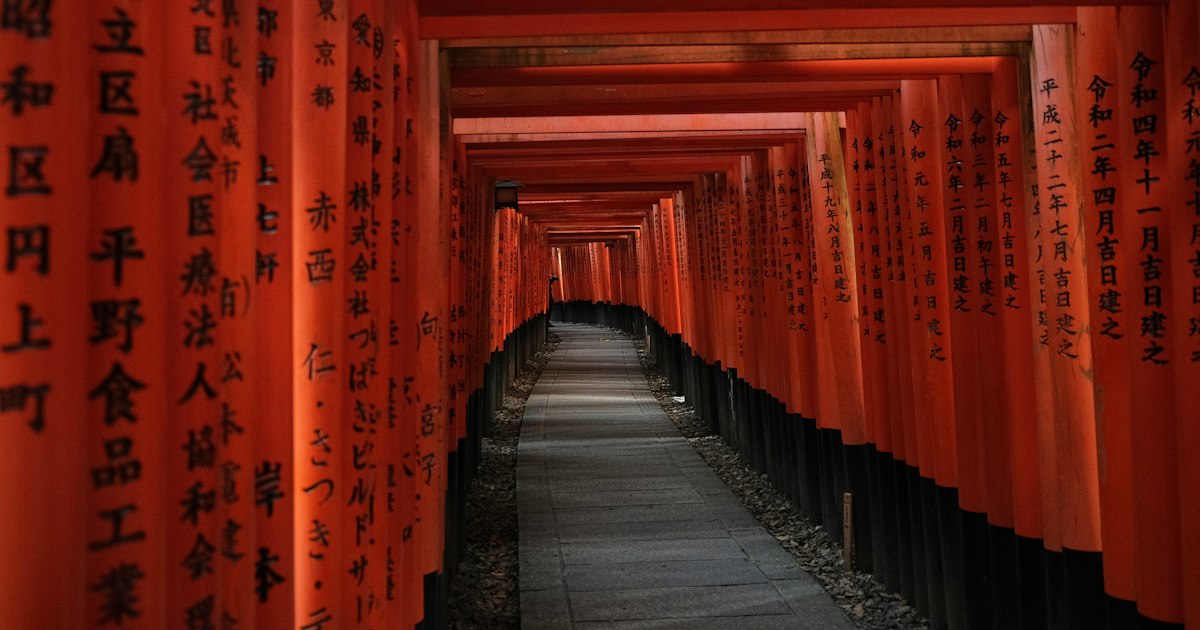
Photo by Nicholas Ng on Unsplash
Tsuwano doesn’t try very hard to be famous, which is exactly why it’s worth the detour. Tucked into a narrow mountain valley in eastern Shimane Prefecture, this former castle town earned the nickname “Little Kyoto of San’in” for its white-walled samurai lanes and canals full of drifting carp — but unlike Kyoto, you can walk the whole historic core in under two hours and rarely share the street with more than a handful of other travelers. It’s a genuinely good day trip or overnight stop for anyone routing between Hiroshima, Yamaguchi, and the San’in coast.
Getting There: Trains, the Steam Locomotive, and Timing Your Visit
Tsuwano sits on the JR Yamaguchi Line, which links Shin-Yamaguchi Station (a Sanyo Shinkansen stop) to Masuda on the San’in coast. From Shin-Yamaguchi, local trains to Tsuwano take roughly 1 hour 40 minutes to 2 hours, sometimes with a change at Yamaguchi Station, and this is a rural single-track line with only a handful of departures a day — check the timetable before you build your day around it. Coming from the San’in side, Masuda is about 20–25 minutes from Tsuwano.
The real draw for train fans is the SL Yamaguchi-go, a restored steam locomotive that runs the Shin-Yamaguchi–Tsuwano route on select weekends and holidays, roughly late March through November. The ride takes about two hours and requires a seat reservation on top of the regular fare, so book ahead if you want a window seat. If you enjoy this kind of small-scale railway ritual, it pairs well with the mindset behind eki stamp rallies — Tsuwano Station has its own stamp worth tracking down at the ticket window.
If you’re coming from further afield in San’in and want a scenic overnight option instead of flying, the Sunrise Izumo sleeper train terminates at Izumo City, from where you can work your way along the coast toward Masuda and Tsuwano by local train over a day or two.
Tonomachi Street: Carp Canals and White-Walled Lanes
The heart of Tsuwano is Tonomachi, a roughly 1-kilometer stretch of former samurai residences with plastered white walls, black tile roofs, and stone-lined canals running alongside the road. Hundreds of ornamental carp — some Tsuwano families have kept them since the Edo period as an emergency food reserve — swim in the clear water, and in June and July the canal banks fill with blooming morning glories. It’s free to walk, open all day, and best appreciated slowly: duck into the old sake and washi paper shops, and don’t rush past the small side alleys.
Renting a bicycle at the station area (roughly ¥700–1,000 for a few hours, cash, ID sometimes requested) is the easiest way to cover Tonomachi plus the shrine and church without backtracking on foot, especially if you’re doing this as a day trip with a train to catch.
Taikodani Inari Shrine and the Castle Ruins Above Town
A ten-minute walk from Tonomachi brings you to Taikodani Inari Shrine, founded in 1773 and considered one of Japan’s five major Inari shrines. Its signature feature is a tunnel of roughly 1,000 vermilion torii gates climbing the hillside — a smaller, quieter cousin of Kyoto’s Fushimi Inari, and one you can usually photograph without a crowd in the frame. The shrine grounds are free and open from early morning to dusk; if you’re the type to collect protective charms as souvenirs, this is a good stop, and our guide to omamori explains what the different types actually mean before you buy one.
From near the shrine, the Tsuwano Castle Ropeway (chairlift) carries visitors partway up Mt. Ryukoyama toward the ruins of Tsuwano Castle. It typically operates March through November and closes for winter, with a round-trip fare in the ¥450–500 range for adults — confirm current hours locally since schedules shift seasonally. From the lift’s upper station it’s a 15–20 minute uphill walk to the stone-wall ruins, but the payoff is a genuinely excellent panorama of the valley, the town’s tiled roofs, and the surrounding rice terraces. Go in late afternoon for the best light, or in autumn when the hillside foliage turns.
The Catholic Church and Tsuwano’s Hidden Christian History
A short walk from Tonomachi stands the Tsuwano Catholic Church, a small 1931 Gothic-style building notable for its stained glass set above tatami-mat flooring — an unusual, quietly moving combination. The church commemorates a darker chapter: during the Meiji-era persecution of Japan’s “Hidden Christians,” dozens of believers exiled from Urakami (Nagasaki) were imprisoned and some died in Tsuwano. A memorial chapel at Otome Toge, a 15–20 minute walk or short drive outside the town center, marks the site. Entry to both is free or low-cost, and neither takes long to visit, but they add real historical weight to what otherwise reads as a purely scenic stop.
Where to Eat and What to Buy
Tsuwano’s signature dish is uzume-meshi — rice in dashi broth topped with grated mountain yam, mushrooms, and vegetables, served in small lacquered bowls at restaurants along Tonomachi for roughly ¥1,000–1,500. Some local restaurants also serve carp as sashimi (arai) or in a miso soup (koigoku), a legacy of the same fish you see swimming in the canals. If you’d rather stick to something familiar, nearby Yamaguchi and Fukuoka are well known for karaage, and a cold plate of zaru soba is a common lunch option in the warmer months at teahouses along the main street.
For shopping, look for Sekishu washi — handmade paper from the Iwami region of Shimane — sold as postcards, lampshades, and stationery in shops along Tonomachi. It’s a lighter, more packable souvenir than most regional crafts. If your Japan itinerary includes wood or lacquer crafts elsewhere, our piece on Hakone’s yosegi zaiku puzzle boxes covers a comparable regional-craft shopping approach.
Practical Tips and Common Mistakes
- Don’t treat it as a quick stopover between shinkansen stations. Because Yamaguchi Line trains run infrequently, arriving without checking the return timetable is the single most common mistake — you can easily get stuck for two or three hours. Screenshot the schedule before you leave your hotel Wi-Fi.
- Best season: late June–July for morning glories along the canals and the Sagi-mai (Heron Dance) festival at Yasaka Shrine on July 20 and 27; November for foliage around the castle ruins; and early spring for mild weather with fewer visitors. Winter is very quiet, atmospheric, but the castle ropeway is usually closed.
- Budget: a day trip covering shrine, church, and lunch can run under ¥3,000 excluding transport. Mid-range: an overnight in a Tonomachi-area ryokan or pension with dinner runs considerably more but lets you see the town in the quiet of early morning. Splurge: pair Tsuwano with a countryside stay — if you want the full traditional-house experience rather than a standard ryokan room, our guide to kominka farmhouse stays covers how to book one in rural regions like this.
- Luggage: Tsuwano Station has coin lockers, but they’re limited in number and size — don’t count on fitting a large suitcase if you arrive on a busy weekend with the SL running.
Tsuwano rewards travelers who’ve already done Kyoto and Kanazawa and want to see what a castle town looks like without the crowds, the queues, or the souvenir megastores. Budget a half-day minimum, a full day if you want the castle ruins and the church properly, and build in slack around those train times — the town itself will do the rest of the work.