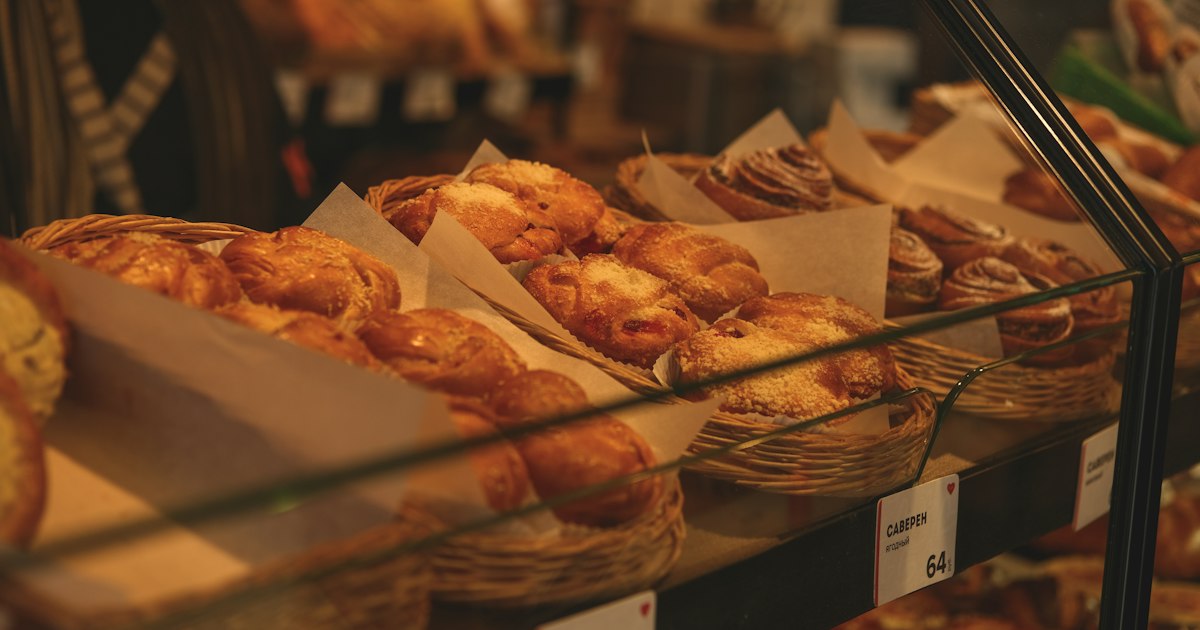
Ask a Japanese adult what food instantly transports them back to elementary school, and a surprising number will say age pan — a deep-fried bread roll coated in sugar, cinnamon sugar, or toasted soybean flour. It’s rarely translated well in English (“fried bread” undersells it), it almost never appears on restaurant menus aimed at tourists, and yet it’s one of the most beloved pieces of edible nostalgia in the country. If you want to taste a genuine slice of Japanese childhood rather than a dish invented for visitors, age pan is worth tracking down.
What Age Pan Actually Is
Age pan starts with koppepan, a soft, slightly dense white bread roll shaped like a hot dog bun. The roll is deep-fried whole until the crust turns golden and faintly crisp, then immediately rolled in granulated sugar while still hot so it sticks evenly. Variations swap plain sugar for cinnamon sugar or kinako (roasted soybean flour) mixed with sugar, and some bakeries add a chocolate drizzle inside the roll as a cream filling. The result is sweet, a little oily in the best way, and chewy rather than flaky — closer to a doughnut-shaped bread than a pastry.
It’s not a snack food in the way taiyaki or dango are; age pan was built as a main component of a school lunch tray, usually paired with milk and a soup or stew. That pairing matters for how it’s eaten — plain, with a cold drink, not dressed up.
The School Lunch Origin Story
The most widely repeated origin story traces age pan back to Koto City in eastern Tokyo in the 1950s. School lunch programs at the time delivered fresh bread daily, but on days when delivery trucks were delayed — heavy snow is the detail most often cited — the bread arriving at schools had already gone stale or hard. Rather than serve it as-is, a school kitchen staff member reportedly started deep-frying the day-old rolls and coating them in sugar, both to mask the staleness and to make the bread more appealing to kids. The trick caught on, spread to other schools, and by the 1960s–70s it was standard enough that an entire generation of Japanese adults now associates it directly with their own school days.
Koto City still leans into this history a little, and the neighborhoods around Kiba and Monzen-nakacho — reachable via the Tokyo Metro Tozai Line to Kiba Station or the Toei Oedo Line to Kiyosumi-shirakawa, both about 15–20 minutes from Otemachi — have a higher-than-average concentration of old-school neighborhood bakeries that still make age pan the traditional way, fried fresh rather than baked and sugared cold.
Where to Actually Buy It as an Adult
You won’t find age pan at most souvenir shops or department store food halls the way you will matcha KitKats or regional sweets, but it’s genuinely easy to find once you know where to look:
- Neighborhood bakeries (pan-ya): This is the most reliable source and gives the freshest product. Most independent bakeries that carry it bake and fry it in the morning, so it’s best bought between opening (usually 7:00–8:00) and early afternoon, before the day’s batch sells out. Expect to pay roughly ¥130–250 per piece.
- Supermarket in-house bakery counters: Chains with their own bakery sections inside the store — common in Tokyo supermarkets like Life and Summit — frequently stock a version alongside melon pan and anpan, usually in the ¥150–280 range. Quality varies more than at a dedicated bakery, but it’s a dependable backup if you can’t find a standalone pan-ya.
- Convenience stores, occasionally: Lawson, FamilyMart, and 7-Eleven sometimes run a packaged fried-bread item as a limited promotion, especially in autumn and winter. Treat this as a bonus rather than something to count on — availability rotates and isn’t consistent store to store.
- Train station bakery kiosks: Chains like Vie de France, found inside and near major stations, sell cinnamon-sugar fried bread items that are close cousins of school age pan, convenient if you’re grabbing something on the way to a platform.
A small but real courtesy point: at a counter-service neighborhood bakery, you’ll usually grab a tray and tongs yourself, place your pick on the tray, and pay at a register near the door — nobody will hover or rush you, which is part of the quiet service style covered in our guide to reading small service gestures in Japanese shops.
Retro Kyushoku Dining: Eating the Whole Tray, Not Just the Bread
If you want age pan as part of the full nostalgia experience rather than a quick bakery purchase, look for Tokyo’s small cluster of Showa-era “retro kyushoku” themed cafes and restaurants. These recreate the entire school lunch tray — age pan alongside curry, soft wheat noodles, or a simple stew, served on actual metal or melamine trays, often in a dining room decorated like an old classroom. A set meal at this kind of place typically runs ¥1,200–2,000, with drinks (including the school-lunch staple of bottled or carton milk) ordered separately. These aren’t large chains with fixed branches everywhere, and they open and close over time, so search current listings for “給食” (kyushoku) themed dining in Tokyo closer to your trip rather than relying on a specific address.
Timing, Budget, and Common Mistakes
Age pan is a year-round item with no real seasonal peak, but there are a few practical things worth knowing before you go hunting for it:
- Don’t expect it late in the day. Many bakeries fry a limited batch each morning and don’t restock; arriving after 3–4pm at a smaller shop often means it’s already sold out.
- Don’t confuse it with anpan or melonpan. All three sit in the same bakery case, but anpan (red bean filling) and melonpan (cookie-crust bun) are baked, not fried, and taste nothing like age pan.
- Plan around holiday closures. Independent bakeries, like most small Japanese shops, close for several days around New Year — worth checking our guide to how Japan shuts down for Shogatsu if your trip overlaps late December or early January.
- Budget-wise, this is a cheap souvenir food. Even sampling three or four variations (plain sugar, cinnamon, kinako, chocolate-filled) across different bakeries rarely costs more than ¥1,000 total.
If age pan gets you curious about other Japanese sweets with strong regional identities and specific ways locals eat them, our comparison of sanshoku dango and hanami dango is a good next read, since both share that same “simple, inexpensive, intensely nostalgic” quality.
Taking the Nostalgia Home
Age pan itself doesn’t travel well — it’s a same-day food, not a packaged souvenir — but the nostalgia around it has created a small secondhand market for kyushoku-era memorabilia: vintage aluminum lunch trays, milk bottle crates, and school-lunch-branded tableware occasionally turn up on Japan’s resale apps. If Mercari doesn’t turn up what you’re after, it’s worth checking the alternative listings covered in our guide to Rakuma versus Mercari, since kyushoku collectibles sometimes cluster on one platform over the other depending on the seller community.
In the end, age pan rewards low-effort curiosity more than careful planning: pick a neighborhood with real local bakeries, go in the morning, and ask for it by name if you don’t see it in the case — “age pan arimasu ka?” is enough. It’s one of the few genuinely everyday foods in Japan that locals eat purely for how it makes them feel, not for how it photographs, which is exactly why it’s worth seeking out.