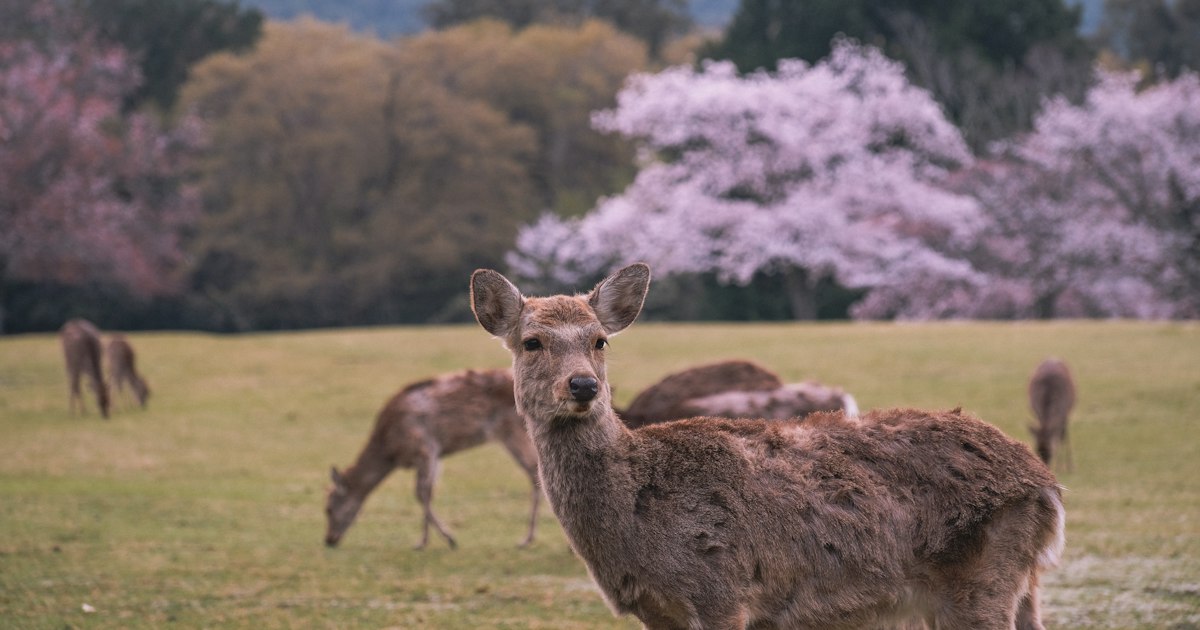
Photo by María Cosmen on Unsplash
In Nara Park, more than 1,000 wild sika deer wander freely among the temples, and almost all of them have learned one trick: bowing for a cracker. Shika senbei, the plain unsalted wafers sold in small stacks around the park, are the reason Nara’s deer feel so approachable — and also the reason so many visitors walk away with a nipped sleeve or a photo of a deer mid-headbutt. Here’s what the crackers actually are, where to buy them, and how to feed the deer without getting hurt or breaking local rules.
What Is Shika Senbei, Exactly?
Shika senbei (“deer crackers”) are small, round, unsweetened wafers made from wheat flour and rice bran — no salt, sugar, or additives, because the deer eat them every day and seasoned human food would make them sick. They’re intentionally bland to humans too; this isn’t a snack you eat yourself, and vendors will gently stop you if you try. The crackers are sold in stacks of roughly 10–15, tied with a thin paper band, for ¥200 a stack. Prices have stayed at ¥200 for years despite inflation elsewhere in Japan, and it’s a flat rate wherever you buy them in the park.
The deer in Nara are protected as a national natural treasure and have lived alongside the city’s temples and shrines for over a thousand years, tied to the mythology of Kasuga Taisha. Feeding them isn’t a tourist gimmick layered on top of the park — it’s a tradition that long predates mass tourism, which is partly why locals care so much about visitors doing it correctly.
Where to Buy the Crackers
Shika senbei stands are scattered throughout Nara Park, concentrated around the main approach to Todaiji Temple, near Kasuga Taisha, and along the paths close to Nara National Museum. Elderly vendors (obaa-chan, as locals affectionately call them) run most of the stands from simple wooden carts; look for stacked wafers wrapped in paper. Hours roughly follow daylight, from around 8:30am to 4:30 or 5pm, shrinking in winter. There’s no need to seek out a “best” stand — they’re all selling the same product at the same price, so just buy from whichever cart is closest when deer start approaching you.
Avoid buying far in advance of actually feeding — deer can smell the crackers immediately and will start following you the moment you’re holding a stack, even through your bag or pocket. If you want a calmer walk through part of the park first, buy right before you plan to feed.
Getting to Nara Park
Nara is an easy day trip from Kyoto (about 45 minutes) or Osaka (about 35–50 minutes) by train. From Kyoto Station, take the JR Nara Line rapid service directly to JR Nara Station; from Osaka, the JR Yamatoji Line or Kintetsu Nara Line both work, with Kintetsu Nara Station actually closer to the park entrance. From either station, it’s a 15–20 minute walk, or a short bus ride, to reach the deer-dense areas around Todaiji and Kasuga Taisha. The park itself is free and open all the time, with no gates — deer roam right up to the roads and sidewalks, so the “feeding zone” effectively starts the moment you’re near the greenery.
The Rules for Feeding Nara’s Deer
- Only feed shika senbei, nothing else. Don’t offer snacks, fruit, or packaged food from convenience stores — it can make the deer sick and is actively discouraged by park staff and signage.
- Show the deer your empty hands after each cracker. This is the single most useful trick: deer react to what they see in your hands, not what’s in your bag. Holding a stack behind your back or in a pocket doesn’t fool them — they’ll nudge or nip at clothing to find it.
- Bow, and many deer will bow back. Years of visitors bowing before handing over a cracker has conditioned a lot of Nara’s deer to bow in return — it’s one of the most photographed quirks of the park, but it’s a learned behavior, not guaranteed with every deer.
- Feed slowly, one cracker at a time, and don’t run out while deer are still close. Running out with deer still expecting food is the most common trigger for pushing, head-butting, or light nipping.
- Don’t tease or wave the cracker without giving it. This is the top cause of bites — deer get frustrated and go straight for the hand holding the food.
- Keep young children’s faces and hands away from eye level with the deer, and never let a small child hold the stack alone; deer have no size discrimination and will treat a toddler the same as an adult.
- During autumn rutting season (roughly October–December), male deer are more aggressive and some antlered bucks can be unpredictable — park staff sometimes rope off areas or post extra warning signs during this period, so follow posted notices closely.
Common Mistakes to Avoid
Most “deer attack” stories from Nara trace back to a handful of avoidable errors: holding the cracker up high and out of reach for a photo (deer will jump for it), buying one stack and trying to feed a crowd of six deer with it (they will compete and push), and wearing loose scarves, ribbons, or dangling bag straps that curious deer mistake for food and tug on. Deer have also learned to associate crinkling plastic or paper bags with snacks, so even if you’re not holding senbei, rustling a convenience-store bag near the park can draw a hungry crowd. If a deer becomes persistent after your crackers are gone, simply show empty palms, back away calmly, and head toward a less crowded path — running tends to provoke chasing.
Best Time to Visit
Early morning (right after sunrise, before 9am) is the calmest time to feed the deer — fewer tourists, cooler weather, and deer that aren’t yet oversaturated with crackers from a full day of visitors. Spring (cherry blossom season, late March–early April) and autumn foliage season (mid-November) are the most crowded, with deer that have been fed heavily by midday and can seem more aggressive simply from cracker fatigue. If you’re also planning a broader look at Japan’s autumn color trip alongside temple towns, note that Nara’s maple season runs a similar window to Kyoto’s. Weekday mornings outside these peak foliage windows give the most relaxed experience with the deer, and shorter lines at Todaiji’s Great Buddha Hall right next door.
Budget Notes and Nearby Extras
Feeding the deer is genuinely cheap by Japan sightseeing standards: ¥200 per stack, and most visitors are satisfied with one or two stacks (¥200–¥400 total) spread across a visit. There’s no “splurge” version of shika senbei itself — the experience is deliberately low-cost and accessible — but many travelers pair the deer park with paid sights nearby: entry to Todaiji’s Daibutsuden (Great Buddha Hall) is ¥600 for adults, and Kasuga Taisha’s inner sanctuary is ¥500. If you’re hunting for a packaged Nara souvenir afterward, deer-themed cookies, mochi, and senbei-shaped treats (safe for humans, unlike the real deer crackers) are widely sold in Nara’s covered shopping arcades near the station, similar in spirit to how other regional treats, such as Baumkuchen in Japan, make for an easy edible souvenir to bring home.