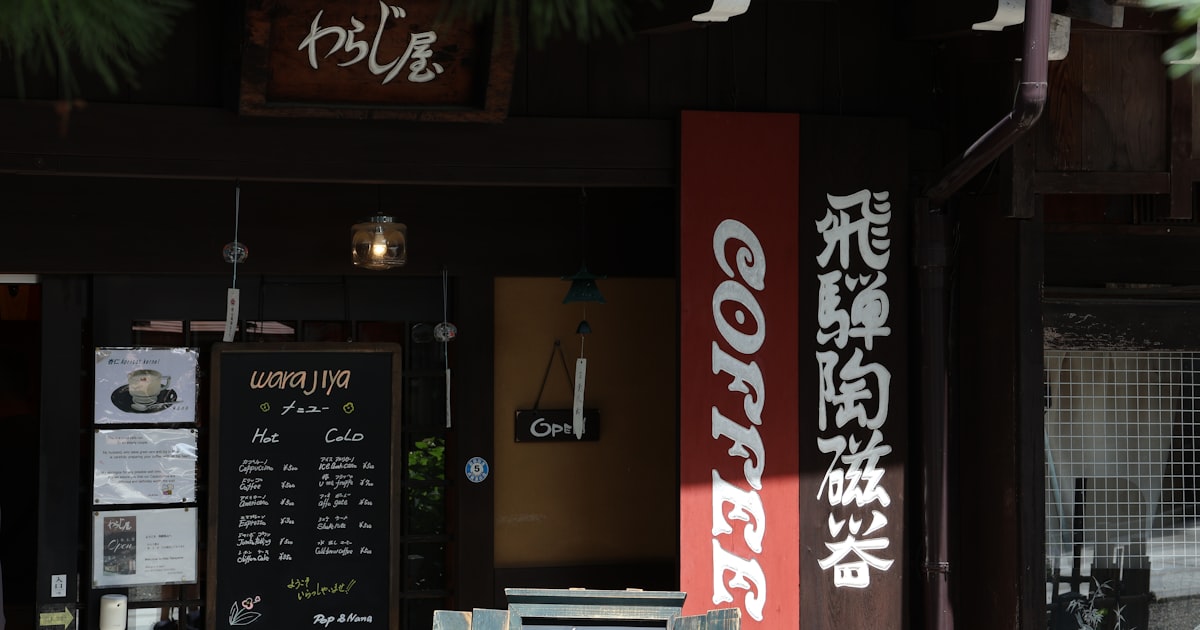
Photo by Yanhao Fang on Unsplash
Long before third-wave coffee bars and convenience-store lattes took over Japan, there was the kissaten (喫茶店) — a dim, wood-paneled coffee shop with siphon pots bubbling behind the counter, jazz or classical music on the speakers, and a menu of naporitan spaghetti and cream soda floats that hasn’t changed since the Shōwa era. Kissaten are a different species from Japan’s modern specialty cafes: slower, smokier (some still allow indoor smoking), and steeped in a hospitality style that treats a single cup of coffee as worth an hour of your time. If you want a genuinely retro slice of Japan that most tourists walk right past, this is it.
What Is a Kissaten, Exactly?
“Kissaten” literally means “tea-drinking shop,” a term that dates to the early 20th century when Western-style coffee culture first arrived in Japan. Legally and culturally, a kissaten is distinct from a café: it’s typically family-run, doesn’t serve alcohol (though some jazz kissaten quietly do), and survives on a menu that hasn’t been updated in decades — thick-cut toast, hand-drip or siphon coffee, and old-fashioned “yōshoku” (Japanese-Western fusion) plates like omurice and naporitan. Many kissaten were built in the 1950s–1970s coffee boom and are now run by second-generation owners, often octogenarians, which is part of the appeal: you’re sitting in a living time capsule, not a themed recreation.
What to Order: The Kissaten Classics
The menu is where kissaten culture really shows itself. A few dishes to look for:
- Naporitan — spaghetti tossed with ketchup, sausage, and peppers, invented in postwar Japan as a riff on “Neapolitan” pasta. Usually ¥800–1,200.
- Morning service (mōningu) — order any coffee before 11am and many kissaten throw in free toast, a boiled egg, and sometimes yogurt or salad. This tradition is strongest in Nagoya, where some shops still price the whole set at ¥500–600.
- Cream soda — bright green melon soda with a scoop of vanilla ice cream floating on top, around ¥700–900. Purely nostalgic, and very photogenic.
- Pizza toast — thick white bread topped with ketchup, cheese, and ham, grilled until crisp.
- Siphon or Nel-drip coffee — brewed slowly at the counter in glass siphon vacuum pots or cloth (nel) filters. This is the thing to order at a serious kissaten; expect ¥600–1,300 depending on the shop’s reputation and bean rarity.
Don’t expect oat milk or extensive customization — kissaten coffee is usually served one way, sometimes with sugar and cream on the side, and that’s the point.
Tokyo’s Best Kissaten and How to Get There
Tokyo has dozens of standout kissaten, but three are worth planning around:
- Kayaba Coffee (Yanaka) — a 1916 building turned coffee shop, in the old-Tokyo neighborhood of Yanesen. A 5-minute walk from Nezu Station (Chiyoda Line) or Sendagi Station (Chiyoda Line). Open roughly 8am–11pm; go early for the egg sandwich morning set.
- Café de l’Ambre (Ginza) — founded in 1948 and still run with the philosophy that coffee beans, like wine, improve with age. A short walk from Ginza-itchōme Station. Coffee runs ¥650–1,500; this is the splurge option for serious coffee drinkers.
- Chatei Hatou (Shibuya) — a hushed, formal kissaten a few minutes from Shibuya Station’s Hachikō exit, known for meticulous hand-drip coffee poured tableside. Expect to pay ¥1,000+ per cup and to sit in near-silence — it’s the opposite experience of Shibuya Crossing outside.
If you’re spending an evening bar-hopping nearby, Golden Gai’s tiny alleys have a similar retro-Shōwa atmosphere after dark, and a few of its bars are essentially night-shift kissaten with jazz records instead of coffee siphons.
Kyoto and Nagoya Kissaten Worth the Detour
Kyoto’s Smart Coffee (Smart Kissa), near Sanjo Station, opened in 1932 and is often cited as the city’s oldest surviving kissaten. It’s famous for its French toast and a morning set served until 11am; a coffee-and-toast combo runs around ¥800–1,000, and there’s usually a short line on weekend mornings, so arrive by 9am if you want a table.
Nagoya deserves special mention as Japan’s morning-service capital — the free-toast-and-egg custom is thought to have started there in the 1950s among local businessmen, and chains like Komeda Coffee (now nationwide) still honor it. If you’re road-tripping through the region, it’s worth pairing a Nagoya kissaten stop with a stretch break at a michi-no-eki roadside station, where you can pick up local snacks for the rest of the drive.
Budget, Mid-Range, and Splurge Options
Kissaten pricing is refreshingly transparent and rarely surges with tourism the way some cafes do:
- Budget (¥400–700): Neighborhood kissaten in residential areas or near train stations, where a basic blend coffee is often cheaper than a convenience-store canned coffee plus snack. Look for shops with hand-lettered menus and no English signage — these are usually the least touristed and least expensive.
- Mid-range (¥700–1,000): Named shops like Kayaba Coffee or Smart Coffee, where you’re paying a bit more for atmosphere, a historic building, or a well-known morning set.
- Splurge (¥1,000–1,500+): Single-origin, aged, or rare-bean pours at places like Café de l’Ambre or Chatei Hatou, where the coffee itself is the destination, not a side order to a meal.
Common Mistakes First-Timers Make
A few things trip up visitors:
- Treating it like a quick coffee stop. Kissaten culture is built around lingering — nobody will rush you, but nobody expects you to rush either. Budget at least 30–45 minutes.
- Expecting to pay at the register on the way out only. Many kissaten still use handwritten paper checks or a small tray system; watch what other customers do, or simply take your bill to the counter.
- Assuming everywhere is non-smoking. Older kissaten were grandfathered out of Japan’s 2020 indoor smoking ban if they meet certain size and registration conditions, so some small shops still permit smoking. If it matters to you, check a shop’s website or a recent review before visiting.
- Showing up during the lunch rush expecting quiet. Between roughly 11:30am and 1:30pm, kissaten near business districts fill with regulars ordering set lunches; late morning (9–11am) or mid-afternoon (2–5pm) is calmer and better for savoring the morning-service menu.
Best Time to Go
Kissaten work year-round since they’re entirely indoors, which makes them a good rainy-day or extreme-heat plan in summer, or a warm mid-winter break between temple visits. Morning-service deals are only available before 11am, so if that’s your goal, build it into the start of your day rather than treating it as a lunch stop. Weekday mornings are consistently quieter than weekends at famous shops like Smart Coffee, where a Saturday queue can add 15–20 minutes to your wait.
Kissaten pair naturally with a slow, analog day out — the kind of afternoon you might also spend browsing vintage shops in Shimokitazawa or working through a plate of old-school Japanese curry rice at a nearby diner. None of it is flashy, and that’s exactly why it’s worth seeking out.