Photo by Andrea Albanese on Unsplash
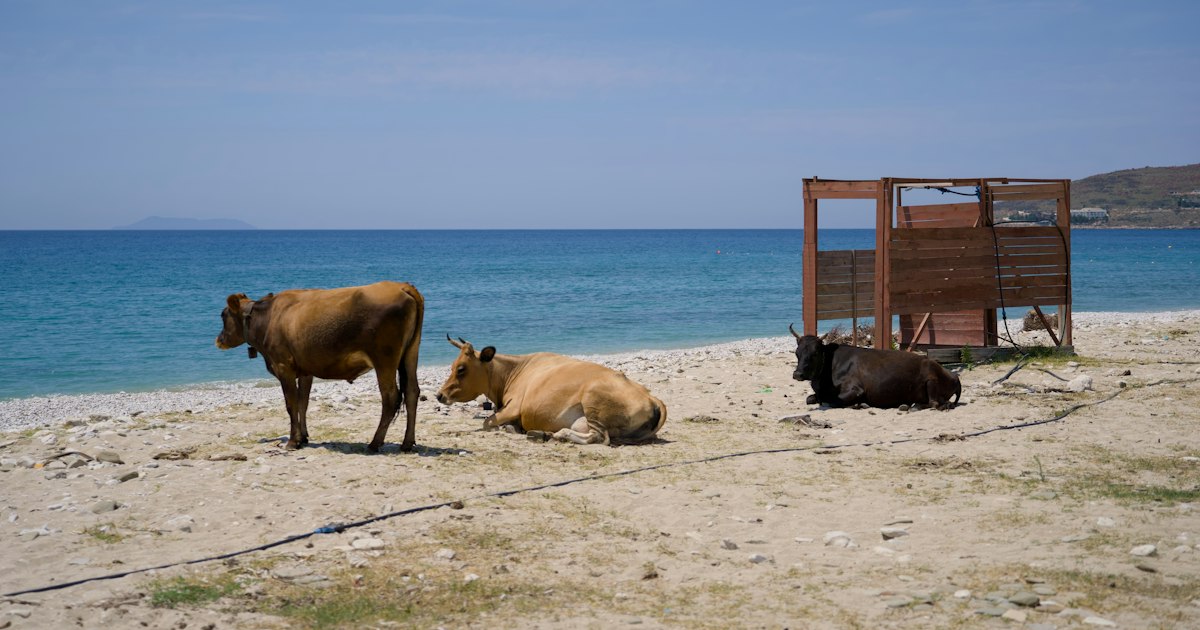
Most travelers to Okinawa’s Yaeyama Islands beeline for Ishigaki’s beaches or Taketomi’s star-shaped sand, then call it a day. Kohama Island, a 20-minute ferry ride from Ishigaki, gets skipped by almost everyone in a hurry — which is exactly why it’s worth the detour. It’s a hat-shaped speck of sugarcane fields, grazing cattle, and empty coral-sand coves where you can hear the waves more than you hear other tourists. This guide covers how to get there, where the star sand actually is, and the mistakes that turn a half-day trip into a frustrating one.
Where Kohama Island Is and Why It’s Different
Kohama sits almost in the geographic center of the Yaeyama Islands, between Ishigaki and Iriomote, and is small enough to see most of it in a single day — roughly 7.8 square kilometers with a year-round population around 500. Unlike Taketomi, which is dense with red-tile houses and tour buses, Kohama is mostly ranchland and cane fields. It was also the filming location for the 2001 NHK morning drama “Churasan,” and a replica of the main character’s house still stands near the port, but the island’s real draw is the combination of pastureland views and quiet beaches that Ishigaki and Taketomi don’t have room for anymore.
If you’ve already done Okinawa’s main island and seen a dramatic coastal cliff there, Kohama’s scenery is a gentler, more rural counterpoint — think grazing cows over turquoise water instead of basalt cliffs like the ones at Cape Manzamo.
How to Get There
Kohama has no airport, so access is by ferry from Ishigaki Island’s port terminal (the same terminal used for Taketomi and Iriomote boats). Two operators, Yaeyama Kanko Ferry and Anei Kanko, run the route; the crossing takes about 25 minutes and a one-way ticket runs roughly ¥1,200–1,300 for adults (round trip around ¥2,400). Boats run from early morning (around 7:30–8:00am) until early evening, with departures roughly every 1–2 hours — check the current timetable at the terminal the morning of, since schedules shift seasonally and with weather.
You’ll need to fly into Ishigaki first, either direct from Tokyo, Osaka, Nagoya, or Naha, or via Naha with a connection. Once on Kohama, there’s no public bus system worth relying on — almost everyone rents a scooter or small car right at the port (several shops cluster near the pier, from roughly ¥2,000–3,000 for a half-day scooter rental). If you’re bringing a rental car reservation from Ishigaki or booking one on Kohama itself, it’s worth understanding how the standard CDW excess waiver works before you sign, since minor scrapes on narrow island roads are common — see our breakdown of the NOC insurance excess waiver for what’s actually covered.
The Star Sand Beaches
“Star sand” (hoshizuna) isn’t sand at all — it’s the tiny star-shaped exoskeletons of a foraminifera (a single-celled marine organism) that wash up on several Yaeyama beaches, Kohama included. On Kohama, the beach fronting the Haimurubushi Resort on the island’s southwest coast is the easiest place to find it, along with quieter stretches near Hosozaki (Shimofuri) on the western tip. The star particles are mixed into ordinary sand, so you’ll need to kneel down and sift through a handful near the dry high-tide line rather than expect to spot them standing up.
A few practical notes: taking sand off the beach is discouraged on conservation grounds (some areas even post signs), so if you want a souvenir, buy a small bottled sample from a gift shop near the port instead of scooping your own. If you want a near-guaranteed haul rather than a scavenger hunt, Taketomi’s Kaiji Beach (a short ferry hop further) is the more famous star sand spot — Kohama’s version is better suited to people who’d rather have a near-empty beach than a sure thing.
Hamanaka Pastureland and Ufudaki Observatory
The signature Kohama view isn’t a beach at all — it’s Hamanaka Pastureland (Hamanaka Bokujo), a working cattle ranch on a bluff where cows graze right up to the edge of a cliff overlooking the ocean, with Taketomi and Iriomote visible on a clear day. It’s free to walk through and photograph, though it’s a working farm, so keep a respectful distance from the animals and stay on the paths.
From there, it’s a short ride to Ufudaki (Oyake-Akahachi no Tou lookout area), the island’s highest point at about 99 meters, with a 360-degree observation platform looking over the whole island and neighboring Yaeyama islands. Both spots are usually combined into one short loop by scooter and together take under two hours including stops for photos.
Best Season and Timing
Kohama is a day-trip-friendly island but rewards an overnight stay if your schedule allows — most visitors come over from Ishigaki in the morning and catch an afternoon ferry back, which is enough time for the pastureland, the observatory, and one beach, but rushed if you want to linger. April through June offers warm weather with lower humidity and fewer crowds than peak summer. July and August are hot and busy with Japanese domestic travelers; September and October carry real typhoon risk, which can cancel ferries with little notice, so build a buffer day into your itinerary if you’re island-hopping in that window. Winter (December–February) is mild by mainland standards but too cool and choppy for swimming — fine for sightseeing, not for beach time.
Common Mistakes and Budget Tips
- Assuming you can walk the island. Distances between the port, pastureland, and beaches run several kilometers with no shade and little traffic to flag down — rent a scooter or car rather than plan on walking.
- Missing the last ferry back. Evening departures thin out fast and there’s no lodging near the port if you miss one — confirm the return schedule at the terminal when you arrive, not the night before.
- Budget option: a scooter rental plus ferry round trip runs under ¥5,000 total for a full day, making Kohama one of the cheaper Yaeyama day trips.
- Mid-range: renting a small car (around ¥5,000–7,000/day) is worth it if you’re island-hopping with luggage or traveling with family.
- Splurge: an overnight at Haimurubushi Resort, which has its own private beach and spa facilities, turns the trip into a proper retreat rather than a quick loop.
Before You Go
Kohama has a small clinic but no pharmacy stocked for every prescription, so sort out medication needs in Ishigaki or before you leave the mainland — our guide on getting a prescription refill without local medical history is worth reading if you’re on a regular medication and traveling to remote islands like this one. Mobile signal is generally fine on Kohama since it’s close to Ishigaki’s towers, but if your phone is lost or stops working mid-trip on a small island with limited shops, know your options in advance — see our rundown on reactivating an eSIM or finding a carrier store while traveling. Bring cash: card acceptance is inconsistent at small rental shops and beachside stands, and there’s no ATM guarantee once you’re off the main strip near the port.