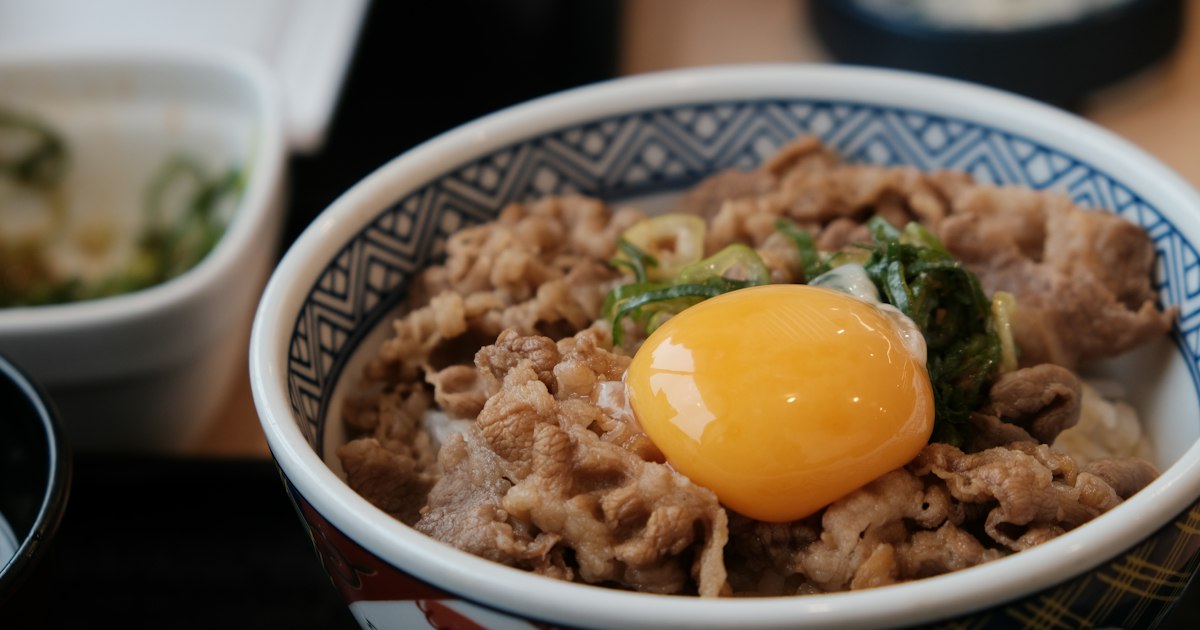
Photo by Nicholas Ng on Unsplash
If you’ve walked past a Japanese train station at lunchtime, you’ve seen the orange, red, and blue signs fighting for the same hungry commuters: Yoshinoya, Sukiya, and Matsuya. All three sell gyudon — a bowl of rice topped with thin-sliced beef and onion simmered in a sweet-savory sauce — for roughly the price of a convenience store sandwich, served in under two minutes. They look interchangeable from the outside, but regulars have strong opinions about which is “better,” and the ordering systems, menus, and flavor profiles are genuinely different. Here’s what actually sets them apart, and how to navigate each one without fumbling at the machine while a line forms behind you.
The Three Chains at a Glance
All three are nationwide chains with thousands of locations, open long hours (many 24/7, especially near stations and highways), and serving a regular-size gyudon for somewhere in the ¥400–500 range as of 2025 — prices creep up a little most years, so treat these as ballpark figures rather than guarantees. The core differences:
- Yoshinoya — the oldest (founded 1899), sweetest and most intensely onion-forward sauce, pay-after-you-eat at most locations.
- Sukiya — the largest chain by store count, the most customizable menu (cheese, kimchi, mega-size options), pay-after-you-eat.
- Matsuya — ticket-vending-machine entry, a slightly lighter and more savory sauce, and the only one of the three that includes free miso soup with most sets.
Yoshinoya: The Original, Sweet and Rich
Yoshinoya’s gyudon sauce leans sweet, built on soy sauce, mirin, and sake with a generous hit of onion that’s simmered until soft. It’s the flavor most non-Japanese visitors picture when they hear “gyudon,” largely because Yoshinoya was the first of the three to expand internationally. At most Yoshinoya locations you take a seat, order verbally or via a tablet at the table, and pay at the register on your way out. A regular bowl plus an egg (tamago) or extra sauce (tsuyu-dakú) are the classic upgrades long-time customers order on autopilot. Many branches near stations and highway interchanges run 24 hours, which makes Yoshinoya a reliable option for a cheap meal after a late train or before an early Shinkansen — handy to know if you’re timing a trip around the reserved vs non-reserved Shinkansen seating rules and need to grab food fast before boarding.
Sukiya: The Customization King
Sukiya has more locations in Japan than either competitor and the broadest menu of the three, which is both its strength and its slight weakness — ordering can feel like reading a diner menu rather than a quick bowl of beef and rice. Beyond the standard gyudon, Sukiya pushes variations hard: cheese gyudon, curry gyudon, kimchi gyudon, and a “mega” size for serious appetites, alongside a genuinely good value “mini” bowl for anyone who just wants a taste. Ordering is verbal at the counter or table, with payment on exit, same as Yoshinoya. If you’re traveling with kids or picky eaters, Sukiya’s variety makes it the easiest of the three to please a group — everyone can order something slightly different without leaving the restaurant.
Matsuya: The Ticket Machine and the Free Miso Soup
Matsuya is the odd one out procedurally: you order and pay upfront at a vending-machine-style ticket machine by the entrance, then hand the printed ticket to staff once you sit down. This trips up a lot of first-time visitors who walk in and try to find a human to order from — look for the machine with illuminated buttons just inside the door, insert cash or a card, press the button matching the photo of what you want, and take the ticket it spits out. The payoff is that Matsuya includes a small cup of miso soup free with most set meals, a nice touch the other two don’t really match. Flavor-wise, Matsuya’s sauce is less sweet and more straightforwardly savory than Yoshinoya’s, which some visitors find more appetite-friendly for an early breakfast bowl — Matsuya was also early to push breakfast sets with a raw egg, nori, and pickles alongside the beef.
How to Order Without Embarrassing Yourself
A few habits will save you confusion at any of the three:
- Check which system you’re in before you sit down. Ticket machine (mostly Matsuya) means pay first; counter/table ordering (mostly Yoshinoya and Sukiya) means pay on the way out.
- Size words matter. Most menus run small (mini), regular, large (ōmori), and extra-large — the price jump between sizes is usually modest, so if you’re hungry, size up rather than ordering a second bowl.
- Beni shoga (pickled red ginger) is self-serve and free at most counters — a small bowl of it sits near the condiments, often alongside shichimi chili pepper. It’s a classic palate-cleanser between bites of rich beef, in the same spirit as the pickling traditions covered in our guide to Japanese tsukemono.
- Don’t expect English menus everywhere. Bigger city branches usually have photo menus or English subtitles on the touchscreen, but small-town locations may not — pointing at the picture works fine.
Budget, Mid-Range, and Splurge Options
Gyudon is inherently a budget category, but there’s still room to spend more or less:
- Budget: A mini or regular bowl with no extras runs roughly ¥400–500 at any of the three — one of the cheapest hot, sit-down meals in Japan, and a good fallback if you’re also budgeting hard on lodging at a business hotel chain like Toyoko Inn or APA.
- Mid-range: Add a raw or onsen egg, extra sauce, and a side salad or miso soup, and you’re still usually under ¥800 for a genuinely filling meal.
- Splurge: Sukiya’s mega-size bowls or any of the three’s premium beef-cut specials (sometimes using wagyu or thicker-cut beef, rotated as limited-time items) can push ¥900–1,200, still cheap by Western fast-food standards.
Timing, Location, and Common Mistakes
Gyudon chains have no real “season” — they’re a year-round, any-time-of-day option, which is exactly their appeal. They cluster around train stations, so they’re a natural stop before or after a day trip; if you’re heading out to somewhere like Kawagoe or Mount Takao, grabbing a fast bowl at the station beforehand means you won’t be hunting for lunch once you’re out hiking. The most common mistake visitors make is treating these restaurants like a sit-and-chat café — they’re built for speed, with counter seating designed for solo diners and a social norm of eating fairly quickly and not lingering once you’ve finished. The second most common mistake is missing the ticket machine at Matsuya and standing awkwardly at the counter waiting to be noticed — staff generally won’t take a verbal order there, so look for the machine first. Lastly, don’t skip the free water, tea, or soup refill stations near the counter; several locations offer unlimited barley tea self-serve, which is easy to miss if you’re focused on the food.
None of the three is objectively “best” — it comes down to whether you want Yoshinoya’s rich sweetness, Sukiya’s variety, or Matsuya’s lighter sauce and free soup. The good news is you’ll almost never have to choose far in advance: in any city center, odds are good you’ll spot all three signs within a five-minute walk of each other.