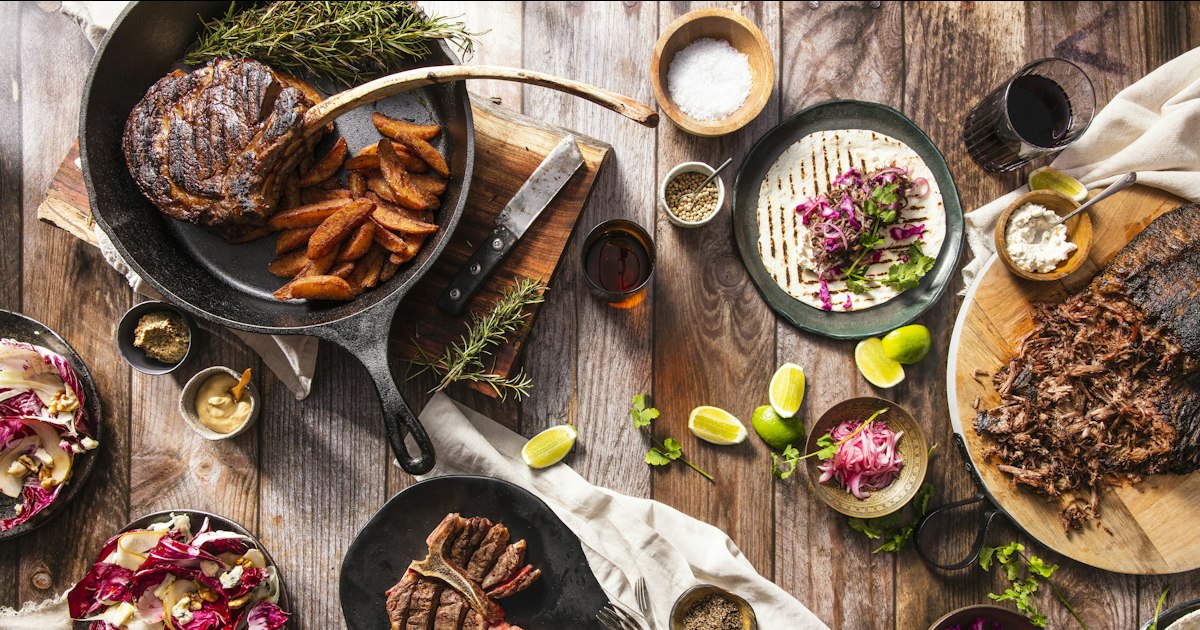
Photo by Madie Hamilton on Unsplash
Kobe beef gets the international fame, but ask a Japanese food lover to name the country’s great wagyu and “Yonezawa” comes up almost every time. This small castle town in Yamagata Prefecture, tucked in the mountains of the Tohoku region, has been raising prized Japanese Black cattle since the 1800s — and unlike Kobe, it still feels like a local secret rather than a tourist checkbox. Here’s what makes the beef worth the detour, and exactly how to plan the trip.
A Wagyu Legacy Older Than You’d Expect
Yonezawa beef is usually named alongside Kobe and Matsusaka beef as one of Japan’s “sandai wagyu,” the three great wagyu brands — though depending on who’s ranking them, Omi beef sometimes takes the third spot instead. What’s not disputed is the origin story: in the 1870s, an English teacher named Charles Henry Dallas taught at Yonezawa’s old samurai academy, the Kojokan. Beef-eating was still unusual in Japan at the time, but Dallas reportedly loved the local cattle so much that word spread back to the foreign community in Yokohama, and Yonezawa farmers started raising cattle specifically for the beef trade rather than just as farm labor. That’s roughly 150 years of continuous reputation-building.
The cattle themselves are Japanese Black (Kuroge Washu), raised longer than many other wagyu lines — often past 30 months — which gives the meat its dense, evenly distributed marbling. Top cuts graded A4 or A5 practically melt at room temperature; this is beef meant to be eaten in small, rich portions, not a full steak-house slab.
How to Get to Yonezawa
From Tokyo Station, take the Yamagata Shinkansen “Tsubasa” (it runs through on Tohoku Shinkansen tracks before splitting off) directly to Yonezawa Station — about 2 hours, with a reserved seat costing roughly ¥10,000–11,000 one way. No transfers, which makes it an easy day trip or one-night stop if you’re also heading toward Yamagata City or Zao Onsen.
Budget travelers can take an overnight or daytime highway bus instead. Several operators run buses from Basta Shinjuku to Yamagata Prefecture for around ¥4,500–6,500 one way, taking 4.5–5 hours — slower, but a real option if you’re stitching this into a wider Tohoku itinerary on a budget.
Once in Yonezawa, the town center and most recommended restaurants are within a 10–15 minute taxi ride or a longer walk from the station; there’s also a local loop bus, though it runs infrequently, so check the schedule rather than count on it.
When to Go: Best Season and Timing
You can eat well-graded Yonezawa beef year-round — this isn’t a seasonal product the way fish or produce can be. That said, timing your visit around the town itself pays off: late April brings cherry blossoms around Yonezawa Castle ruins (Matsugasaki Park) and the Uesugi Shrine, while autumn (late October to mid-November) lights up the surrounding mountains with color and coincides with the Yonezawa Beef Festival, usually held over a few days in late October, where local shops sell beef dishes at festival-stall prices.
Winter is also worth considering if you’re combining the trip with skiing — Zao Onsen’s slopes and famous “snow monster” frost-covered trees are about 40 minutes away by car or bus, making a hot beef dinner after a cold day on the mountain feel earned rather than indulgent.
Where to Eat: Budget to Splurge
Yonezawa beef is sold three main ways: steak, sukiyaki, and shabu-shabu, plus a local specialty worth seeking out — a bowl of thinly sliced beef served over rice with a raw egg yolk, sold at casual counter shops near the station for a few thousand yen.
- Budget (¥2,500–4,500): Lunch sets at beef-specialty restaurants are the best value — the same producers who sell premium cuts at dinner often serve a smaller hamburg steak, beef curry, or yakiniku lunch plate at a fraction of the evening price. Look for lunch-only “teishoku” boards outside shops near the station.
- Mid-range (¥8,000–15,000 per person): A proper sukiyaki or shabu-shabu course at an established restaurant like Tokiwa Honten (登起波本店), a long-running sukiyaki specialist in town, gets you a genuine multi-course experience with rice, pickles, and dessert included.
- Splurge (¥15,000–30,000+ per person): A5-graded steak courses at the town’s top-tier restaurants, including old meat-shop-turned-restaurant operations like Kigi (黄木), are where you taste the difference grading actually makes — order the sirloin or chateaubriand cut if it’s offered, since that’s where the marbling shows best.
Reservations matter more than you’d expect for a small town — the well-known restaurants seat limited tables and are popular with domestic food tourists, so book a few days ahead if you have a specific restaurant in mind, especially for dinner or weekend visits. Few places have English menus, so a translation app or device like a Pocketalk helps when you want to ask about grading or cut specifics rather than just pointing at a set menu.
Buying Yonezawa Beef to Take Home
If you can’t eat your way through a full course, Yonezawa Station and the shopping street near it sell vacuum-packed cuts, beef jerky, beef-filled rice crackers, and canned beef curry as gifts — small jerky or curry cans run about ¥500–1,500, while a proper gift box of sliced steak or sukiyaki meat for home cooking runs ¥5,000–15,000 depending on grade and weight. Vacuum-sealed raw beef needs to go in checked luggage with ice packs or be shipped via a cold courier service (ask the shop — many will arrange takkyubin delivery within Japan, though not international shipping), so if you’re flying out soon after, stick to the shelf-stable jerky and canned goods instead.
Common Mistakes to Avoid
The biggest mistake is treating Yonezawa beef like a Western steak dinner — ordering a huge cut and expecting to finish it. Wagyu this marbled is rich; a 100–150g portion per person at dinner is normal and plenty. Skipping the lunch sets is another easy miss — they’re genuinely the best value-to-quality ratio in town and let you try the beef without committing to a full dinner budget.
Also don’t assume every “Yonezawa beef” sign in Tokyo or elsewhere is the real thing; the brand is protected but imitation and blended products exist outside the region, so if authenticity matters to you, eating it in Yonezawa itself — or buying from a shop that states the cattle’s traceability number — is the safest bet. Finally, if you’re staying overnight at a nearby ryokan or onsen inn as part of the trip, it’s worth knowing about kokorozuke, the small cash-gift custom some traditional inns still observe — it’s optional, but good to understand before you check in rather than fumbling with it at the front desk.