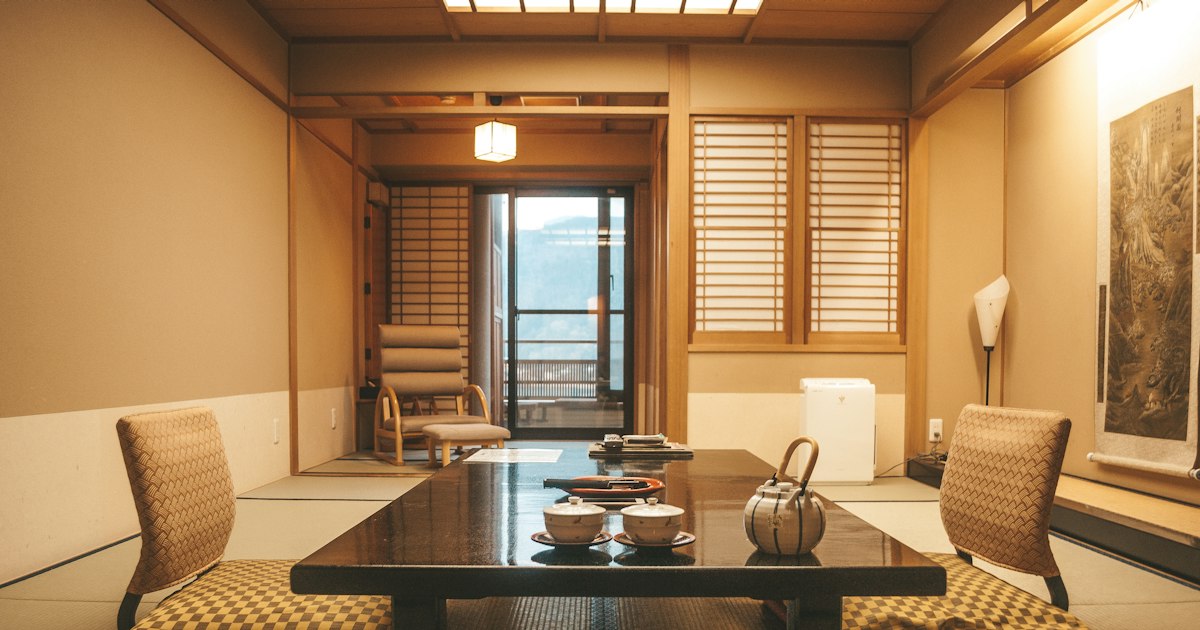
Photo by Filiz Elaerts on Unsplash
Japan famously has no tipping culture — until you check into a traditional ryokan and notice an elderly guest discreetly slipping an envelope to the woman who just carried in a tray of kaiseki dishes. That envelope is kokorozuke (心付け), literally “a gift from the heart,” and it’s one of the few pockets of Japanese hospitality where a little cash still changes hands. Almost no guidebook explains how it actually works, which means most foreign visitors either miss it entirely or get the etiquette backwards. Here’s what you need to know before your next ryokan stay.
What Kokorozuke Actually Is
Kokorozuke is a small, voluntary cash gift given to the staff member assigned to look after your room during a ryokan stay — usually the nakai-san, the attendant who serves your in-room dinner and breakfast, lays out the futon, and pours your tea. It’s not a mandatory service fee and it’s not calculated as a percentage of your bill. It’s closer to a thank-you note with money in it: a gesture that acknowledges someone is about to take personal care of you for the length of your stay, not a reward for service already rendered.
This distinguishes it from Western tipping in an important way. In the US, you tip after the fact, scaled to how well you were served. Kokorozuke is traditionally handed over at the start of the stay, before the service even begins — a point that trips up a lot of visitors who assume it works like a restaurant tip.
Who Receives It — and Who Doesn’t
Kokorozuke is specific to traditional ryokan with dedicated room attendants — the kind of inn where meals are served in your room or a private dining area, not a buffet hall. You’ll encounter the custom most often in classic onsen towns: Kusatsu, Kinosaki, Kurokawa, Hakone, and Hokkaido lakeside resorts like the ones around Lake Toya (see our guide to Lake Shikotsu & Lake Toya, both ringed with old-school ryokan). It does not apply to business hotels, capsule hotels, Airbnb-style machiya rentals, or modern ryokan-style hotels that run on a front-desk, no-attendant model. If nobody is personally assigned to your room, there’s no one to give it to.
Bellhops, taxi drivers, and restaurant servers in Japan are not tipped, full stop. Kokorozuke is the exception that proves the rule, not evidence that tipping is spreading more broadly.
How Much to Give
The amounts are modest and have stayed fairly stable for years:
- Budget / standard ryokan: ¥1,000 per room, regardless of party size
- Mid-range ryokan (¥20,000–40,000/night): ¥2,000–3,000 per room
- Splurge / high-end ryokan or multi-night stays: ¥3,000–5,000 per room
It’s always per room, never per person, and it’s a flat gesture rather than a tip scaled to your total bill. Many ryokan now add a 10–15% “service charge” (サービス料) directly to the invoice; when that’s listed, kokorozuke is optional, since the gratuity is technically already built in. Check your room’s welcome binder or rate confirmation for the phrase service charge included — if it’s there, feel free to skip the envelope without any guilt.
The Envelope Matters More Than the Amount
Handing over bare cash is considered somewhat crude in Japan, the same way it would be odd to pass loose bills at a wedding instead of a decorated shugi-bukuro envelope. For kokorozuke, the standard is a pochi-bukuro — a small, often cute or seasonal paper envelope, sold for ¥100–300 at convenience stores, 100-yen shops, and stationery counters. Slide in one or two bills (new or clean notes if you have them), write nothing on the outside unless you want to, and seal it loosely.
If you didn’t pack one, most ryokan gift shops or nearby convenience stores stock them, and front-desk staff will sometimes provide one if you ask — though this requires a bit of Japanese or a translation app. A device like the ones covered in our Pocketalk and translation gadgets guide can help here, since the phrase you’ll want is simple but easy to fumble: “Kore, kokorozuke desu. Yoroshiku onegaishimasu” (“This is a small token — thank you for taking care of us”).
Timing: Before Check-In, Not After Checkout
The classic moment to hand over kokorozuke is right after you’re shown to your room, before the attendant leaves you to unpack — not at checkout, and not after the final meal. Giving it early is the whole point: it’s a gesture of trust ahead of the service, not a tip for service already delivered. Offer it with both hands, a slight bow, and a brief word of thanks; don’t make a show of it, and don’t expect effusive thanks back — a quiet “arigatou gozaimasu” and a small bow from the attendant is the expected response.
If you forget at check-in, giving it on your last morning is acceptable but considered slightly less elegant. What you should avoid is handing it over mid-stay while asking for a favor — that reads as payment for a specific task rather than a general gesture of goodwill, which defeats the spirit of kokorozuke.
Common Mistakes Foreign Guests Make
- Tipping per person instead of per room. One envelope covers your whole party, whether it’s two people or six.
- Insisting after a polite refusal. Some ryokan — particularly ones with a strict no-tipping policy printed in their guest information — will politely decline. Accept the refusal gracefully rather than pushing the envelope back a second time; repeating the offer can come across as insistent rather than generous.
- Using a dirty or heavily creased bill. Pulling a wrinkled ¥1,000 note straight from your wallet is considered a bit careless. If you can, swap for a cleaner note at a bank or convenience store ATM before your stay.
- Confusing it with a service charge dispute. If your bill already lists a service charge, you’re not expected to also hand over cash — doing both isn’t an insult, just unnecessary.
- Treating it as mandatory. No ryokan will treat you poorly for skipping kokorozuke. It’s a nicety, not a transaction, and plenty of Japanese guests don’t bother with it either.
When to Skip It Entirely
Skip kokorozuke at hotels, city ryokan-style accommodations without a personal attendant, and any property where the confirmation email explicitly states a service charge is included or tipping is not customary. It’s also unnecessary for short, one-night stays at casual budget inns where meals aren’t served in-room. If you’re building a ryokan night into a longer rail itinerary — say, routing through Odawara toward Hakone via the Tokaido line, where choosing between the Nozomi, Hikari, and Kodama shinkansen actually matters for which stations you can reach — budget a few ¥1,000 notes and a couple of pochi-bukuro into your packing list so you’re not scrambling for a convenience store the moment you check in. It’s a small detail, but getting it right is one of those quiet signals that you’ve done your homework on Japanese travel etiquette rather than just read a packing list.