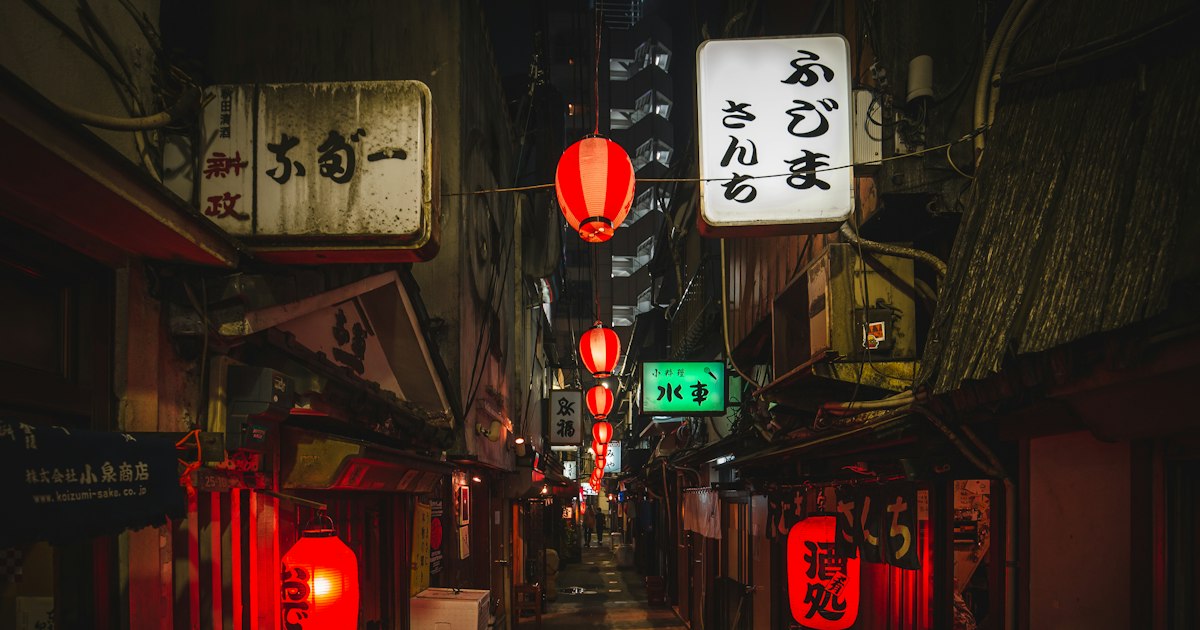
Photo by Denys Nevozhai on Unsplash
One train stop past Shibuya, Sangenjaya trades neon megascreens for a tangle of alleyways packed with izakaya the size of a living room. Locals call it “Sancha,” and on any given weeknight you’ll find off-duty salarymen, university students, and neighborhood regulars elbow-to-elbow at counters that seat eight people max. It’s one of the easiest places in Tokyo to have a genuinely local night out without a reservation, a dress code, or a language barrier that can’t be solved by pointing at the menu.
Why Sangenjaya Is Worth the Detour
Sangenjaya sits in Setagaya Ward, a mostly residential part of Tokyo with none of the tourist infrastructure of Shinjuku or Shibuya. That’s the appeal. The area immediately south and west of the station is a grid of narrow lanes — some barely wide enough for two people to pass — lined with izakaya, yakitori counters, standing bars, and tiny late-night ramen shops that have operated in the same spot for decades. Unlike Shinjuku’s Golden Gai, which now sees as many tourists as regulars, Sangenjaya’s bars are still overwhelmingly used by the people who live and work nearby. Expect curiosity and friendliness if you walk in as a visitor, not a tourist trap.
Getting There
Sangenjaya Station is one stop from Shibuya on the Tokyu Den-en-toshi Line (about 4 minutes, roughly ¥140 with an IC card). It’s also the eastern terminus of the Tokyu Setagaya Line, a charming old-fashioned two-car tram that trundles through residential Setagaya toward Shimotakaido — worth riding at least one stop for the novelty, even if you’re not continuing anywhere. From the station, exit toward “Chazawa-dori” or the south side and you’re immediately in alley territory. Note that the five-way intersection right outside the station exits is notoriously confusing even for Tokyoites; if you get turned around, just pick an alley and start walking — that’s half the fun.
Last trains back toward central Tokyo run until roughly 00:30–01:00 depending on the line and direction, but they get crowded and unpredictable in exact timing near year-end. If you’re staying out past that, see the taxi notes below. If you’re basing yourself in Shibuya for convenience, the guide on business hotel chains in Japan is useful for finding a reliably clean, affordable room within one stop of Sangenjaya’s nightlife.
What to Eat and Drink
Sangenjaya’s specialty is motsuyaki — grilled skewers of beef and pork offal (intestine, liver, heart) — alongside standard yakitori. Individual skewers typically run ¥120–¥300 each; a satisfying meal of 6–8 skewers plus drinks lands around ¥2,500–¥3,500 per person. Almost every seated izakaya charges an otoshi (a small unordered starter dish, ¥300–¥600) the moment you sit down — this isn’t a scam, it’s standard practice nationwide and functions like a cover charge.
- Budget (¥1,500–¥2,500): Standing bars (tachinomi) around the station sell draft beer and highballs for ¥450–¥600 a glass, with no table charge and no obligation to order food. Great for a quick first or last stop of the night.
- Mid-range (¥3,000–¥5,000): A proper seated izakaya with a motsuyaki or yakitori course, a few rounds of drinks, and otoshi. Many offer a 2-hour nomihodai (all-you-can-drink) add-on for ¥1,500–¥2,500, which is worth it if your group is drinking beer or highballs steadily.
- Splurge (¥6,000+): A handful of small sake- or whisky-focused bars in the alleys stock harder-to-find bottles and charge accordingly, but Sangenjaya isn’t really a high-end destination — if you want a splurge dinner, this isn’t the neighborhood for it.
If the alleys feel like too much of a gamble on a given night, there’s a reliable fallback: a gyudon counter near the station for a ¥500–¥700 bowl. The comparison in Gyudon Chains Compared: Yoshinoya vs Sukiya vs Matsuya is handy for knowing what to expect before you sit down.
How to Actually Choose a Bar
With no English signage and dozens of nearly identical doorways, decision paralysis is real. A few practical tips: look for a plastic food model case or photo menu out front (common and tourist-friendly); peek in — if it’s full of regulars mid-conversation with the owner, it’s a good one; and don’t be afraid of the tiny 6-seat counters, since those are often the most memorable. The lanes just south of the station around Chazawa-dori and the area locals call “Sanchaka” have the highest density, but wandering two streets further out usually turns up quieter, cheaper spots with the same quality.
Best Time to Visit
Thursday through Saturday nights, from about 19:00 onward, is when the alleys are liveliest — many of the smallest bars don’t bother opening before 18:00 and get going around 20:00–21:00. Weeknights (Monday–Wednesday) are quieter and better if you want actual conversation space at the counter rather than standing-room-only. Winter is comfortable since most bars are small and well-heated; summer visits mean narrow, humid alleys, so an early start before the evening crowd builds up is more comfortable. Avoid arriving right at opening expecting festival energy — Sangenjaya builds slowly and peaks late, closer to 22:00–23:00.
Common Mistakes to Avoid
- Walking in as a large group without calling ahead. Most izakaya here seat 8–15 people total. Groups of 5+ should call or have accommodation staff call to check space, especially Friday/Saturday.
- Assuming cash isn’t needed. Many of the smallest, best bars are cash-only. Bring ¥10,000–¥15,000 in notes for a night out to avoid an awkward moment at the register.
- Forgetting the last train. It’s easy to lose track of time hopping between three or four tiny bars. If you’re not confident you’ll make the last train, budget for a taxi — the guide on Taking a Taxi in Japan: Fares, Apps & Etiquette covers how to flag one down or book through an app late at night (expect roughly ¥2,000–¥3,000 back to central Shibuya/Shinjuku).
- Skipping the otoshi line item. It’s not optional and not a mistake on your bill — budget an extra few hundred yen per person per venue.
Beyond the Alleys
If you arrive before dark, Carrot Tower — the tall building directly connected to the station — has a free public observation lobby on the 26th floor with views over Setagaya and, on clear days, Mount Fuji to the west. It’s a good, free way to kill 20 minutes before the alleys fill up. From there, it’s a short walk back down into the lanes to start the night properly.