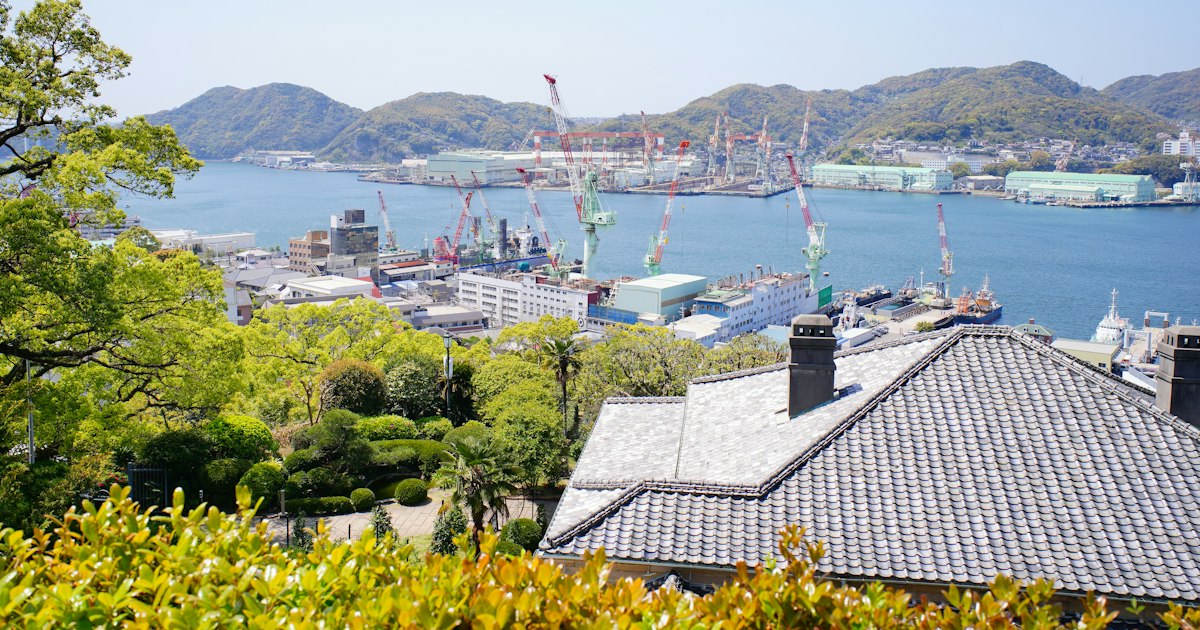
Perched on a terraced hillside above Nagasaki Harbor, Glover Garden is a cluster of Meiji-era Western-style houses built for the foreign merchants who settled here after Japan opened its ports in the 1850s. It’s one of the few places in Japan where you can walk through 19th-century colonial-style architecture while looking straight down at working shipyards and cruise ship berths — a reminder that Nagasaki, not Yokohama or Tokyo, was Japan’s first real window onto the outside world. Here’s how to plan a visit that doesn’t turn into a sweaty, confused slog up the hill.
What Glover Garden Actually Is
The centerpiece is the Former Glover House, built around 1863 for Scottish merchant Thomas Blake Glover, who sold ships, weapons, and machinery to the domains that would go on to topple the shogunate — and later helped found what became Mitsubishi. It’s the oldest surviving Western-style wooden building in Japan. Around it, several other merchant and diplomat residences — the Former Ringer House, Former Alt House, Former Mitsubishi No. 2 Dock House, and others — were relocated here from around the city and arranged along the slope as an open-air architecture museum. There’s also a small monument to Puccini and the opera singer Tamaki Miura, tied to the local legend that Nagasaki’s foreign quarter helped inspire the setting of Madama Butterfly, and a nod to the (unverified but widely repeated) story that Glover’s face is hidden in the Kirin beer logo.
Getting There: Take the Tram, Not a Taxi
From JR Nagasaki Station, the easiest route is the Nagasaki Electric Tramway — the city’s old streetcar network, which is half the fun of visiting Nagasaki in its own right. Take a tram bound for Ishibashi (tram line 5) and get off at Oura Tenshudo-dori, then walk uphill for about 10 minutes following the signs toward Oura Church and Glover Garden. If the climb looks daunting, Glover Garden has an outdoor escalator system (locally called the Glover Sky Road) that carries you most of the way up from a side entrance near the tram stop, which is a lifesaver in Nagasaki’s summer humidity. If you want the full rundown on how the tram system works, fares, and day passes, see this guide to Japan’s retro city streetcars, which covers Nagasaki alongside Hiroshima, Kumamoto, and Matsuyama.
Hours, Admission, and Tickets
Glover Garden is typically open 8:00 to 18:00 daily, with last entry around 17:40; during summer evening illumination events the garden stays open later (sometimes past 21:00) for lit-up night views over the harbor. Standard admission runs roughly ¥620 for adults, ¥310 for high school students, and ¥300 for elementary and junior high students — young children are free. Combination tickets covering Glover Garden and the neighboring Oura Church (one of the oldest Christian churches in Japan) are sold at the entrance and usually save a bit versus buying separately; check the ticket window for the current combo price, since fees are adjusted from time to time. There’s no need to book ahead — this isn’t a timed-entry attraction, even in peak season.
What You’ll See Inside
Budget 60–90 minutes for a relaxed walk through. The paths wind down the hillside (most people enter near the top and walk downhill, which is the more comfortable direction), passing restored parlors, period furniture, and photo displays about the foreign merchant community. The Former Glover House itself has wide verandas clearly designed for the subtropical Nagasaki climate, and the views from the garden’s overlooks — straight down onto the Mitsubishi shipyard cranes and the harbor — are arguably as memorable as the buildings themselves. Jiyu-Tei, a small building near the entrance, is marked as the site of Japan’s first Western-style restaurant, a nice detail if you’re already curious about how foreign food culture took root here.
Best Time to Visit
Spring (April, when azaleas and rhododendrons bloom around the gardens) and autumn (October–November, mild and dry) are the most comfortable seasons to be walking uphill outdoors. Summer is genuinely hot and humid, but it’s also when Glover Garden runs its extended evening hours with the buildings lit up against the harbor lights — worth it if you don’t mind the heat. Winter brings Nagasaki’s Lantern Festival (around Chinese New Year), when the whole old foreign quarter, including the approach to Glover Garden, gets decorated with lanterns. Avoid visiting during Obon week in mid-August if you want a quieter visit — Nagasaki draws domestic crowds for its harbor fireworks and Peace Park events around that time, and trams and hotels fill up fast.
Common Mistakes to Avoid
- Wearing the wrong shoes. The site is all slopes, stairs, and uneven stone paths. Sandals or heeled shoes make it unnecessarily miserable — wear real walking shoes.
- Treating it as a quick stop. People often allot 20 minutes and end up rushing the best viewpoints. Give it at least an hour, more if you’re also visiting Oura Church next door.
- Skipping the Sky Road escalators out of habit. Many visitors walk straight up the steep road without realizing there’s a free-to-use escalator shortcut from the side entrance — ask staff near the tram stop if you can’t spot it.
- Going at midday in summer with no water. There’s limited shade on the open terraces; bring a drink and sun protection, especially if you’re also heading to Mt. Inasa or the harbor afterward.
Budgeting Your Visit
On a budget, a day tram pass plus the ¥620 admission covers the whole visit for well under ¥1,000, and you can easily walk to Oura Church afterward on the same ticket zone. For a mid-range day, combine the garden with the Oura Church combo ticket and lunch at one of the small cafés along the approach road serving Nagasaki’s distinctive Western-influenced dishes. For a splurge, cap the day with the Nagasaki Ropeway up Mt. Inasa for the night view (consistently ranked among Japan’s best), or book a short harbor cruise to see the shipyards from the water — if you’re curious about chartering a small boat rather than a big sightseeing cruise, this guide to booking a local fishing boat charter explains how tourists can arrange one. And before you board the train out of Nagasaki, it’s worth swinging by the station concourse — Kyushu’s JR stations are known for region-limited snacks worth grabbing for the ride, as covered in this guide to JR Kyushu station snacks.