In the narrow lantern-lit lanes of Shibu Onsen, guests shuffle between nine wooden bathhouses in cotton robes and clacking geta, each one stamping a hand towel at every stop. This is the kyu-yu meguri, or nine-bath pilgrimage — a 1,300-year-old ritual still running exactly as it did when samurai and traveling merchants used these same waters. It’s one of the few places in Japan where “bathing” is the actual sightseeing activity, not a way to wind down after it, and it pairs naturally with a day trip to see the snow monkeys at nearby Jigokudani. Here’s how to actually do it.
What the Nine-Bath Pilgrimage Is
Shibu Onsen’s nine public bathhouses — called soto-yu — sit scattered along the town’s main stone-paved street in Yamanouchi, Nagano Prefecture. Each one is fed by a different natural hot spring source, each is said to ease a different ailment (stiff joints, skin conditions, digestive trouble), and each has its own small wooden stamp waiting just inside the door. Guests staying overnight at one of the town’s traditional ryokan are given a tenugui hand towel and a single wooden key that unlocks all nine baths. The idea is to visit each one in order, stamp your towel, and finish at the ninth and final bath, Shin-yu — tucked up a steep stone stairway behind Kumano Shrine at the top of the town, and intentionally the hottest and most ritualized stop of the nine. Locals describe reaching it as a small act of purification; most visitors describe it as “intense.”
Crucially, this is not a casual walk-in attraction. The baths are locked, and the key is only issued to guests who are staying the night in Shibu. Day-trippers from Nagano or Tokyo generally cannot use them — plan this as an overnight, not a drive-through stop.
Getting There
From Tokyo, take the Hokuriku Shinkansen to Nagano Station (around 80–100 minutes). From Nagano Station, the Nagaden Nagano Line runs to Yudanaka Station in about 45–55 minutes (roughly ¥1,300 one-way); from Yudanaka, it’s a 10–15 minute walk or a short local bus/taxi ride (around ¥700–900) to Shibu Onsen. Nagaden also runs direct buses from Nagano Station toward the Jigokudani/Shibu area that bundle in monkey park admission — worth checking current fares and timetables at the station, since schedules shift seasonally. If you’re driving, there’s paid parking near the town entrance, but most ryokan can arrange pickup if you ask in advance.
How the Stamp Rally Actually Works
Check in at your ryokan first — this is when you’ll receive your tenugui and bath key. The nine baths are generally accessible from early morning until around 10–11pm, though a few close briefly midday for cleaning, so early morning or after dinner tends to be the easiest window with fewer people waiting outside. There’s no entry fee beyond your lodging; the key simply unlocks each door as you go. Bring your own small towel for drying off between baths (the soto-yu themselves have no changing amenities, lockers, or showers), and return the key at checkout — some inns do charge a small fee for a lost key.
Etiquette is standard onsen practice: no swimsuits, rinse off before soaking (there’s no shower at these baths, so wash at your ryokan beforehand), and keep your towel out of the water. Many of the nine are small, one-room spaces used by a few people at a time, so don’t expect anything resembling a resort bath — part of the charm is how modest and unpolished they are.
Few visitors manage all nine in a single evening, and that’s fine; the bathhouses are genuinely hot, and overdoing it back-to-back is the most common way to feel woozy. Spreading the circuit across two nights, or doing five or six plus the Shin-yu finale, is a perfectly respectable way to complete it.
Pairing It With Jigokudani Monkey Park
Shibu Onsen’s other claim to fame is 30–40 minutes away on foot: Jigokudani Yaen-koen, where wild Japanese macaques soak in their own steaming hot spring pool, famously with snow piled around them in winter. Admission is roughly ¥800 for adults and ¥400 for children (confirm current pricing before you go), and the walk in from the car park follows a wooded trail that’s scenic but can be icy in winter — proper footwear matters. If you’re coming from a different wildlife-watching mindset, it’s a similar kind of free-roaming animal encounter to Zao Fox Village in Miyagi, just with monkeys instead of foxes and a hot spring instead of a pen.
Best Time to Visit
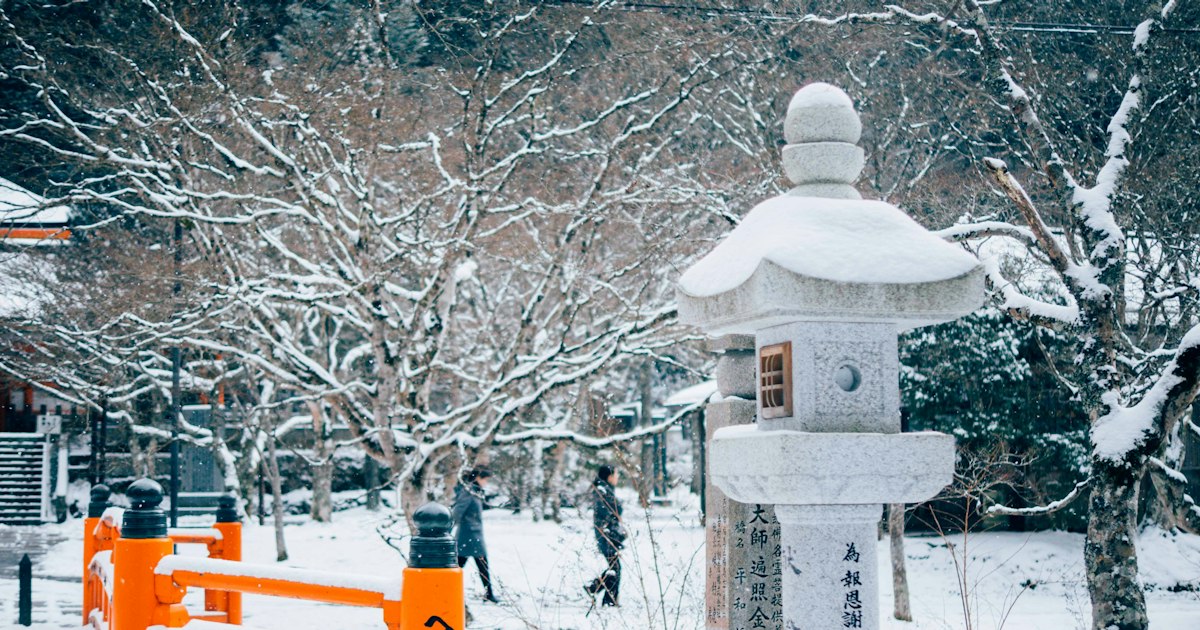
The bathhouse circuit itself runs year-round, but December through February is when Shibu Onsen looks the way it does in postcards — snow on the eaves, steam rising off the street, and the monkeys at Jigokudani actually sitting in their pool rather than lounging on nearby rocks. Early November and April offer a quieter, cheaper shoulder-season visit with lighter crowds at both the baths and the monkey park, though without snow. If you’re building a winter Nagano itinerary around this trip, it’s worth sorting out proper outerwear beforehand — Nagano gets genuinely cold, and Japanese technical ski brands like those covered in Descente, Goldwin & Phenix are easy to find in the region if you need a layer you didn’t pack.
Where to Stay
Lodging is really the ticket price for this whole experience, since the key only comes with a room. Budget travelers can find simple ryokan rooms with shared facilities from around ¥8,000–10,000 per person with breakfast; mid-range options with kaiseki dinner and private bathrooms run roughly ¥15,000–25,000 per person; and a handful of higher-end ryokan with riverside rooms or private in-room baths push past ¥30,000. Book directly with the inn or through a Japanese booking site rather than showing up — Shibu is small, rooms are limited, and winter weekends sell out well in advance.
If you want a similar slow, onsen-town rhythm elsewhere in Japan without the stamp-rally structure, Kurama and Kibune near Kyoto offers a comparable mountain-village pace, just built around temple hikes and riverside dining rather than bathhouses. And if mixed-bathing giant baths are more your interest than a nine-stop circuit, Sukayu Onsen up in Aomori is the opposite extreme — one enormous bath instead of nine tiny ones.
Either way, the nine-bath pilgrimage rewards patience over speed. Treat it as the reason for the trip, not a side activity squeezed between monkey photos, and the stamped towel you bring home will actually mean something.