Photo by Dominic Kurniawan Suryaputra on Unsplash
From early November through February, Japan turns its parks, train stations, and mountain resorts into glowing LED wonderlands. Winter illuminations (irumineshon) are one of the country’s most photogenic seasonal traditions, and unlike cherry blossoms or autumn leaves, they’re predictable — no weather gamble, no guessing when peak timing will hit. Here’s where to see the best of them, what they actually cost, and how to avoid the crowds that catch most first-time visitors off guard.
Kobe Luminarie: the original and still one of the best
Kobe Luminarie started in 1995 as a memorial to victims of the Great Hanshin Earthquake, and it remains one of Japan’s most striking displays — thousands of ornate metal-framed arches strung with LED bulbs along a corridor near Higashi Yuenchi Park and the Old Foreign Settlement. It typically runs for about ten days in early December (check the current year’s dates, since they shift slightly), lit nightly from around 6pm to 9:30pm. Entry is free. The nearest stations are JR Motomachi or Kobe Sanomiya, both a 5-10 minute walk. Go on a weeknight if you can — weekend crowds funnel through the narrow arch corridor in one direction only, and it can take 30-45 minutes just to shuffle through.
Nabana no Sato: Japan’s biggest illumination by scale
In Kuwana, Mie Prefecture (accessible from Nagoya), Nabana no Sato is a flower park that transforms into an enormous illumination garden from mid-October through early May — one of the longest seasonal runs in the country. The signature feature is a tunnel of LED “wisteria” light trees and a massive light-up lake reflection that’s become one of the most Instagrammed scenes in the country. Admission runs around 2,300 yen for adults during illumination season (it’s seasonal, so check current pricing), and hours are typically 9am to around 9pm with lights on from sunset. From Nagoya, take the Kintetsu line to Kuwana Station, then a shuttle bus (about 20 minutes) to the park entrance — the shuttle runs frequently but queues form fast on weekends, so arrive by mid-afternoon if you want a seat and daylight time to walk the flower gardens before dark.
Tokyo’s illumination circuit: Marunouchi, Roppongi, and Shiodome
Tokyo doesn’t have one single mega-illumination — instead it has a scattered circuit you can hit in one evening. Marunouchi Naka-dori (near Tokyo Station) strings its keyaki trees with warm white lights from mid-November through Valentine’s Day, free and unticketed, lit from around 5pm to midnight. Roppongi Hills does a blue-toned “Roppongi Hills Christmas” with a giant tree display, also free. Shiodome’s Caretta illumination is smaller but has a good soundtracked show every 15-20 minutes. None of these require tickets or reservations, and they’re all within a 20-minute train ride of each other on the Yamanote/Oedo lines — a practical option if you’re short on time and don’t want to leave the city. If your Tokyo trip also has you exploring old shopping streets, pair an evening illumination walk with a daytime visit to Sugamo’s old-fashioned shopping street or the bargain stalls at Ameyoko Market.
Sapporo White Illumination and the Snow Festival lead-in
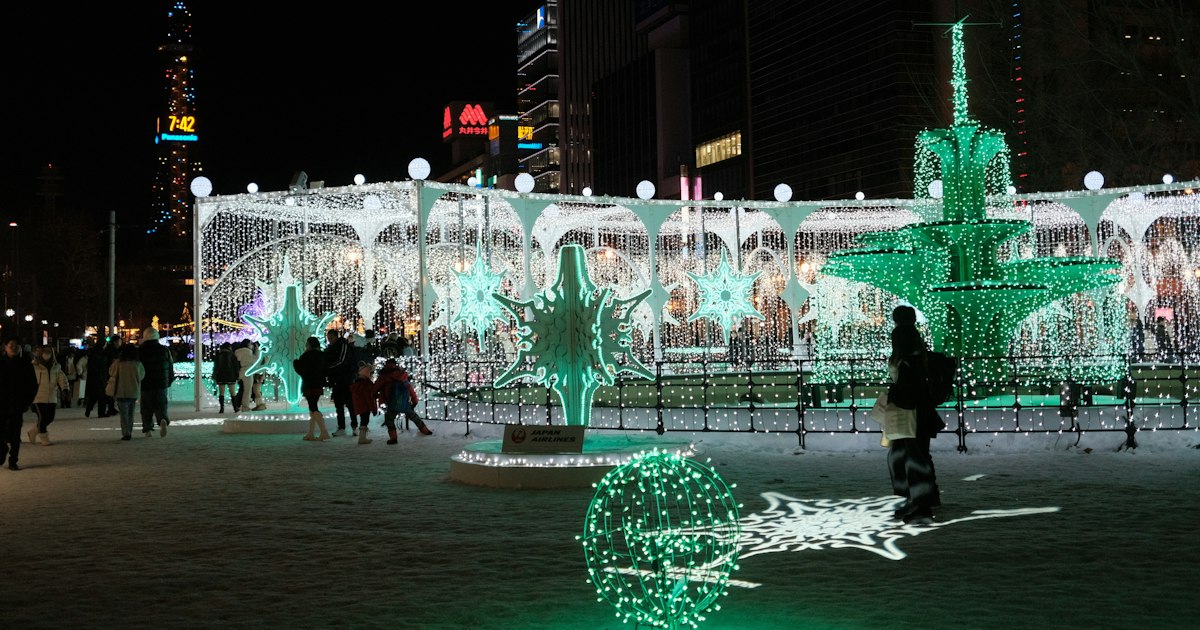
In Hokkaido, Sapporo’s White Illumination runs Odori Park from late November through around Christmas, free to walk through, lit from around 4pm (it gets dark early up north) to 10pm. It’s a good warm-up if you’re timing a trip toward the Sapporo Snow Festival in February — the two don’t overlap, so pick one based on your travel window. Dress far warmer than you think you need to; Sapporo winter evenings regularly sit below freezing, and standing still for photos gets cold fast. If Hokkaido’s onsen towns are also on your list, this region pairs naturally with a detour to see the snow monkeys at Jigokudani Monkey Park, though note that’s in Nagano, not Hokkaido — worth factoring into your route if you’re combining both.
Regional standouts worth a detour
- Ashikaga Flower Park (Tochigi) — roughly 90 minutes from Tokyo by train, this park’s illumination centers on light-wrapped wisteria trellises and is widely ranked among Japan’s top three illuminations. Tickets are around 1,800-1,900 yen for adults during peak illumination dates (late October through early February), with reduced pricing on off-peak weeknights. Hours run to around 8:30pm.
- Huis Ten Bosch (Nagasaki) — a Dutch-themed park that stages one of the country’s largest illuminations, with over 13 million bulbs across the grounds. Full-day passes run roughly 6,900-7,500 yen for adults, which sounds steep until you realize it includes daytime access to the park’s attractions too. If you’re already in Nagasaki, it’s an easy add-on to a day spent trying castella sponge cake around the city.
- Karuizawa’s winter illumination — if you’re doing a mountain-resort getaway from Tokyo, Karuizawa runs a more low-key, atmospheric illumination through its outlet mall and shopping streets, a nice contrast to the mega-parks. See our guide to Karuizawa as a mountain resort getaway for the full trip-planning picture.
Common mistakes and how to budget your evening
The single biggest mistake visitors make is arriving right at lighting time — that’s when everyone else arrives too. Get to major illuminations 30-45 minutes before lights-on if you want clear photos and a comfortable walking pace; the crowds thin out noticeably about an hour after sunset once the initial rush passes through. Second mistake: underestimating how cold standing still for photos gets, even in relatively mild regions like Kobe or Nagoya — bring more layers than you’d wear for daytime sightseeing. Third: not checking whether an illumination requires a separate ticket from general park admission (Nabana no Sato and Huis Ten Bosch both fold it into one price, but some venues charge extra for evening entry after a daytime closure).
For budget planning: free options (Kobe Luminarie, Tokyo’s Marunouchi and Roppongi Hills, Sapporo White Illumination) let you build a multi-stop evening for the cost of train fare alone. Mid-range options like Ashikaga Flower Park run under 2,000 yen and are easy day trips from Tokyo. For a splurge that turns into a full day out, Huis Ten Bosch or Nabana no Sato justify their higher ticket prices with daytime attractions plus the light show. If you’re traveling between illumination cities by Shinkansen with winter coats and gear in tow, it’s worth knowing the oversized luggage rules and reservation requirements before you book seats, since bulky winter luggage can trigger the oversized-baggage reservation fee.
When to go
Peak illumination season runs from late November through late December, driven by Christmas timing even though Christmas isn’t a major Japanese holiday — it’s treated more as a romantic/seasonal event than a family one. Many illuminations extend into January and February, which is actually the better window for avoiding crowds, since the pre-Christmas rush dies down but the lights stay up. If your trip lands in early November, Nabana no Sato is one of the few major illuminations already running, since its season starts earliest.