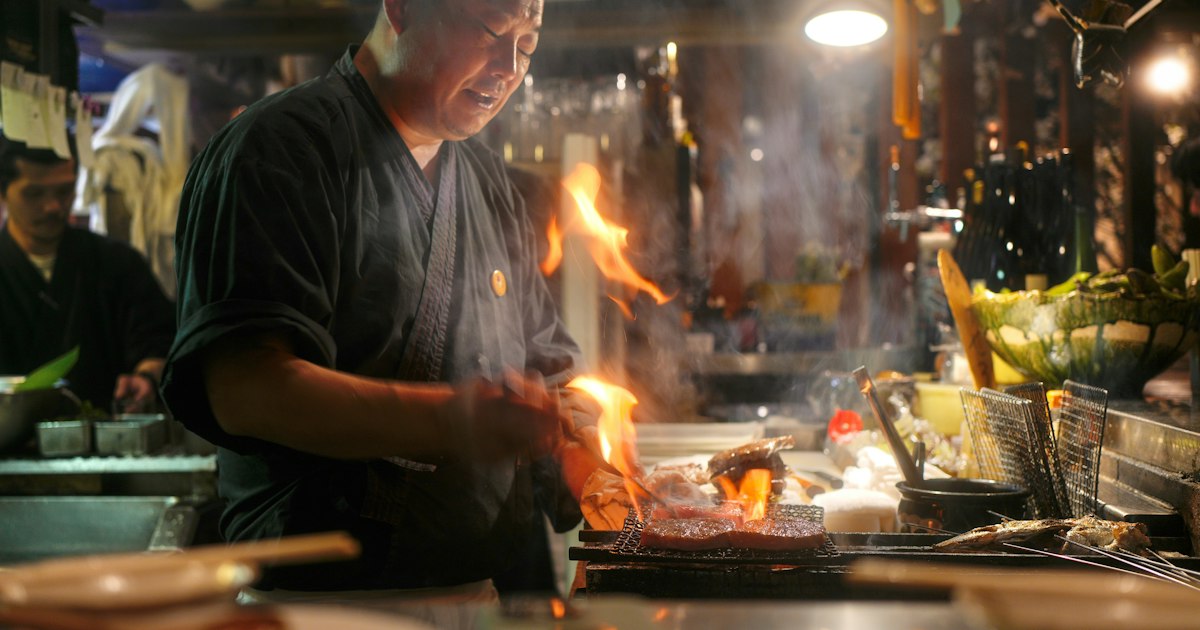
Photo by Laszlo Oveges on Unsplash
Teppanyaki looks simple from the outside — a chef, a hot steel plate, some butter, and a lot of sizzle — but getting a good seat in front of a skilled itamae (chef) takes a bit of planning. This guide covers what teppanyaki actually is, how it differs from the “hibachi” most foreign visitors know, what it costs at every budget level, and how to book a counter seat without wasting an evening standing outside a full restaurant.
What Teppanyaki Actually Is (and Isn’t)
Teppanyaki means “grilled on an iron plate” (teppan = iron plate, yaki = grilled). In Japan, it refers to a style of cooking on a flat steel griddle, usually built into the counter so diners sit around it and watch the chef work a few feet away. It developed in Japan in the postwar years, with steakhouses like Misono in Kobe (opened 1945) and Ustuwa-no-Yakatabune credited as early pioneers of the format now associated with premium wagyu.
What Americans call “hibachi” — the theatrical onion-volcano, shrimp-flipped-into-hats routine — is actually teppanyaki as adapted for restaurant chains in the US (Benihana being the most famous). You won’t find onion volcanoes in Japan. Real teppanyaki is quieter and more focused: the chef narrates little, concentrates on searing technique, and the showmanship comes from precision — perfectly timed turns, a clean sear, minimal seasoning (usually just salt, pepper, and a squeeze of yuzu or a pat of garlic butter) that lets good beef speak for itself.
Budget: Casual Teppanyaki and Okonomiyaki-Style Grills
At the low end, teppan dining means okonomiyaki and monjayaki restaurants, where the “chef” is often you — batter, cabbage, and toppings are cooked on a shared table-top teppan grill. Tokyo’s Tsukishima monja street has dozens of these shops, and a full meal runs ¥1,500–¥2,500 per person. In Osaka, Dotonbori okonomiyaki spots like Mizuno charge roughly ¥1,200–2,000 for a plate. This isn’t the tableside-chef experience but it’s the same cooking surface and a good way to understand teppan cuisine before paying steakhouse prices.
For an actual chef-at-the-counter experience on a budget, look for casual teppan steak chains such as Ikinari Steak (stand-and-eat, pay by weight, roughly ¥1,500–¥3,000 for a reasonably sized cut) or hotel-basement teppan lunch sets, which often run ¥2,500–¥4,000 for a lunch course that would cost double at dinner.
Mid-Range: Dedicated Teppanyaki Steakhouses
This is the sweet spot for most visitors. A proper teppanyaki restaurant with a 6–10 seat counter, a dedicated chef per counter, and a set course (soup, salad, vegetables, rice or garlic fried rice, and a beef course) typically costs ¥6,000–¥15,000 per person for dinner, less for lunch courses (often ¥3,000–¥6,000 at the same restaurants). Kobe and Osaka have the highest concentration of classic teppanyaki houses given the region’s association with Kobe beef, but every major city has reputable options — Ginza and Roppongi in Tokyo, Gion and Kawaramachi in Kyoto.
Book ahead where possible, especially for dinner and especially for counter seats, which are limited by design — a single chef can usually only serve 6–8 people at once. Many teppanyaki restaurants take reservations by phone only, so if you don’t speak Japanese, ask your hotel concierge to call, or use a restaurant booking app. Walk-ins are possible at lunch but risky at dinner in tourist-heavy areas.
Splurge: Wagyu-Grade Teppanyaki
At the top end, teppanyaki is where you eat A4 or A5 Kobe, Matsusaka, or Omi beef cooked a few inches from your hands. Courses at well-regarded Kobe or Tokyo wagyu teppanyaki restaurants run ¥20,000–¥40,000+ per person, and flagship omakase-style counters can exceed ¥60,000. What you’re paying for isn’t just the beef grade — it’s the chef’s control of heat and timing, which is the entire point of teppanyaki as a format. A5 wagyu has so much intramuscular fat that a chef has to manage rendering carefully; overcooked, it turns greasy rather than silky.
At this level, it’s worth asking in advance whether the course includes a specific cut (sirloin vs. fillet) and whether the beef’s grade and origin will be shown or certified tableside — reputable restaurants are happy to show the certificate of origin for Kobe beef specifically, since the name is a protected regional brand with strict certification requirements.
Best Season and Timing
Teppanyaki isn’t seasonal the way some Japanese cuisine is, but a few timing notes help: lunch courses are consistently 40–60% cheaper than dinner for the same restaurant and often the same cut of beef, just a smaller portion — a good way to try a splurge-tier restaurant on a mid-range budget. Winter (December–February) is considered prime wagyu season because cattle are typically finished for slaughter in the cooler months, giving slightly better marbling, though this varies by producer. Avoid peak dinner hours (7–8:30pm) if you want a same-day walk-in chance; early dinner (5:30–6pm) or late lunch (1:30–2pm) seatings are easier to get without a reservation.
Common Mistakes to Avoid
- Confusing teppanyaki with okonomiyaki or yakiniku. Yakiniku is diner-grilled meat on a grated or perforated grill at your table — no chef involved. If you want to watch a chef cook for you, you specifically want a restaurant advertising “teppanyaki,” not “yakiniku” or “okonomiyaki,” though all three use variations of a flat or grated iron cooking surface.
- Expecting Benihana-style theatrics. If you want the flipping and flaming show, that’s an overseas interpretation; Japanese teppanyaki chefs are typically reserved and technical, not comedic performers.
- Not asking about seating before booking. Some restaurants have both counter (teppan) seats and regular table seats where food is cooked in the kitchen and plated — if watching the chef matters to you, confirm counter seating specifically when you book.
- Overdressing the beef with sauce. Good teppanyaki chefs season minimally. If you douse a ¥30,000 cut of A5 wagyu in steak sauce, you’re paying premium prices to taste the sauce, not the beef — ask for just salt, or the ponzu/garlic options on the side, and taste a bite plain first.
- Skipping the garlic fried rice finale. Many courses end with rice fried in the beef fat and drippings on the same teppan — don’t fill up on the preceding courses and miss it; it’s often the most memorable bite of the meal.
Practical Booking Notes
Most teppanyaki restaurants above the casual tier require reservations, accept credit cards, and expect you to arrive on time (seating is often choreographed around when the chef starts). Smart casual dress is appropriate — no beachwear or flip-flops at mid-range and above. If you’re combining a wagyu teppanyaki dinner with a broader food-focused itinerary, it pairs naturally with other tableside or counter dining experiences like yakitori for a contrasting casual counter meal, or gyutan if you’re building a beef-focused food trip around Japan. If you’re coming straight from Narita on your first day and want to get settled before a dinner reservation, see our comparison of the Narita Express vs. Keisei Skyliner to plan arrival timing. And if you’re carrying cash for a cash-only izakaya-style teppan spot, it’s worth knowing how receipts and payment norms work in Japan before you sit down, since some smaller teppanyaki counters still don’t take cards.