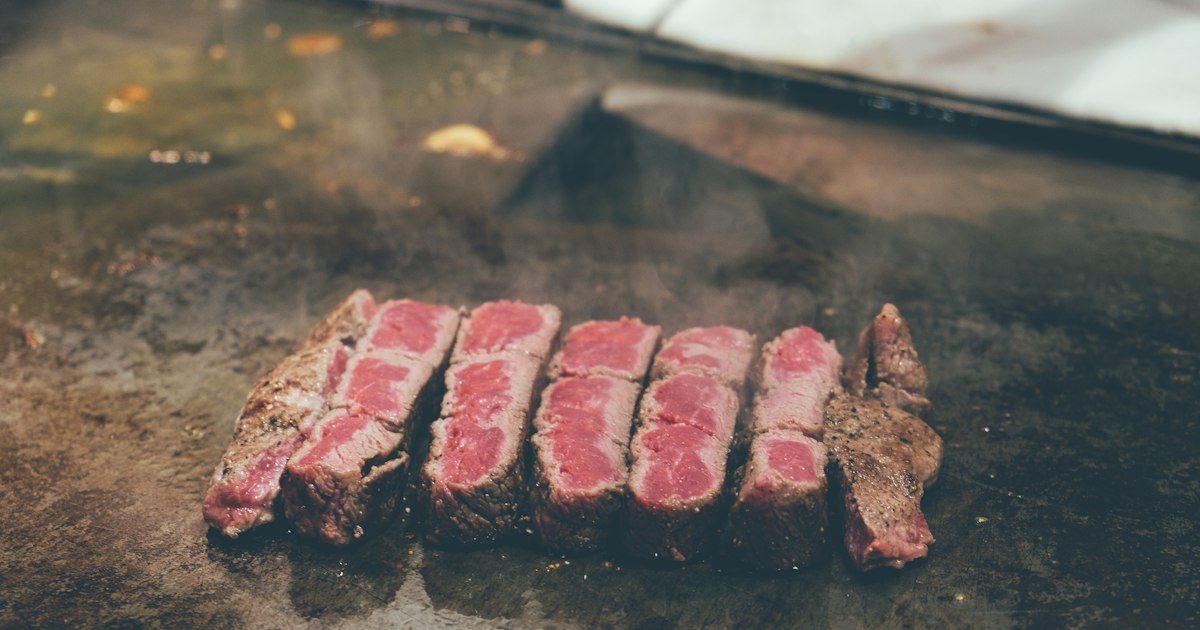
Photo by note thanun on Unsplash
If you ask someone from Sendai what to eat in their city, the answer comes back almost instantly: gyutan. Thick slices of grilled beef tongue, charred at the edges and chewy in the middle, served with barley rice and a bowl of oxtail soup — it’s one of the few regional Japanese dishes that didn’t exist a century ago and is now a full-blown culinary identity. If you’re passing through Tohoku, or even just changing trains at Sendai Station, this is worth the detour.
What Gyutan Actually Is (and Why Sendai Claims It)
Gyutan simply means “beef tongue.” It’s sliced thick — usually 7-10mm — scored lightly so it grills evenly, then cooked over charcoal until the outside is crisp and smoky and the inside stays springy and slightly fatty near the root end. It’s seasoned simply, often just salt, sometimes with a light miso or sauce marinade, and finished with a squeeze of lemon.
The dish is a Sendai invention, not an ancient one. After World War II, a local restaurateur named Keishiro Sano started experimenting with beef tongue and oxtail, cuts that American occupation forces weren’t using, as a way to avoid wasting food. His shop, Aji Tasuke, is widely credited as the originator, and it’s still open in Sendai today. The dish caught on citywide through the 1960s-80s and is now treated as Sendai’s signature food in the way okonomiyaki belongs to Osaka or Hiroshima.
The Classic Gyutan Teishoku Set
Almost every shop serves the same basic format, called a teishoku (set meal), so it’s easy to know what you’re ordering even if the menu is only in Japanese:
- Grilled beef tongue — usually 4-6 slices for a standard set
- Mugimeshi — barley mixed into rice, the traditional pairing because it was cheap and filling in the postwar years
- Tail soup (tēru sūpu) — a clear oxtail broth, often with scallion, that’s simmered for hours
- Pickles and sometimes raw cabbage or a small side
Expect to pay roughly 1,600-2,200 yen for a standard teishoku, 2,800-3,800 yen for a “thick-cut” (tokuatsu or tokuchō) version with fewer but noticeably thicker slices, and around 1,200-1,500 yen for a mini or lunch-only set at some shops. Many places also sell a tasting set with three cuts from different parts of the tongue — root, middle, tip — which is a good way to taste the texture range in one sitting.
Where to Eat: Budget, Mid-Range and Splurge
You don’t need to leave Sendai Station to eat well. The third floor has a dedicated strip nicknamed “Gyutan Street” (牛たん通り) with several competing shops side by side, and the S-PAL department store basement food court has more options. This is the easiest entry point if you’re short on time between trains.
- Budget (1,300-1,800 yen): Chain shops like Rikyu (利久) have multiple branches inside and around Sendai Station. The food is consistently good, English menus are common, and turnover is fast — ideal if you have under an hour before a Shinkansen.
- Mid-range (1,800-2,800 yen): Sasashige, Kiwamiya, and Tan-tan tend to use slightly thicker cuts and char over real charcoal rather than gas, which gives a smokier result. Several branches sit in the Ichibancho covered arcade and the Kokubuncho entertainment district, both walkable from the station.
- Splurge (3,000-5,000+ yen): Aji Tasuke, the shop that started it all, is still running and worth the trip for the history alone, though it’s smaller and lines form at peak times. Thick-cut multi-course sets here and at similar long-established shops run higher but include a wider range of textures and sometimes grilled vegetables or tongue sashimi-adjacent preparations.
Most individual shops seat 20-40 people, so queues of 15-30 minutes are normal at lunch (12:00-13:00) and dinner (18:30-20:00) on weekends. Typical hours run from around 11:00 to 22:00, sometimes with a short afternoon closure between lunch and dinner service at the smaller, non-chain locations — it’s worth a quick check of the specific shop’s hours on the day, since smaller operators occasionally close for a midweek rest day.
How to Get There and Best Timing
Sendai is about 90 minutes from Tokyo on the Tohoku Shinkansen (covered by the JR East or national JR Pass), making it an easy day trip or a one-night stop on a Tohoku itinerary. The station itself is the single best place to eat gyutan with zero extra travel, since the third-floor restaurant row exists specifically for travelers passing through.
There’s no strong seasonal angle to gyutan — it’s a year-round grilled dish, not a seasonal ingredient — so the real timing consideration is crowds, not weather. Arrive right at opening (11:00) or go for a late lunch around 14:00 to skip the worst of the queue. If you’re visiting in winter, pairing a gyutan meal with a bowl of the tail soup is especially satisfying since it’s served hot and generously.
Common Mistakes to Avoid
- Ordering it rare or pink. Unlike steak, gyutan is always served well-grilled through. Don’t expect — or ask for — a rare center; that’s not how the dish is meant to be cooked.
- Skipping the tail soup. It’s included in the set for a reason and is arguably as good as the tongue itself. Don’t let it go cold while you focus only on the meat and rice.
- Assuming all shops are the same. Thickness, char, and seasoning vary meaningfully between the budget chains and the smaller charcoal-grill shops. If you only have time for one meal, lean toward charcoal-grilled over gas-grilled for a more pronounced smoky flavor.
- Going only for dinner. Lunch sets at several shops are discounted compared to the dinner menu for the same core dish, so lunch is the better-value time to try it.
Bringing Gyutan Home
Vacuum-packed, frozen, or retort-pouch gyutan is sold at Sendai Station and in the airport, usually pre-sliced and seasoned for home grilling or microwave reheating, running roughly 1,500-3,000 yen depending on quantity and cut. It travels well in checked luggage if kept frozen until your flight, and it makes a distinctive gift precisely because it’s a single-city specialty rather than something sold nationwide. If you’re bringing it back for coworkers rather than just yourself, it’s worth knowing the informal rules — see our guide to omiyage etiquette for how individually wrapped, shareable gifts are expected to work in a Japanese office.
Rounding Out a Sendai Visit
Gyutan is usually just one stop on a short Sendai visit. Right alongside it, the city is equally known for a completely different regional specialty — sweetened mashed edamame used as a topping for mochi — which we cover in our guide to zunda mochi and other Tohoku snacks. If your trip lines up with a home match, Sendai’s J-League club, Vegalta Sendai, plays at a stadium a short ride from downtown, and our guide on watching J-League soccer in Japan covers how to get tickets and what to expect. Between a gyutan lunch at the station, a zunda sweet for the road, and an evening match, it’s an easy way to fill a full day in the city without needing a car.