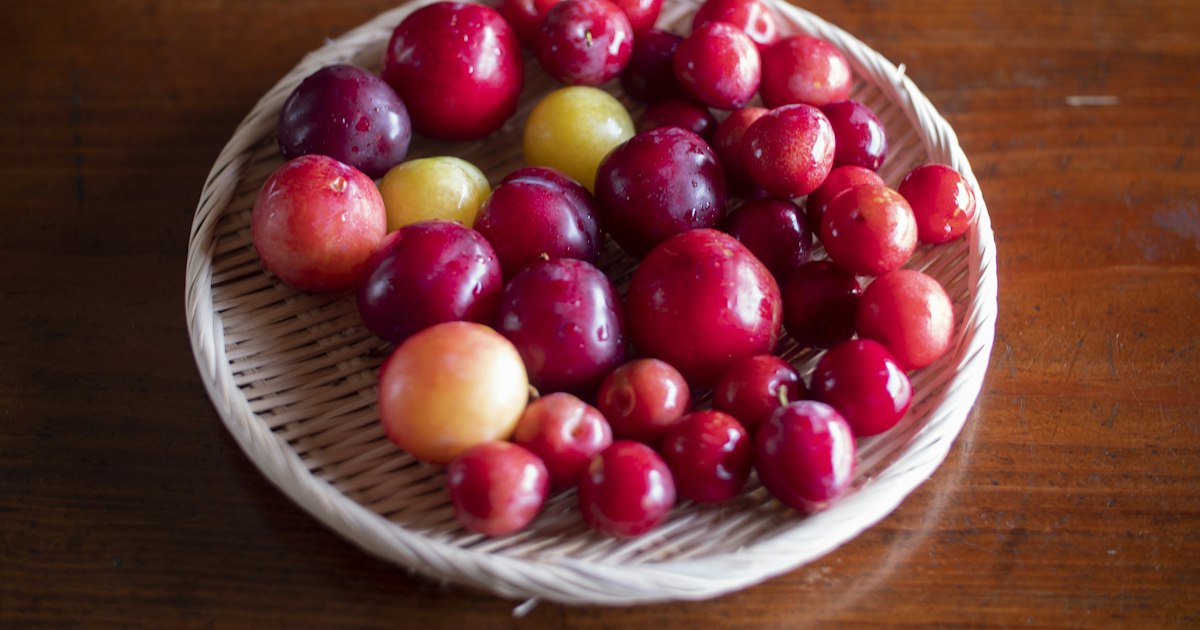
Photo by Jinomono Media on Unsplash
Somewhere between a condiment, a hangover cure, and a childhood memory, umeboshi is one of those foods that divides visitors to Japan instantly: you either pucker and reach for water, or you’re hooked for life. If you’ve seen a single startling red-pink circle tucked into the center of a rice ball at a convenience store and wondered what it was, this is it. Here’s what umeboshi actually is, how to try it without wasting money on the wrong grade, and which brands are worth packing in your suitcase.
What Umeboshi Actually Is
Umeboshi are Japanese plums — technically a relative of the apricot called ume — that are salt-pickled, sun-dried, and often colored and flavored with red shiso (perilla) leaves. The result is intensely sour, intensely salty, and sometimes sweet if honey or sugar has been added to soften the edge. Traditional umeboshi can be startlingly salty, with sodium content around 10-20% depending on the brand; modern “mild” (usuzuke or hachimitsu/honey) versions cut that down to roughly 5-8% salt and add sweetness, which is almost always the better entry point for first-timers.
They show up everywhere in Japanese food culture: as the salty-sour heart of an onigiri rice ball, as a small side dish next to a bowl of rice, stirred into dressings, or eaten whole as a digestive aid at the end of a heavy meal. If you’ve ordered oyakodon or katsudon, you may have noticed a single umeboshi tucked on the side of the tray at some shokudo-style restaurants — it’s there to cut the richness, not as decoration.
How to Try Your First One Without Regret
Common mistake #1: buying a bag of traditional, heavily salted umeboshi as a first try. The sourness and salt hit hard, and a lot of visitors assume all umeboshi tastes like that and never try it again. Start with something labeled hachimitsu ume (honey plum) or katsuobushi ume (bonito-flavored), which are widely available and much gentler.
Common mistake #2: eating a whole one in one bite expecting it to behave like a regular dried fruit. The pit is large relative to the flesh — bite around it gradually rather than trying to chew through. Common mistake #3: assuming vacuum-sealed supermarket packs and the loose, pit-in tubs at a department store food hall (depachika) are the same quality — they’re not, and the depachika versions are almost always fresher and better, just pricier.
Where to Buy It
You don’t need to seek out a specialty shop; umeboshi is a supermarket and convenience-store staple. For the widest selection in one place, a depachika (department store basement food floor) is hard to beat — Takashimaya, Isetan, and Daimaru locations in Tokyo, Osaka, and Kyoto all carry multiple regional brands, usually from 10am to 8pm, with staff happy to let you sample before buying. Specialty shops near famous ume-producing regions, especially Wakayama Prefecture (which produces roughly half of Japan’s umeboshi, centered on the town of Minabe), sell the premium end of the market in gift boxes.
For everyday eating rather than gifting, regular supermarkets (Life, Seijo Ishii, Ito-Yokado) stock reliable mid-range bags for 400-900 JPY. If you’re already stocking up on Japanese pantry items in bulk, Costco Japan sells large tubs of umeboshi at a noticeably lower per-gram price than convenience stores, though the flavor skews traditional and salty rather than mild. Train station kiosks and bento counters — the same places that sell eki soba and station bento — almost always have umeboshi onigiri for 130-180 JPY, which is the cheapest and fastest way to try it in context, wrapped in rice.
Best Brands to Buy, by Budget
Budget (under 1,000 JPY): Kibun and Kinoshita are reliable supermarket brands sold nationwide in resealable pouches of 10-20 plums; look for the mild “hachimitsu” line as your starting point. These are perfectly good everyday umeboshi and the ones most Japanese households actually eat.
Mid-range (1,000-3,000 JPY): Nakata Shokuhin and Kishu Umeboshi (both based in Wakayama) sell well-regarded gift-box sets of larger, meatier plums with noticeably better texture than supermarket versions — these are what most Japanese people buy as souvenirs or gifts for family. Look for the grade labels “3L” or “4L,” which indicate larger plum size and generally better quality and texture, not just bigger fruit.
Splurge (5,000 JPY+): Premium Wakayama brands like Umeya Shoten and Kishu Umegen sell top-grade “nanko-ume” plums — the specific cultivar most prized for umeboshi — in lacquered gift boxes, sometimes aged for a year or more before sale, with a softer, almost custard-like texture that’s genuinely different from anything mass-produced. These make excellent, well-packaged gifts and travel fine in checked luggage since they’re vacuum-sealed.
Best Season and Timing to Buy
Fresh ume fruit is harvested in June, and that’s when you’ll see unripe green plums for sale briefly if you want to pickle your own — not practical for most visitors. For buying finished umeboshi, timing barely matters since it’s a shelf-stable, year-round product; the pickling process and salt content mean most varieties keep for 6-12 months unopened, and some traditional high-salt versions keep for years. The one seasonal wrinkle: late December through early January sees a bump in gift-box sales ahead of New Year, when osechi (New Year’s food boxes) sometimes include umeboshi, so selection in depachika food halls is at its best then but prices on gift sets don’t discount.
Getting There and Practical Tips
If you want the full regional experience rather than just buying a bag, Wakayama’s Minabe area is reachable by JR from Osaka (around 2 hours to Minabe Station via the Kuroshio limited express, roughly 5,000-6,000 JPY one-way) and has small family-run shops selling direct-from-producer umeboshi, though this is a niche day trip best combined with other Wakayama plans rather than a dedicated visit. For nearly everyone else, a depachika visit in Tokyo, Osaka, or Kyoto accomplishes the same goal — tasting multiple brands side by side — in twenty minutes with zero travel.
A few practical notes for buying as a souvenir: vacuum-sealed pouches travel far better than loose tubs with liquid brine, which can leak in luggage; airport duty-free shops rarely carry umeboshi, so buy before you head to the airport; and if you’re flying to the US, dried/pickled umeboshi in sealed commercial packaging is generally fine to bring back, though double-check current customs rules for your destination country since produce regulations change. Finally, don’t buy umeboshi as your only snack for a long flight unless you genuinely love sour food — it’s a condiment, not trail mix, and the salt will leave you thirsty for hours.