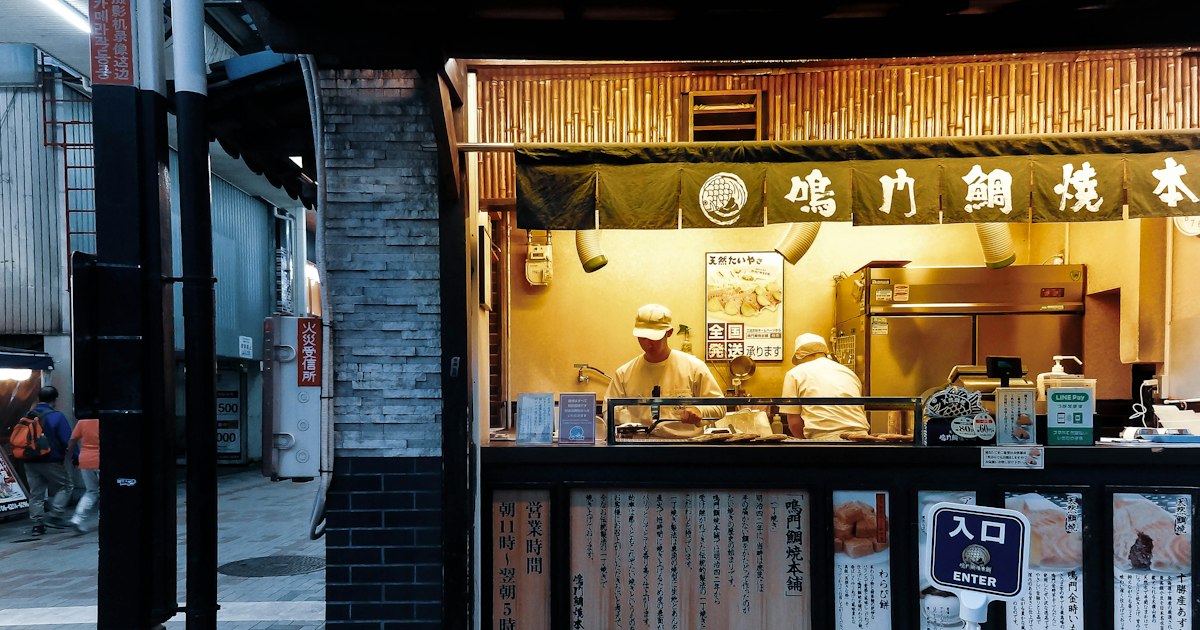
Photo by Danish Prakash on Unsplash
If you spend even half a day wandering Namba or Shin-Osaka Station, you’ll see it: a steady line of people waiting in front of a red-and-white counter, clutching numbered tickets, waiting for pale, pillowy buns to come out of a steamer. That’s 551 Horai, and in Osaka it’s less a snack than a civic institution. Here’s what it is, where to get it, and how to avoid the rookie mistakes that waste time or money.
What Is 551 Horai, and Why Do Osakans Queue for It?
551 Horai (蓬莱551, usually written simply “551”) is an Osaka-born Chinese-food chain founded in 1945, built almost entirely around one item: the butaman, a steamed bun filled with seasoned minced pork, onion, and a savory-sweet sauce. It’s similar in concept to a Chinese baozi, but 551’s version has a distinct, slightly sweet dough and a filling built to be eaten plain — no dipping sauce needed, no chopsticks required.
The local joke is that Osakans “won’t carry 551 across the Yodogawa River” — meaning they treat it as something you eat in Osaka, not something worth exporting, because the chain has deliberately stayed concentrated in the Kansai region (Osaka, Kyoto, Hyogo, Nara) rather than expanding nationwide. There’s no permanent branch in Tokyo; the chain occasionally appears at Tokyo department-store food fairs for a few days, but if you want it reliably, you need to be in Kansai. That scarcity is part of why the lines exist — it’s a true regional specialty, not something you can pick up at any convenience store.
The Namba Honten: 551 Horai’s Flagship Store
The main store (honten) sits in Namba, a short walk from Namba Station — reachable via the Osaka Metro Midosuji Line, the Nankai Namba terminal, or the Kintetsu/Hanshin lines that converge in the area. It’s a full restaurant as well as a takeout counter, so you can sit down and order butaman alongside fried rice, ramen, and other Cantonese-leaning dishes, not just grab buns and go.
This location tends to have the most reliable stock and the widest menu, but it also draws tour groups, so midday on weekends can mean a genuine wait. If you want the sit-down experience, go early for lunch (opening is typically around 11:00) rather than at the noon peak.
Where Else to Find 551 Horai Across Osaka
You don’t have to go to Namba. 551 Horai runs dozens of takeout counters across Osaka, and for visitors, three locations matter most:
- Shin-Osaka Station — the single busiest counter in the chain, because it sits right where Shinkansen travelers grab a box of buns for the trip home. Expect the longest lines here, especially in the evening rush and around holiday travel windows.
- Kansai International Airport (KIX) — convenient for a last pre-flight bite or an omiyage (souvenir) purchase, located in the terminal shopping area before security.
- Department store basements (depachika) in Umeda, Tennoji, and Shinsaibashi — these often have shorter lines than Namba or Shin-Osaka since they’re less of a single-purpose destination.
Opening hours vary by location: standalone shops generally run from around 10:00 to 21:00, while department store counters follow the store’s hours (often closing earlier, around 20:00 or 20:30). Station kiosks tend to open earliest and close latest. Always check the specific branch, since hours shift seasonally and around holidays.
How to Order, What It Costs, and What Else Is on the Menu
Ordering is simple: take a numbered ticket (or queue directly at busier counters), tell the staff how many buns you want, and pay at the register before or after collection depending on the branch. Buns are sold both individually, for eating on the spot, and boxed in sets of 2, 5, 10, or more for takeaway.
As a rough guide to pricing (expect gradual increases over time, so treat these as approximate): a single butaman runs a little over ¥200, with boxed sets scaling up from there — a box of 10 generally lands somewhere in the ¥2,000–2,500 range. Beyond the pork bun, the two other menu items worth knowing:
- Shumai — open-topped pork dumplings, sold boxed, a natural pairing if you’re building an omiyage box with some variety.
- Mango ice cream bars — an unexpected but genuinely popular side item, often sold from a small freezer case near the counter. Many locals buy one to eat while waiting for their buns to steam.
If you’re assembling a broader Osaka snack crawl, this pairs well with other regional rice and bowl dishes — see our guide to oyakodon and katsudon if you want something more substantial for lunch before or after.
Timing Your Visit: When the Lines Are Shortest
Lines move fast — 551 Horai’s counters are set up for volume, so even a long-looking queue often clears in 10–15 minutes. That said, timing still matters:
- Worst times: lunchtime (12:00–13:30) at Namba, and the evening Shinkansen rush (17:00–19:30) at Shin-Osaka Station.
- Best times: mid-morning (10:00–11:00) right after opening, or mid-afternoon (14:00–16:00), when both tourist and commuter traffic dips.
- Seasonal note: lines lengthen noticeably around Golden Week, Obon, and New Year’s, when travel volume through Shin-Osaka and KIX spikes and buns are being bought in bulk as gifts.
If you’re killing time at a station waiting for a quieter window, it’s worth knowing how other station food stalls work too — our guide to eki soba standing noodle stalls covers the fast-ordering etiquette that applies at busy station counters generally.
Common Mistakes First-Timers Make
- Buying too far ahead of eating. The buns are best eaten within a short window of purchase — they lose their steamed texture and go slightly gummy as they cool. If you’re buying to eat immediately, don’t buy an hour before you plan to eat.
- Assuming you can find it in Tokyo. Outside of occasional department-store pop-up fairs, 551 Horai doesn’t have permanent Tokyo locations. Don’t save your “must-try” list item for a Tokyo leg of the trip — get it in Kansai.
- Not checking if reheating is possible. If you’re taking a box home as a souvenir (rather than eating on the spot), you’ll need to steam or microwave them later — they’re not meant to be eaten cold, and many travelers forget they’ll need kitchen access.
- Underestimating how fast the queue actually moves. Some visitors skip the line assuming it’ll take 30+ minutes; in practice it’s usually much faster, and skipping means missing out.
Quick Tips for Taking 551 Horai Home
Boxed sets travel reasonably well for a few hours if kept cool, which is why they’re a standard omiyage pickup at Shin-Osaka before boarding the Shinkansen. If you’re flying out of KIX and want to bring buns back to your home country, be aware that fresh meat-filled products like these typically can’t clear customs in most countries — treat it as a trip souvenir to eat before departure, not a take-home gift across borders.
After you’ve had your fill of something savory, Osaka’s sweet shops are worth a stop too — if red bean and mochi desserts are more your speed, our guides to ichigo daifuku and youkan cover two more classic options you’ll spot in the same department store basements as 551 Horai’s counters.