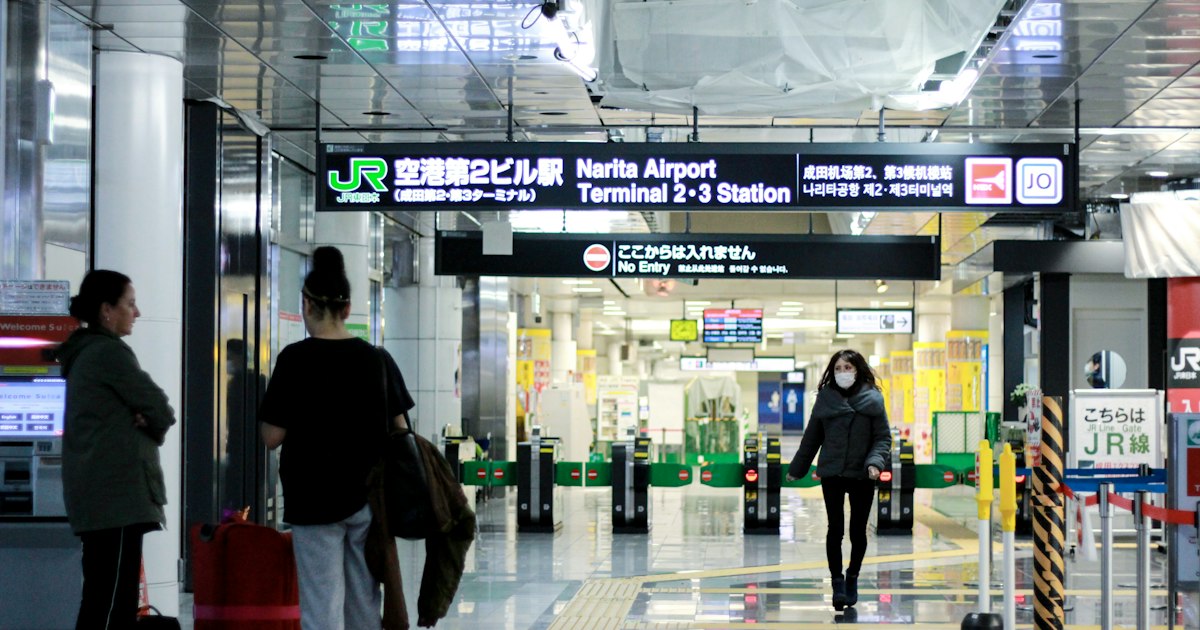
Landing at Narita after a long flight, you’re faced with your first real decision in Japan: how to get into Tokyo. The two best options are the JR Narita Express (N’EX) and the Keisei Skyliner, and most first-time visitors have never heard of either until they’re standing in the arrivals hall trying to choose. Both are fast, reliable, and far better than a taxi (which can run ¥20,000–¥25,000 to central Tokyo). Here’s how they actually compare, so you can pick the right one before you’ve even cleared customs.
The Quick Answer
If you’re heading to Tokyo Station, Shinagawa, Shibuya, Shinjuku, Ikebukuro, or Yokohama — and especially if you’re also using a Japan Rail Pass — take the Narita Express. If you’re headed to Ueno, Nippori, Asakusa, or anywhere on the northeast side of Tokyo, or you simply want the cheapest and fastest ride to a JR/Keisei connection point, take the Keisei Skyliner. Both depart from the same terminals, so you’re not locking yourself into a bad route either way.
Narita Express (N’EX): Comfort and Direct Reach
The Narita Express is operated by JR East and is the more versatile of the two because it runs through, without a transfer, to multiple major Tokyo hubs: Tokyo Station (about 55–60 minutes), Shinagawa, Shibuya, Shinjuku, and Ikebukuro, plus a branch to Yokohama. All seats are reserved, the cars have generous luggage racks near the doors, and there are power outlets at most seats — useful if your phone died on the flight.
Standard one-way fares run around ¥3,070 to Tokyo Station and ¥3,250 to Shinjuku or Shibuya for an ordinary reserved seat (Green Car upgrades cost more). Foreign visitors can often save with the discounted “N’EX Tokyo Direct Ticket,” a round-trip fare bought in advance at roughly ¥4,070–¥4,370 depending on destination — worth it if you already know you’ll fly out of Narita again. The Narita Express is also fully covered by the Japan Rail Pass, which matters if you’re activating a 7, 14, or 21-day pass on arrival day; in that case it’s effectively free.
Trains run roughly every 30–60 minutes from early morning (first departure around 7:30–8am) until about 9:45–10pm. Because every seat is reserved, you cannot board without a seat reservation during busy periods, so book at the JR ticket counter or machines in the arrival lobby as soon as you land, especially around holidays.
Keisei Skyliner: Speed and Value
The Keisei Skyliner is the faster and generally cheaper option, but it only goes to two stations: Nippori and Ueno, both on Tokyo’s east side. The ride to Ueno takes about 41 minutes — the fastest airport-to-city train in the Tokyo area. From either station you can transfer to the JR Yamanote Line or Tokyo Metro to reach almost anywhere else in the city within another 20–30 minutes.
Regular one-way fare is ¥2,570 for adults. Foreign tourists can buy a discounted ticket (around ¥2,200–¥2,300) through Keisei’s own site or travel platforms like Klook and Voyagin before arrival — showing your passport at the counter also gets a tourist discount on the spot. Trains run every 20 minutes through the day, from roughly 7:30am to around 10:30pm, and all seats are reserved but easy to book at airport kiosks even with no advance planning.
The Skyliner isn’t covered by the Japan Rail Pass since Keisei is a private railway, but it pairs well with a Tokyo Subway Ticket or a prepaid IC card for onward travel. If you’re setting up contactless payment for the rest of your trip, our guide on adding Suica or Pasmo to Apple Wallet is worth reading before you land — tapping through the Ueno transfer gates is much faster than fumbling with a paper ticket while jet-lagged.
Comparing the Two Side by Side
- Speed: Skyliner wins to Ueno (41 min) vs. N’EX to Tokyo Station (55–60 min).
- Price: Skyliner is cheaper (~¥2,200–2,570) than N’EX (~¥3,070–3,250) for a one-way adult fare.
- Destinations without a transfer: N’EX reaches far more stations directly — Shibuya, Shinjuku, Ikebukuro, Yokohama. Skyliner only reaches Ueno/Nippori directly.
- Luggage space: Both have dedicated racks, but N’EX cars feel slightly roomier for oversized suitcases.
- JR Pass coverage: N’EX only. If you’re activating a pass on day one, it’s essentially a free ride.
Common Mistakes to Avoid
The biggest mistake is assuming you can just walk up and board — both trains require seat reservations, and during peak season (cherry blossom weeks, Golden Week, New Year) same-day seats can sell out on the first one or two departures. Book at the ticket counter in the arrivals area the moment you land, even before collecting bags if the queue looks long.
The second mistake is boarding the wrong train entirely: Narita Airport has two JR platforms shared with local trains and Keisei has a similarly shared setup, so double-check the signage and the destination board rather than just following the crowd. Staff at both counters speak enough English to confirm your platform.
The third mistake is buying a round-trip discount ticket for the wrong leg of your trip — the N’EX round-trip deal is only worthwhile if you’re flying out of Narita again at the end of your stay, not if you’re departing from Haneda.
Which One Fits Your Trip?
If your hotel is near Tokyo Station, Shinagawa, or you’re continuing on to Yokohama, or you already hold a Japan Rail Pass, the Narita Express is the simpler, if pricier, choice. If you’re staying anywhere near Ueno, Asakusa, or planning to browse boutique neighborhoods like Daikanyama after a quick transfer, the Skyliner saves both time and money. Either way, budget travelers can also combine the Skyliner with the Tokyo Subway 24/48/72-hour ticket bundles sold at the same counter for a cheaper total transit cost over a multi-day stay.
One last tip: Narita’s terminals have a surprising number of decent shops for last-minute omiyage if you’re departing rather than arriving — if you haven’t picked up gifts yet, our guide to Tokyo Banana and other iconic omiyage sweets covers what’s actually worth grabbing before you board either train home.