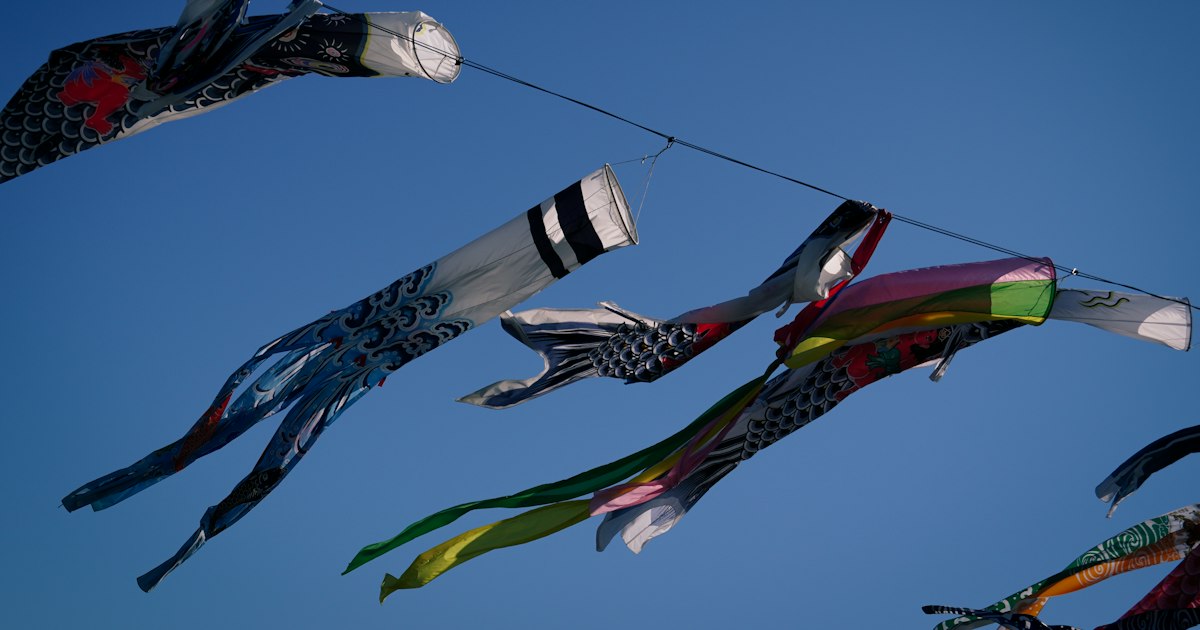
Every year on May 5, rivers of colorful carp-shaped streamers ripple over Japanese towns, wagashi shops sell out of oak-leaf-wrapped mochi, and department stores roll out miniature samurai helmets for sale. This is Kodomo no Hi (こどもの日), Japan’s Children’s Day — the final holiday of Golden Week and one of the most visually striking seasonal traditions you can catch as a visitor. Here’s what it actually celebrates, where to see it at its biggest, and what to eat while you’re there.
What Is Kodomo no Hi?
Kodomo no Hi falls on May 5 and has been a national holiday since 1948, closing out Golden Week (roughly April 29–May 5, though exact dates shift with weekends). Before 1948, May 5 was Tango no Sekku, a boys’ festival mirroring Hinamatsuri, the girls’ doll festival held on March 3. Officially the holiday is now for all children, but in practice most of the decorations and foods you’ll encounter — koinobori, kabuto helmets, iris leaves — still carry the old boys’-festival symbolism of strength and healthy growth. Families with young sons tend to mark it most visibly, but the public displays (rivers of carp streamers, festival stalls) are for everyone to enjoy.
If you’re traveling with kids, this is also a genuinely fun week to be in Japan — museums and parks often run free or discounted admission for children around May 5, and local tourism boards post schedules a few weeks ahead on their sites.
Koinobori: The Carp Streamers You’ll See Everywhere
Koinobori are windsock-style carp streamers flown on poles outside homes, apartment balconies, and rivers throughout April and early May. The imagery comes from a Chinese legend in which a carp swims upstream against a waterfall and becomes a dragon — a symbol of perseverance that Japanese families adopted for wishing children strength and resilience.
A traditional set has a black carp (magoi, representing the father), a red carp (himoi, the mother), and one smaller, colorful carp for each child in the family, strung beneath spinning arrow-shaped wheels (yaguruma) and a cylindrical windsock. You’ll see small household sets on balconies from mid-April, and much larger community displays strung across rivers, which is where the real spectacle is.
Best Places to See Giant Koinobori Displays
If you want to see koinobori at scale rather than a single streamer on someone’s balcony, a few towns turn this into a proper festival:
- Kazo, Saitama – The Kazo Giant Koinobori Festival flies a single enormous carp streamer (around 100m long, one of the largest in Japan) over the Tonegawa riverbed, alongside hundreds of smaller ones. Held in early May; free to attend. Kazo Station is about 40 minutes from Tokyo on the Tobu Isesaki Line, then a short bus or taxi ride to the riverbank site.
- Sagamihara, Kanagawa – The Sagami River festival strings thousands of koinobori across the river, one of the largest such displays in the country, usually held the weekend closest to May 5. Reachable from Tokyo via the Odakyu or JR lines in roughly an hour.
- Tatebayashi, Gunma – Koinobori no Sato runs for about a month (early April to early May), with thousands of streamers over the Tsuruuda River; one of the longer-running displays if your trip doesn’t land exactly on May 5.
- Tokyo Tower – A smaller but convenient display goes up near the tower’s base in late April, good if you don’t have time to leave central Tokyo.
Timing matters: most river displays go up in mid-to-late April and come down within a few days of May 5, so check the specific town’s tourism site for exact dates before building a day trip around it — unlike cherry blossoms, these dates are fixed by the organizers rather than the weather, so once you find them they’re reliable.
Kashiwa Mochi and Chimaki: The Seasonal Sweets to Try
The signature food of the holiday is kashiwa mochi — a soft mochi rice cake filled with sweet red bean (anko) or a miso-flavored bean paste, wrapped in a kashiwa (oak) leaf. The leaf isn’t eaten; it’s there for fragrance and symbolism, since oak leaves famously don’t fall until new buds appear, making them a stand-in for family lineage continuing unbroken.
In the Kansai region (Osaka, Kyoto), you’re more likely to see chimaki instead — a different, slightly chewy mochi wrapped in bamboo leaf, without filling. Both appear in shops only seasonally, roughly from mid-April through May 5, so this isn’t a year-round souvenir.
Where to buy it:
- Budget: Supermarkets and convenience stores stock individually wrapped kashiwa mochi for about ¥150–250 per piece during the season — an easy, low-commitment way to try it.
- Mid-range: Neighborhood wagashi (Japanese sweets) shops sell fresher versions, often ¥200–350 each, sometimes in small boxed sets of 3–5 for gifting.
- Splurge: Department store food halls (depachika) carry premium versions from famous wagashi makers, individually boxed, which make a nicer souvenir if you’re bringing sweets home to share — though note mochi doesn’t travel or keep well, so this is a same-day treat, not a packable souvenir.
If you like tracking down seasonal Japanese food traditions tied to specific calendar dates, this sits alongside things like Toshikoshi Soba on New Year’s Eve — another food whose symbolism matters as much as its taste.
Shopping for Kabuto Helmets and Satsuki Dolls
Families with young children often display a kabuto (samurai helmet) or a full Satsuki ningyo doll set in the weeks before May 5, parallel to how Hinamatsuri families display dolls in March. These range enormously in price and size:
- Budget: Small decorative kabuto ornaments, a few centimeters tall, from around ¥3,000–8,000 — sold as general Japanese crafts, closer to a souvenir than a serious collectible.
- Mid-range: Tabletop kabuto or armor display sets, roughly ¥20,000–60,000, sold at department stores like Takashimaya or Isetan from February through April.
- Splurge: Full lacquered samurai armor replicas with helmet, stand, and folding screen can run ¥150,000–300,000+, the kind of purchase local grandparents traditionally make for a new grandson.
If elaborate traditional dollcraft interests you beyond the holiday itself, it’s worth comparing to other regional doll traditions like Hakata Ningyo clay dolls from Fukuoka, which follow a completely different craft tradition but show the same cultural weight placed on figural dolls in Japan.
For a lighter, cheaper way to bring home something kid-themed, Lawson convenience stores run Ichiban Kuji lottery draws that frequently feature children’s and anime characters — a fun five-minute stop rather than a planned purchase. And if you’re shopping with kids who recognize Japanese characters, note the overlap with Anpanman, the bread-headed superhero whose anpan origins make him one of the most recognizable characters on Kodomo no Hi merchandise aimed at toddlers.
Common Mistakes and Timing Tips
A few things trip up visitors planning around this holiday:
- Confusing it with Hinamatsuri — March 3 is the girls’ doll festival; May 5 is Kodomo no Hi. Different displays, different sweets.
- Underestimating Golden Week crowds and prices — because Kodomo no Hi falls inside Golden Week, trains, hotels, and popular sites nationwide are at their most expensive and crowded all year. If you’re coming specifically for koinobori displays, book transport and accommodation well in advance, or consider visiting Tatebayashi’s month-long display outside the absolute peak dates.
- Assuming kashiwa mochi is available year-round — it’s strictly seasonal (mid-April to early May); don’t save it for later in your trip.
- Missing the iris bath — many onsen and public baths add shobu (iris) leaves to the water on May 5 (shobu-yu), believed to ward off illness. It’s a small, easy-to-miss seasonal detail worth asking your ryokan or sento about if you’re visiting on the day itself.
Kodomo no Hi rewards travelers who build in a little flexibility — the best koinobori displays are at their fullest for only about two weeks, and they’re far more impressive flying over a wide river than they are in photos, so it’s worth routing a day trip around one if your Golden Week itinerary allows it.