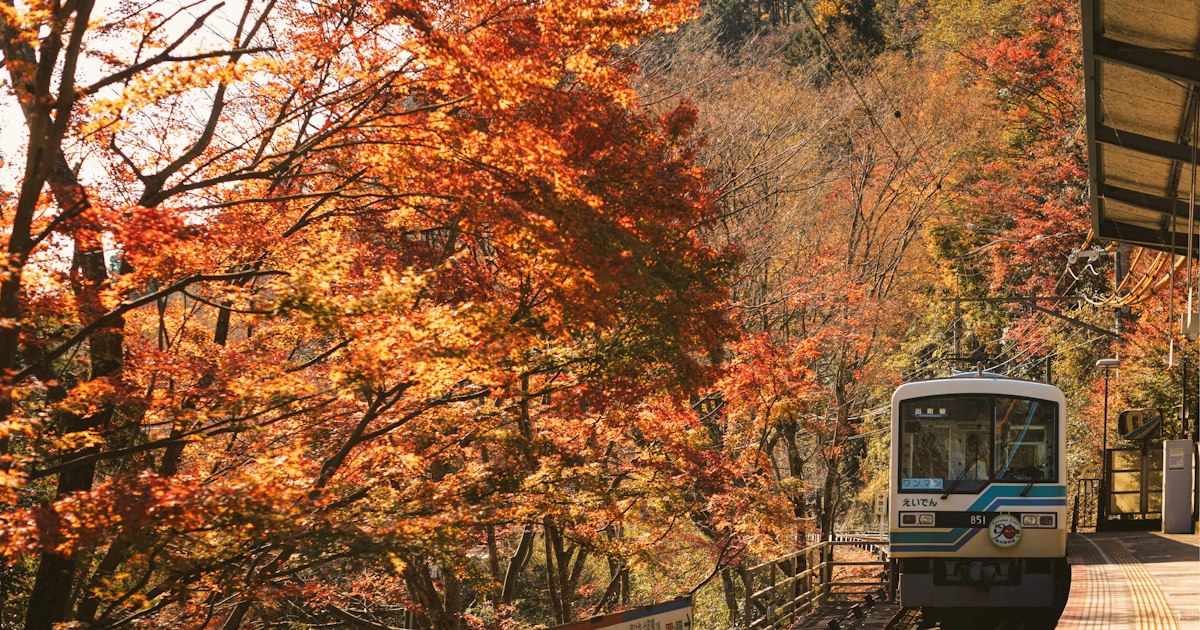
Tucked into the mountains behind Toyama Bay, the Kurobe Gorge Railway (黒部峡谷鉄道) is one of Japan’s most memorable short train rides: a narrow-gauge trolley line built nearly a century ago to haul workers and dam materials into a sheer granite gorge, now carrying sightseers instead. The open-air cars creak across bridges strung high above jade-green water, duck through unlit tunnels, and stop at a hot spring you can only reach by rail. It’s slow, a little cold, and completely unlike anything on a standard Tokyo-Kyoto itinerary.
What the Kurobe Gorge Railway Actually Is
The line runs 20.1 km from Unazuki Station to the end-of-the-line Keyakidaira Station, climbing through the Kurobe Gorge along a route originally cut for hydroelectric dam construction in the 1920s-30s. A one-way trip takes about 80 minutes at a walking-pace crawl, with the train winding past tunnels, 41 bridges, and viewpoints where the gorge drops away on both sides. Most cars are genuinely open-air, meaning no windows on the sides — you feel the temperature drop as you enter the mountains, and in tunnels you’ll get a faint mist on your face. This isn’t a polished theme-park ride; it’s a working mountain railway that happens to be scenic enough to attract tourists, and that rough-edged quality is a big part of its appeal.
Getting There from Toyama
Start at Toyama Station, reachable via the Hokuriku Shinkansen (about 2 hours from Tokyo, roughly 25 minutes from Kanazawa). From there, take the Toyama Chihou Railway local line to Unazuki Onsen Station — about 1 hour 20 minutes, with limousine-style express trains cutting that down somewhat. Here’s the detail that trips people up: Unazuki Onsen Station (the Chihou Railway stop) and Unazuki Station (the Kurobe Gorge Railway’s starting point) are two separate stations about a 5-minute walk apart, connected by a signed path along the river. Budget extra time for this transfer, especially with luggage.
If you’re driving, there’s paid parking near Unazuki Station, and the drive from Toyama city takes roughly an hour on local roads. Anyone combining this with a rental car elsewhere in the region should check our guide to ETC cards and expressway tolls before setting off, since several approach routes use toll roads.
Tickets, Fares, and Which Car to Choose
There are two main car types. The standard open-air car (ippan-kyaku) is unreserved, first-come first-served, and the one-way adult fare for the full run from Unazuki to Keyakidaira is around ¥1,980 (children roughly half price). The “Relax” car is glass-enclosed with proper windows and padded seats, reservable in advance for a surcharge of around ¥530 on top of the base fare — worth it if you’re visiting during peak autumn weekends when standard cars fill up fast, or if you’d rather not sit exposed to the wind for 80 minutes each way.
You don’t have to ride the whole line. Shorter fares exist to intermediate stops like Kuronagi and Kanetsuri, which can be a good option if you’re short on time or traveling with young kids who won’t sit still for a 2.5-hour round trip. Buy tickets at the Unazuki Station window on the day, or reserve Relax car seats in advance through the railway’s official booking channels, especially for November weekends.
Stops Worth Getting Off For
Kuronagi Station is the most popular midway stop, home to Kuronagi Onsen — a riverside hot spring reachable via a short walk and a tunnel from the platform, with an open-air bath you can soak in for a fee even as a day visitor. Kanetsuri Station has a free footbath (ashiyu) right by the platform, a nice quick stop if you don’t want the full detour to Kuronagi. At the end of the line, Keyakidaira has walking trails to the Sarutobi Gorge viewpoint and the Okukane suspension bridge, plus its own footbath and a small restaurant — plan for at least 30-40 minutes here before the return train, since the turnaround schedule isn’t generous.
Best Season and Timing
The line is seasonal, typically running from mid-to-late April through the end of November, closing entirely in winter because snow and avalanche risk make the gorge impassable. Early-to-mid June brings fresh green foliage and is noticeably less crowded than autumn. Late October into early November is peak season for fall colors and also the busiest and most expensive time to find a room in Unazuki — expect sold-out Relax cars and long lines for standard cars if you arrive without a plan. Midsummer is pleasant precisely because the gorge stays cool, often 10°C or more below the valley floor, which is refreshing in August but means you’ll want a jacket no matter when you visit. Services occasionally suspend for heavy rain or rockfall checks, so build slack into your schedule rather than treating this as a tightly timed connection.
Common Mistakes to Avoid
- Underdressing: the open-air cars and tunnels are cold even in summer — bring a light jacket regardless of season.
- Confusing the two Unazuki stations: Unazuki Onsen Station (Chihou Railway) and Unazuki Station (Kurobe Gorge Railway) are separate buildings a short walk apart.
- Assuming it runs year-round: the line closes for winter; check the operating calendar before building an itinerary around it.
- Skipping advance booking in autumn: Relax car seats and even standard-car capacity get tight on November weekends.
- Treating it as a quick side trip: round trip plus transfers from Toyama easily eats half a day — don’t schedule a tight connection afterward.
If you’re planning to photograph the gorge with a drone, note that flight restrictions apply around many of Japan’s dam and forest areas — our guide to drone laws and photography permits in Japan is worth checking before you pack one.
Where to Stay and Budget Options
Unazuki Onsen itself is a proper hot spring town, not just a train depot, with ryokan ranging from simple guesthouses to riverside inns with gorge views. Budget travelers can do the trolley as a day trip from Toyama city and skip lodging entirely — the standard car plus a short stop at Kanetsuri’s footbath makes for a satisfying half-day for well under ¥5,000 per person including transit. Mid-range visitors might add a Relax car reservation and a soak at a public bathhouse in Unazuki before heading back. For a splurge, stay overnight at a ryokan with its own onsen bath and kaiseki dinner, then combine the trip with the nearby Tateyama Kurobe Alpine Route for a multi-day Toyama mountain itinerary — the two routes sit in the same region but offer completely different experiences, one a riverside gorge railway, the other a high-altitude crossing by cable car and bus.