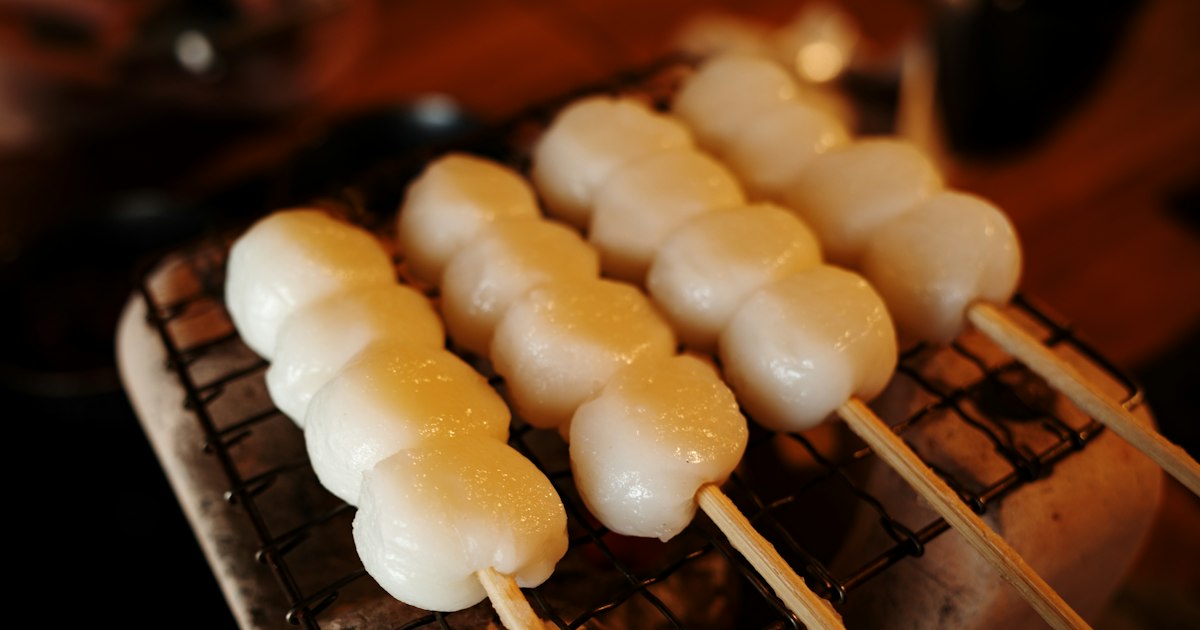
If you’ve wandered past a shrine gate, a festival stall, or a convenience store checkout counter in Japan and caught the smell of something sweet and slightly scorched, there’s a good chance it was mitarashi dango. These small, chewy rice dumplings on a skewer, glazed in a glossy soy-sugar sauce, are one of Japan’s oldest and most unpretentious sweets — and one of the easiest to find once you know where to look.
What Is Mitarashi Dango?
Mitarashi dango is made from rice flour — usually a blend of glutinous (mochigome) and regular rice flour — rolled into small balls, boiled or steamed, then skewered three to five at a time. The skewer is grilled briefly over charcoal or a griddle to give the dumplings a light char, then brushed with mitarashi sauce: soy sauce, sugar, and a thickener (often potato starch) simmered into a sweet-salty glaze that’s slightly sticky and faintly smoky where it caramelizes.
Texture-wise, expect something closer to mochi than Western dumplings — dense, chewy, and only mildly sweet, which is why it pairs so well with bitter green tea. A single skewer is a snack, not a dessert course; most people eat two or three in one sitting without feeling like they’ve overdone it.
The Shrine Where It All Began
The most commonly cited origin story traces mitarashi dango to Shimogamo Shrine in Kyoto, specifically the Mitarashi Pond within its grounds. According to local lore, bubbles rising from the pond’s spring water inspired the shape and spacing of the dumplings on the skewer — one ball set slightly apart from the other four, said to represent a head and body. A tea house near the shrine has sold dango under this name for generations, and it remains a reasonable first stop if you want to taste something close to the original.
Shimogamo Shrine sits in the Tadasu no Mori forest in northern Kyoto, about a 15-minute walk from Demachiyanagi Station (Keihan Main Line or Eizan Electric Railway), or reachable by city bus from central Kyoto. Go on a weekday morning if you can — the approach is quiet and shaded, and nearby tea houses tend to sell out of the freshly grilled skewers by mid-afternoon on busy days.
Where to Try It: Tokyo and Beyond
In Tokyo, Asakusa is the easiest place to start. Nakamise-dori, the shopping street leading up to Senso-ji temple, has several stalls grilling dango to order — look for the ones with visible charcoal grills and a short line, since fresh-off-the-grill is noticeably better than pre-made skewers sitting under a heat lamp. Expect to pay roughly ¥130–250 per skewer depending on the shop. Asakusa Station is served by the Tokyo Metro Ginza Line, Toei Asakusa Line, and Tobu Skytree Line.
Beyond temple towns, dango shows up at rest stops along hiking trails, where a hot cup of tea and a skewer are the classic reward for reaching a lookout point. If you’re hiking around Okutama in western Tokyo, several of the small shops near the trailheads and lake area sell grilled dango alongside other simple snacks — a good, low-key way to refuel before the return trip. Regional markets are another reliable source: at Omicho Market in Kanazawa, a few of the food stalls between the seafood vendors sell grilled dango as a palate-cleansing break from all the sashimi sampling.
Best Time to Visit
Mitarashi dango isn’t seasonal the way sakura mochi or kuri (chestnut) sweets are — it’s sold year-round. That said, it’s most visible and most fun to eat during festival season (matsuri), roughly June through September, when temporary stalls set up along shrine approaches and grill skewers over open flame for crowds. Cherry blossom season (late March to early April) and autumn foliage season (mid-November) also bring out more vendors near popular viewing spots, since dango is a traditional hanami and momiji-viewing snack. If you want it fresh and hot rather than packaged, aim for late morning to early afternoon — many small tea houses and stalls sell out or wind down production by 4 or 5pm.
Budget, Mid-Range and Splurge
- Budget (¥100–180 per skewer): Convenience stores — 7-Eleven, Lawson, and Family Mart all stock packaged mitarashi dango in their chilled dessert section, usually two or three skewers per pack for around ¥150–250 total. It’s a perfectly decent version, just less fresh and slightly firmer than grilled-to-order.
- Mid-range (¥180–350 per skewer): Street stalls and casual wagashi (Japanese sweets) shops near temples, shrines, and shopping streets. This is where you get the charcoal aroma and a sauce made that day.
- Splurge (¥400–800 per skewer or set): Established tea houses, particularly ones with a historical claim like the shops near Shimogamo Shrine, or dango served as part of a seasonal wagashi set with matcha at a traditional tea room. You’re paying for ingredients, technique, and often a seated experience with tea included.
Common Mistakes
The biggest mistake visitors make is confusing mitarashi dango with other dango varieties and being surprised by the flavor. Hanami dango (the pink-white-green trio) and an-dango (topped with sweet red bean paste) are both sweeter and have no soy sauce; mitarashi is savory-sweet, not candy-sweet, so go in expecting something closer to a savory rice cracker with a glaze than a dessert.
Another frequent error is buying dango from a display case that’s been sitting for hours — the dumplings firm up and lose their chew within a few hours of being made, so if you have the option to buy from a stall actively grilling, take it. Finally, don’t eat it standing at the stall counter in a crowded tourist area without checking for a trash bin nearby; most vendors expect you to dispose of the skewer at or near the stall, since eating while walking is still frowned upon in many traditional shopping streets.
Bringing the Flavor Home
Packaged mitarashi dango doesn’t travel well as a souvenir — it’s a fresh food item, not shelf-stable, so eat it in Japan rather than trying to bring it home. If you want a rice-based Japanese flavor to take back with you instead, a bag of furikake rice seasoning captures a similar savory-umami profile and keeps for months in your pantry. And if you’re snack-hunting through a convenience store anyway, it’s worth a detour to the freezer aisle for a Garigari-kun ice bar — a completely different texture and temperature, but the same everyday-treat spirit that makes a skewer of mitarashi dango worth seeking out in the first place.