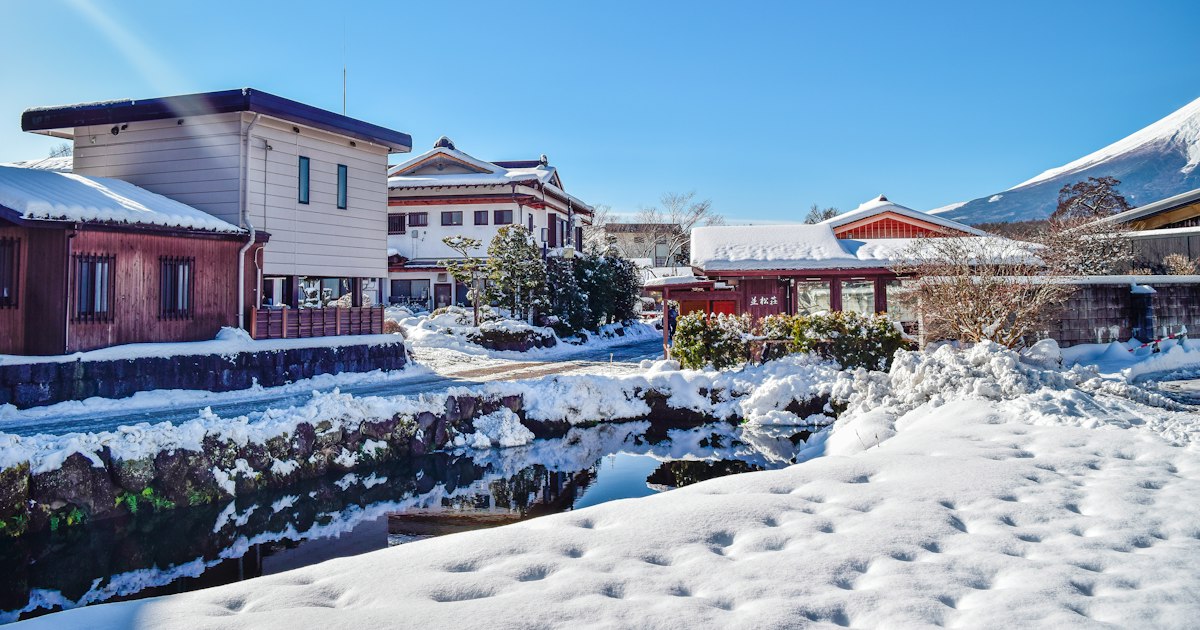
Photo by Nopparuj Lamaikul on Unsplash
Steam rising off wooden bathhouses, narrow lanes lined with ryokan, and skiers tramping home in slippers past a 13th free hot spring — Nozawa Onsen in northern Nagano is one of the few places in Japan where the ski resort and the onsen town are genuinely the same village, not a resort bolted onto a hot spring as an afterthought. It’s been a bathing destination for well over a thousand years and a ski town since the 1930s, and the two identities still run through each other on every street corner.
Why Nozawa Onsen Is Worth the Trip
Most visitors come for one of two reasons: the skiing, which is some of the most reliable powder snow in Nagano thanks to the village’s elevation and position facing the Sea of Japan, or the onsen culture, which is unusually public and communal. Unlike most hot spring towns where the best baths are locked inside hotels, Nozawa Onsen’s 13 historic soto-yu (external bathhouses) are scattered through the village and open to anyone — residents and visitors alike — for free or a small donation. That combination of serious skiing and genuinely free public bathing is rare even by Japanese standards.
Getting There: Tokyo to Nozawa Onsen
The standard route from Tokyo is the Hokuriku Shinkansen to Iiyama Station, which takes roughly 1 hour 40 minutes. From Iiyama Station, the Nozawa Onsen Liner bus runs directly to the village in about 25 minutes, with fares typically around ¥600–700 one way; in winter, buses are timed to meet shinkansen arrivals, but schedules thin out considerably outside peak ski season, so check the timetable before you plan a late arrival. If you’re booking the shinkansen leg yourself, it’s worth reading up on Smart EX, the EX App, and Ekinet beforehand, since reserved seats on the Hokuriku line sell out fast on weekends during ski season. And if your connection is tight, it helps to know that Japan’s shinkansen transfer rules are more forgiving than most tourists expect if you end up on a later train.
The 13 Free Soto-yu: Etiquette and Must-Visit Baths
The soto-yu are maintained entirely by the local community — residents pay for their upkeep, and visitors are essentially guests in a neighborhood facility, not a tourist attraction. Treat them accordingly: there’s no staff, no soap or shampoo provided (and often none allowed), and a small donation box (around ¥100 is the customary amount) at the entrance. Rinse off before entering the tub, don’t bring towels into the water, and keep noise down — these are working baths for local families as much as they are for travelers.
Most soto-yu are open very long hours, typically from around 5:00 or 6:00 a.m. until 11:00 p.m., though individual baths occasionally close for cleaning on a rotating schedule, so if one is shut, there’s almost always another within a few minutes’ walk. The most famous is O-yu, a large wooden bathhouse right in the center of the village near the old clock tower — it’s the one you’ll see photographed most often, and a good first stop since it’s easy to find. From there, it’s worth wandering to two or three others rather than sticking to just one; each has a slightly different water temperature and feel, and the walk between them, past steaming drainage channels used by locals to cook eggs and vegetables, is part of the experience.
Because the waters are genuinely hot (many soto-yu run noticeably hotter than a typical hotel onsen), ease in gradually, and don’t attempt a bath if you’ve been drinking — a combination that causes more fainting incidents than almost anything else in these villages.
Skiing and Snow Season Timing
Nozawa Onsen Ski Resort is one of Japan’s oldest and largest, with a base around 565m and a summit near 1660m, offering a genuine mix of long cruising runs, steep terrain, and good tree skiing for a resort this accessible from Tokyo. The season generally runs from early/mid-December through late March or early April depending on snowfall, with the most reliable powder in January and February. Late December and the New Year period are the busiest and most expensive weeks; late February into March often brings a good balance of snow quality and thinner crowds. Lift day passes are priced in the same general range as other major Nagano resorts, typically somewhere around ¥6,500–7,500 for an adult, though exact pricing shifts by season, so confirm current rates before you go.
Where to Stay: Budget to Splurge
Nozawa Onsen is almost entirely small ryokan and minshuku rather than big hotel chains, which keeps the village feel intact but means booking ahead matters in peak season.
- Budget: Simple minshuku or guesthouse rooms, often shared bathrooms (though you’ll bathe in the soto-yu anyway), run roughly ¥8,000–12,000 per person per night, sometimes including breakfast.
- Mid-range: Family-run ryokan with private or semi-private baths and a kaiseki-style dinner typically land around ¥15,000–25,000 per person.
- Splurge: A handful of higher-end ryokan with private in-room onsen baths and multi-course dinners can run ¥30,000 and well beyond per person.
Whichever tier you choose, most rooms are traditional tatami with futon bedding rather than Western beds — if you haven’t slept on one before, it’s worth knowing how a traditional futon sleep set is actually arranged and used so the first night doesn’t come as a surprise.
The Dosojin Fire Festival and Local Food
If your trip lines up with January 15, Nozawa Onsen hosts the Dosojin Fire Festival, one of Japan’s most dramatic fire festivals: villagers build a massive wooden shrine structure and defend it against torch-wielding young men in a ritual battle before the whole thing is set ablaze. It draws large crowds, so accommodation around that date books out especially early.
Off the slopes, the village’s signature food is nozawana, a pickled mustard green grown locally and served at nearly every ryokan breakfast and as a snack from village shops — it’s a good, inexpensive souvenir if you want to bring a taste of the trip home.
Common Mistakes to Avoid
Don’t assume every soto-yu works like a tourist onsen — showing up without small coins for the donation box, or bringing shampoo into a bath that doesn’t allow it, is the fastest way to feel (and look) like an outsider. Don’t skip travel insurance for a ski trip either; injuries on the slopes or a bad fall on icy village lanes are common enough that it’s worth reading what kind of travel insurance actually covers a Japan ski trip before you go, and knowing where to find a pharmacy or clinic if something does go wrong. Finally, don’t try to do Nozawa Onsen as a single-day trip from Tokyo — between the shinkansen, the bus, and the time it takes to actually enjoy the baths and the village at a walking pace, it’s a destination that rewards at least one overnight stay.