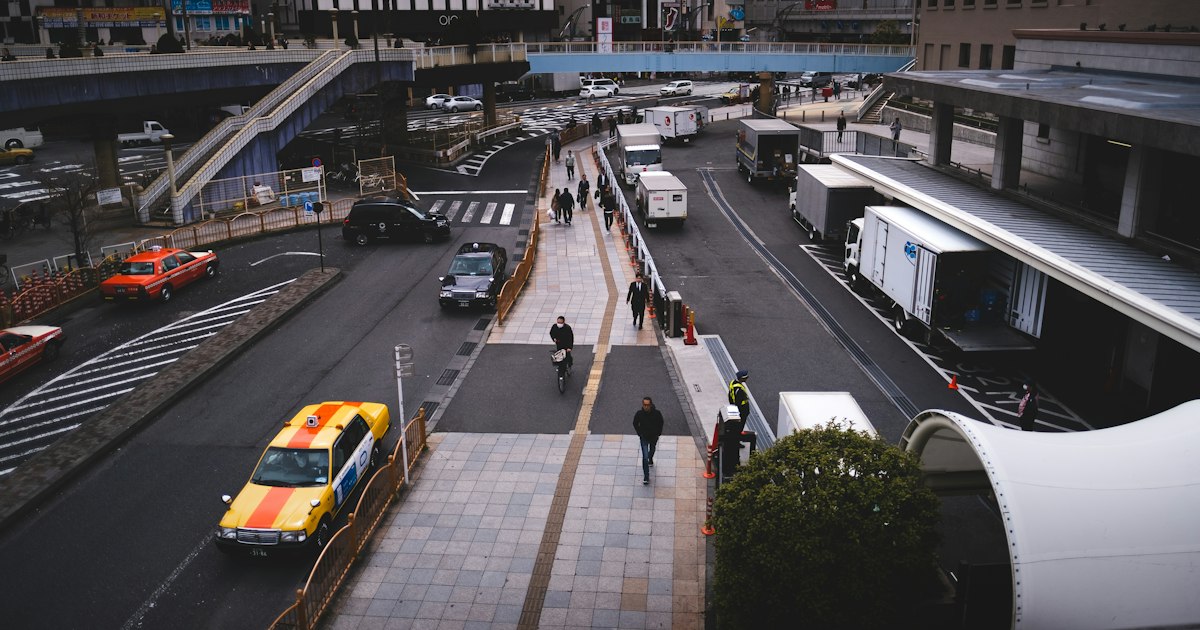
Photo by Levi Meir Clancy on Unsplash
If you land in Tokyo with heavy suitcases and no interest in hauling them up and down train station stairs, the Airport Limousine Bus is the easiest fix. It’s not a limousine in the stretch-car sense — it’s a comfortable, reserved-seat coach that picks you up right at the airport terminal and drops you off at the door of dozens of major hotels and transit hubs around the city, with zero transfers. Here’s how the Narita and Haneda services actually work, what they cost, and where people trip up.
Why Skip the Train Transfer in the First Place
Trains like the Narita Express or Keisei Skyliner are faster on paper, but they only get you to a station — Tokyo, Shinjuku, Ueno. From there you still need a taxi, a subway connection, or a long walk with luggage, often through stairs and ticket gates with no elevator in sight. The Limousine Bus trades a bit of speed for door-to-door convenience: you board once at the airport and get off steps from your hotel lobby. For families, anyone with mobility issues, or travelers arriving jet-lagged after a long flight, that trade is usually worth it.
Narita Airport Limousine Bus: Routes, Fares, and Timing
The main operator is Friendly Airport Limousine, with counters on the arrival floors of Terminals 1, 2, and 3. Buses serve a long list of hotels in Shinjuku, Shinagawa, Ginza, Tokyo Station (Yaesu side), Akasaka, Shiodome, Asakusa, Ikebukuro, and Tokyo Disney Resort, among others.
- Fare: around ¥3,600 one-way for adults to most central Tokyo hotels (children roughly half price). Discounted round-trip tickets are available if you’re booking both legs in advance.
- Travel time: roughly 85–150 minutes depending on your destination and traffic — Tokyo Station and Ginza are on the faster end; Shinjuku and Ikebukuro take longer.
- Frequency: buses run from around 6am until roughly 11pm–midnight, timed loosely around international flight banks, with departures every 20–40 minutes on popular routes and longer gaps late at night.
Because Narita sits well outside the city, this route is also where traffic matters most — more on timing below.
Haneda Airport Limousine Bus: Routes, Fares, and Timing
Haneda’s bus network (run primarily by Keikyu Bus and Airport Transport Service) is cheaper and faster simply because the airport is closer to central Tokyo. Buses depart from the International Terminal arrivals floor and also serve Terminals 1 and 2 domestic.
- Fare: typically ¥1,100–1,300 one-way to hotels in Shinagawa, Shiodome, or Tokyo Station; a bit more to Shinjuku or Ikebukuro.
- Travel time: around 30–45 minutes to nearby areas like Shinagawa and Shiodome, up to 60–75 minutes for Shinjuku or Ikebukuro depending on traffic.
- Frequency: departures roughly every 15–30 minutes during the day, thinning out late at night and before the first morning flights.
If your flight is a redeye landing before 6am or departing after midnight, double-check the first/last bus times for your specific hotel route — some stop running earlier than the airport’s own operating hours.
How to Buy Tickets and Board
You don’t need to book ahead for most routes — just walk to the limousine bus counter on the arrivals floor, tell the staff your hotel name (or the nearest major hotel if yours isn’t a direct stop), and they’ll sell you a ticket for the next departure and tell you which bay to wait at. Payment is cash or card at the counter; some routes also let you pay the driver directly. Advance online reservations exist and are worth doing only during very busy periods (year-end holidays, Golden Week, major conventions) when seats on popular routes can sell out.
Luggage goes in a stowed compartment underneath the bus — there’s no carry limit as strict as on trains, which is another reason this option works well for families or anyone bringing back large suitcases of shopping. If you’re planning to come home with bulky finds like a futon set or boxed appliances from a baby goods run at Akachan Honpo, the bus’s generous under-floor storage is genuinely more practical than fighting for luggage rack space on a train.
Best Times to Ride — and When to Avoid the Bus Entirely
The Limousine Bus’s one real weakness is traffic. Narita routes in particular can blow past their scheduled time by 30–60 minutes during evening rush hour (roughly 5pm–8pm) or on holiday travel days. Check our guide to Japanese public holidays before you fly — arriving at the start of a long weekend or around New Year’s can mean highways into Tokyo are jammed for hours, and on those days the train is genuinely more reliable even with a transfer. Outside of rush hour and holiday clusters, the bus runs close to its printed schedule and is the more relaxing choice.
If you have a tight connection — a same-day Shinkansen departure, for instance — build in buffer time or consider the train instead. For context on how forgiving Japan’s rail system is if you do misjudge a connection, see our piece on missed Shinkansen transfer rules.
Common Mistakes
- Assuming every hotel is a direct stop. Smaller hotels and machiya-style inns often aren’t on the route list — check the operator’s stop list (or ask the counter staff) and pick the nearest major stop if needed.
- Not budgeting extra time from Narita. Treat the printed travel time as a minimum, not a guarantee, especially in the evening.
- Paying for a round-trip ticket you won’t use. The discount is only worth it if you’re genuinely certain of your return flight’s terminal and timing; plans change and airport-side refunds can be a hassle.
- Forgetting travel insurance covers delay-related costs. If a late bus causes you to miss a connecting booking, it’s the kind of scenario covered by a decent policy — see our rundown on travel insurance for Japan.
Budget, Mid-Range, and Splurge Options
For budget travelers, the Limousine Bus itself is already the economical door-to-door option compared to a taxi, which can run ¥20,000–25,000 from Narita or ¥6,000–8,000 from Haneda to central Tokyo. Mid-range travelers get the same bus experience regardless of ticket type — there’s no “premium” bus tier, so the fare is simply the fare. For a genuine splurge with the same no-transfer convenience, a private airport transfer car (bookable through hotel concierges or transfer services) costs several times the bus fare but takes you directly with no shared stops, which matters most for late-night arrivals with small children or a lot of fragile luggage.
Whichever budget you’re working with, the core appeal of the Limousine Bus stays the same: one ticket, one seat, and a straight shot to your hotel’s front door — no stairs, no transfers, no guesswork about which platform to find next.