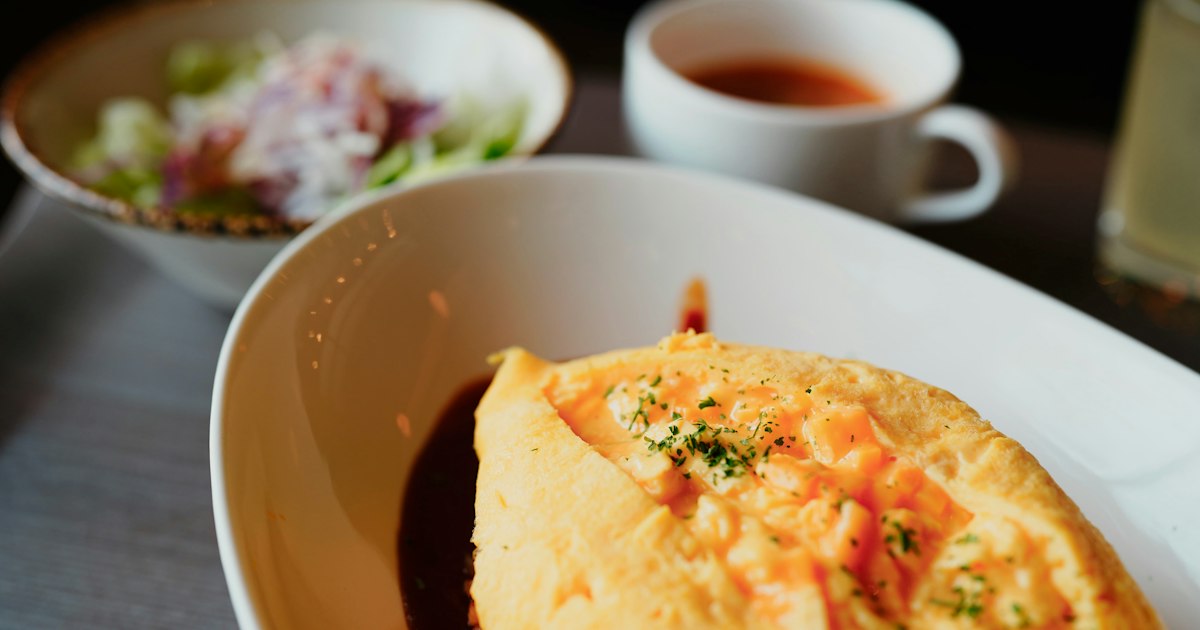
Photo by Leo Okuyama on Unsplash
Order “taco rice” anywhere outside Okinawa and you might get a confused look from the kitchen. On the island, though, it’s a staple — a bowl of warm rice topped with seasoned taco meat, shredded cheese, lettuce, tomato, and salsa, eaten with a spoon rather than folded into a tortilla. It’s one of the clearest edible reminders of Okinawa’s decades-long relationship with the US military, and it’s genuinely good, cheap, and easy to find once you know where to look.
What Taco Rice Actually Is
Taco rice swaps the tortilla for a bed of steamed white rice, then piles on taco-seasoned ground beef (or pork, or a mix), a handful of shredded lettuce, a few cubes of tomato, melted cheese, and a drizzle of salsa or ketchup-based sauce. Many shops offer a fried egg on top as an add-on, and most places leave a bottle of koregusu — Okinawa’s fiery awamori-steeped chili liquor — on the table so you can heat it up yourself. The flavor profile sits somewhere between American Tex-Mex and Japanese home cooking: familiar, salty, a little sweet, and very filling for the price.
Where It Began: Kin Town and Parlor Senri
Taco rice was invented in 1984 by Matsuzo Gibo, owner of a small restaurant called Parlor Senri in Kin Town, a small municipality on Okinawa’s eastern coast right next to Camp Hansen, one of the US Marine Corps bases on the island. Gibo wanted something filling and cheap for young Marines who didn’t have much money or time between duty shifts, so he built taco fillings on top of rice instead of a tortilla. The dish spread from base-adjacent diners into mainstream Okinawan food culture over the following decades, and it’s now sold everywhere from convenience stores to izakaya menus across the prefecture.
Parlor Senri (パーラー千里) is still open in Kin Town today, serving the original-recipe taco rice for around ¥850–¥950. It’s a modest, old-school diner rather than a polished tourist stop, open roughly 11:00–20:00 most days, though hours can shift without much notice, so it’s worth calling ahead if you’re making a special trip. Kin Town itself has no train access — you’ll need a rental car, and it’s about a 60–75 minute drive north from Naha along the Okinawa Expressway and Route 329.
Best Places to Try It Without a Rental Car
If you’re based in Naha or don’t want to drive, you still have good options. King Tacos, a local chain with several locations around the base towns of Kin and Okinawa City, is the most famous name in taco rice and sells a basic order for roughly ¥500–¥650 — cash often preferred, and some branches are stall-style with outdoor seating only. For travelers staying near central Naha, Chatan’s American Village area (accessible by bus from Naha, or by taking the Yui Rail to a station with onward bus connections) has several American-influenced diners and bars serving taco rice alongside burgers and tacos proper, which makes it an easy half-day outing without a car.
You don’t even need a sit-down restaurant to try it: Okinawan convenience stores, especially Lawson locations, sell taco rice onigiri and bento boxes for about ¥200–¥350, which is a perfectly legitimate (and fast) way to sample the dish if you’re short on time between flights or sightseeing stops.
Budget, Mid-Range, and Splurge Versions
- Budget (¥200–¥650): Convenience store onigiri/bento, or a basic plate at King Tacos or a small local diner. Fine for a quick, authentic taste.
- Mid-range (¥700–¥1,200): Sit-down diners and casual restaurants in Chatan or Okinawa City that add a fried egg, extra cheese, or a side of Okinawan soba. A&W Okinawa — the root beer chain that’s unique to the island — also serves a taco rice plate with onion rings for around ¥900–¥1,100.
- Splurge (¥1,300+): A handful of resort hotel restaurants and modern Okinawan cafés plate taco rice as a composed dish with premium Okinawan beef, local Agu pork, or an upgraded cheese blend. It’s not a dish with a true “luxury” tier the way kaiseki or wagyu is, so spending more mainly buys you a nicer setting and bigger portions rather than a fundamentally different experience.
Getting There and Timing Your Visit
Most of the dish’s heartland — Kin, Camp Hansen’s surroundings, and the central-east coast — requires a rental car, since Okinawa’s rail network is limited to the short Yui Rail line in Naha. If you’re not driving, Chatan and American Village are the practical compromise: reachable by bus, walkable once you’re there, and dense with options. Any season works for eating taco rice itself, but if you’re road-tripping up to Kin Town, avoid the peak of typhoon season (August–September), when heavy rain and occasional road closures can derail day trips. Spring and early winter (outside Japan’s Golden Week and the Silver Week holiday cluster, when domestic tourist traffic spikes) tend to be the calmest times to explore Okinawa’s base towns without crowds or inflated accommodation prices.
Common Mistakes to Avoid
- Expecting Mexican flavors: Taco rice seasoning is a Japanese interpretation of Tex-Mex, closer to a mildly spiced ketchup-and-cumin beef than anything from an actual taqueria. Go in expecting Japanese comfort food, not Mexican food, and you won’t be disappointed.
- Skipping the koregusu: The dish is often served fairly mild. A few drops of the table chili liquor (it’s potent — start with one or two drops) brings it much closer to how locals actually eat it.
- Assuming every place looks like a restaurant: Some of the best-known spots, including King Tacos branches, are stalls or windows with a few plastic tables outside. Don’t drive past them looking for a storefront.
- Not checking hours before a long drive: Small, family-run diners in Kin Town and Okinawa City sometimes close early, take irregular holidays, or sell out of ingredients. If a specific shop is the goal of your day trip, call ahead or check recent reviews the morning of your visit.
Why It’s Worth Seeking Out
Taco rice is a small, edible piece of Okinawa’s postwar history — a dish born out of necessity near a military base that became a genuine regional comfort food, the way other Japanese regions have turned outside influences and local ingredients into dishes travelers now seek out on purpose, from Nagasaki’s champon to Morioka’s jajamen. It’s cheap, it’s filling, and unlike a lot of “must-try” foods, it’s genuinely hard to find outside Okinawa — so eat it while you’re there.