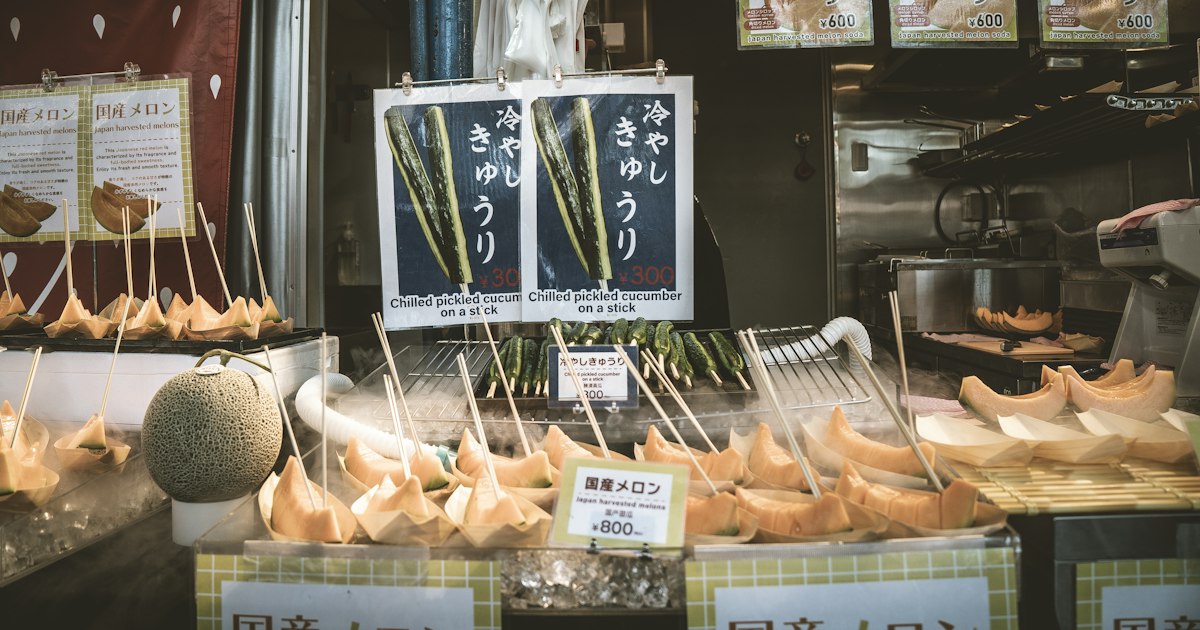
Photo by Alexandre Valdivia on Unsplash
If you’ve ever seen a news photo of two melons selling for millions of yen at a Sapporo auction, you’ve met Japan’s strangest luxury category: fruit. Yubari King and Crown melons aren’t just expensive snacks — they’re a cornerstone of Japan’s gift-giving culture, wrapped in straw netting and presented in wooden boxes like jewelry. This guide explains why they cost what they cost, when to go looking for one, where to actually buy one as a visitor, and — importantly — whether you can bring one home.
What Makes These Melons So Expensive
Yubari King is a cantaloupe-type muskmelon grown almost exclusively in Yubari, a small city in central Hokkaido known for volcanic, well-drained soil that’s ideal for melon cultivation. Each vine is pruned down to a single fruit so all the plant’s sugar goes into one perfect melon, and farmers hand-check sweetness with a refractometer before anything goes to market. The result is intensely sweet, orange-fleshed fruit with almost no fibrous texture.
Crown melon comes from Shizuoka Prefecture and is grown in temperature-controlled greenhouses year-round. The name comes from Yamamoto Noen, the Fujinomiya-based grower who registered “Crown Melon” as a brand in the 1960s — each one still gets a small crown-shaped leaf tag as a seal of authenticity. Crown melons are the classic choice for Tokyo-area depachika gift counters, while Yubari King is the Hokkaido specialty most associated with the headline-grabbing auctions.
The famous first-of-season auction at Sapporo’s central wholesale market is a marketing event as much as a sale — a pair of the season’s first Yubari King melons has fetched as much as 5 million yen (roughly $45,000) in a record year, 2019. Those auction melons are bought by hotels, restaurants, and companies purely for the publicity; the actual melons most shoppers buy cost a tiny fraction of that.
When to Buy: Season and Timing
Yubari King season runs from late May through September, with peak quality and peak availability from mid-June through July. The first-of-season auction happens in late May, but the melons sold at that auction are the absolute earliest harvest — ordinary, excellent-quality fruit becomes widely available a few weeks later. Crown melon, grown in greenhouses, is sold year-round, though quality and selection are best from early summer into autumn.
If your trip lands outside peak Hokkaido melon season, you’ll still find Crown melons at Tokyo and Osaka department stores any time of year — just expect Yubari King selection to thin out from autumn through spring.
Japan’s Gift-Giving Culture Around Melons
Melons sit near the top of Japan’s seasonal gift hierarchy, alongside premium wagyu and sake, because of two mid-year and year-end gift traditions: ochugen (mid-summer gifts, typically sent in July) and oseibo (year-end gifts, sent in December). A beautifully boxed melon signals real respect — for a boss, a client, a doctor, or in-laws — in a way that’s hard to replicate with cheaper gifts. This is also why department stores will gift-wrap and ship a melon directly to the recipient’s address for a small additional fee, usually 500–1,500 yen, rather than handing you a loose piece of fruit.
Where to Buy One in Japan
You don’t need to travel to a farm to buy an excellent melon. The easiest option is a depachika — the gourmet food basement of a major department store. Isetan Shinjuku, Takashimaya Shinjuku, and Mitsukoshi Nihombashi all stock Yubari King and Crown melons in season, individually boxed with prices clearly marked.
For something more theatrical, visit Senbikiya, Japan’s oldest fruit specialty retailer (founded in 1834), which has boutique-style shops in Nihonbashi, Ginza, and Shinjuku. Senbikiya sells boxed melons for gifting and also runs fruit parlors where you can eat a few slices or a melon parfait without committing to a whole fruit.
If you’re actually in Hokkaido, Yubari itself is worth the detour. JA Yubari’s direct sales outlets and the roadside “Yubari Melon Dome” area sell fresh melons and melon soft-serve straight from the growing region, generally at better prices than you’ll find in Tokyo. Note that the old rail line into Yubari was discontinued in 2019 and replaced by bus service, so the easiest route from Sapporo is a direct bus or rental car, about 1.5 hours each way. If Hokkaido is on your itinerary, pairing a melon stop with a day in Otaru or stocking up on regional snacks at a Seicomart along the way makes for an efficient Hokkaido loop.
Budget, Mid-Range, and Splurge Options
You don’t have to spend a fortune. Here’s roughly what to expect:
- Budget (2,000–4,000 yen): Smaller or slightly imperfect-shaped Yubari King melons sold as “家庭用” (household grade) at Hokkaido supermarkets and direct-sale stands — same flavor, less cosmetic perfection.
- Mid-range (5,000–12,000 yen): A standard gift-grade Yubari King or Crown melon, properly boxed, from a depachika or Senbikiya. This is the typical price point for an ochugen or oseibo gift.
- Splurge (15,000–50,000+ yen): Extra-large, perfectly round, highest sweetness-grade melons, often sold as matched gift sets or during the early-season window when supply is tightest. Auction-grade fruit at six or seven figures in yen is essentially a collector’s item and not something you’ll find at retail.
Can You Ship or Bring One Home?
This is the part most visitors get wrong. Fresh melons cannot be legally brought into most countries, including the US, EU nations, Australia, and Canada, because of agricultural quarantine restrictions on fresh fruit — there’s no amount of extra customs paperwork that fixes this for a perishable item bought on a casual trip. Assume you will need to eat the melon (or give it to someone) while you’re still in Japan.
Domestic shipping within Japan is simple and common: department stores and Yubari direct-sale outlets will arrange takkyubin (courier) delivery anywhere in Japan, including to a hotel you’ll be staying at later in your trip or to a Japanese friend or business contact. This is exactly how ochugen and oseibo gifts are typically sent — the giver often never physically hands over the box.
If you’re hoping to buy a melon online before your trip the way you might shop for crafts or collectibles on Mercari Japan, don’t — fresh fruit isn’t practical to ship internationally through secondhand marketplaces, and most sellers won’t attempt it. Treat Mercari-style platforms as useful for durable goods, not perishables.
Common Mistakes to Avoid
- Assuming “Yubari” on the label means genuine Yubari King. Only melons grown by JA Yubari-affiliated farmers under its grading system can legally use the Yubari King name — look for the official sticker.
- Buying a melon at the start of a multi-week trip. These are ripe, soft fruit, not souvenirs — buy near the end of your trip or arrange direct shipping to your final hotel.
- Expecting airport duty-free shops to stock them. Fresh melon isn’t a typical airport item; buy from a depachika or direct-sale outlet instead, and plan to eat it well before you fly.
- Confusing the auction headline price with the retail price. The millions-of-yen auction melons are a tiny, symbolic batch — everyday Yubari King and Crown melons are genuinely affordable luxury, not unattainable.
A good melon won’t fit in your suitcase, but understanding why it costs what it costs — and how it fits into Japan’s gift-giving calendar — is its own small window into how seriously the culture takes thoughtful, seasonal giving.