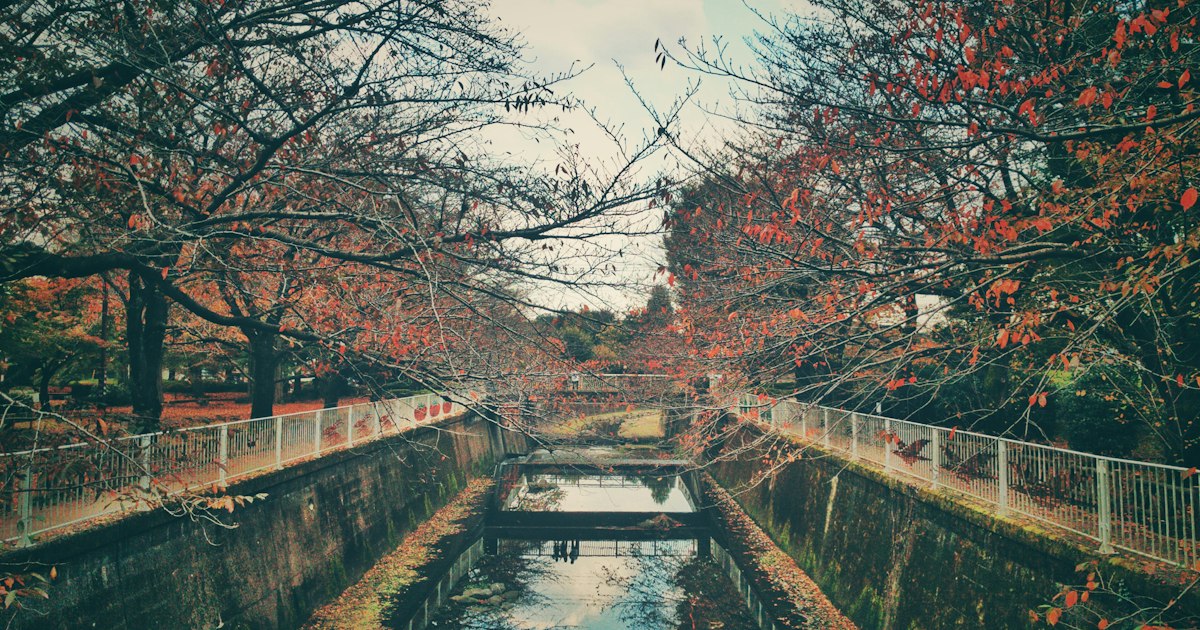
Photo by El Salanzo on Unsplash
Most first-time visitors to Tokyo never make it east of the Sumida River, and that’s exactly why Monzen-Nakacho is worth the detour. This Koto City neighborhood grew up around a shrine gate (the name literally means “in front of the gate”) and still feels like a working Tokyo district rather than a tourist set piece — shopping arcades selling senbei and tsukudani, old timber-merchant canals, and a Japanese garden that rarely gets crowded even on weekends. It pairs naturally with a half-day loop that takes in Kiyosumi Gardens, a historic shrine and temple, and a stretch of the Sumida River.
Getting There
Monzen-Nakacho Station is served by two lines: the Tokyo Metro Tozai Line and the Toei Oedo Line. From Otemachi or Nihonbashi, it’s about 7–10 minutes on the Tozai Line; from Shinjuku, figure roughly 20–25 minutes via the Oedo Line. If you’re coming straight from the airport, check Narita to Haneda (and Back): Routes, Time & Cost Compared first, since your arrival airport determines whether a quick transfer through Tokyo or Nihonbashi stations makes more sense before heading out this way.
One nuance worth knowing in advance: Kiyosumi Gardens is actually closer to Kiyosumi-Shirakawa Station (Toei Oedo Line / Tokyo Metro Hanzomon Line, one stop from Monzen-Nakacho), about a 3-minute walk from exit A3. Monzen-Nakacho Station is the right stop for the shrine, temple, and shopping street, but if the garden is your main goal, riding one extra stop saves a 15-minute walk.
Kiyosumi Gardens: A Quiet Edo-Era Stroll
Kiyosumi Gardens (清澄庭園) is a strolling garden built around a central pond, originally developed in the Meiji era on the site of an Edo-period merchant’s villa. It’s small enough to cover in 45–60 minutes but landscaped with enough variety — stepping stones across the water, a teahouse, stone lanterns, and rocks shipped in from around Japan — that it doesn’t feel rushed.
- Hours: 9:00 AM–5:00 PM (last entry 4:30 PM), open daily except December 29–January 1
- Admission: ¥150 for adults, ¥70 for visitors 65 and older, free for junior high school age and younger
- Best for: plum blossoms in February, fresh green in May, and koyo (autumn leaves) in late November to early December
Unlike Shinjuku Gyoen or Rikugien, Kiyosumi rarely sees tour groups, so it’s a good option if you want garden photos without other people in every frame.
Tomioka Hachimangu and Fukagawa Fudodo
Near Monzen-Nakacho Station itself are two adjacent religious sites worth pairing together. Tomioka Hachimangu, founded in 1627, is historically tied to sumo — the shrine grounds hold stone monuments listing the names of every yokozuna champion, a relic of the era when the sport’s early tournaments were held here. On the 1st, 15th, and 28th of every month (weather permitting), the shrine grounds host a sizeable antique and flea market running from early morning until mid-afternoon, free to browse, with vendors selling old ceramics, kimono fabric, and vintage odds and ends.
Right next door, Fukagawa Fudodo is a striking temple whose main hall is covered in gold Sanskrit characters. Several times a day, priests perform a goma fire ritual — chanting and drumming while burning wooden prayer sticks in front of the altar. It’s loud, dramatic, and free to watch from the hall; if your visit lines up with a session (times are posted at the entrance and shift slightly through the year), it’s worth staying for the full 20–30 minutes.
Along the Sumida River and Kiba Park
Kiyosumi Gardens actually borders a canal (Sendaibori) rather than the Sumida itself, but the river is only a few minutes’ walk further east. Eitai Bridge and Kiyosu Bridge both offer unobstructed river views and are far less photographed than the bridges near Asakusa, which makes for a calmer walk at sunset. If you want more green space, Kiba Park, a short ride away on the Tozai Line, is a large riverside park popular with local families and a good cherry blossom spot in late March/early April that doesn’t draw the Ueno-sized crowds.
Where to Eat: Fukagawa-meshi and Local Favorites
The neighborhood’s signature dish is Fukagawa-meshi (also called Fukagawa-don) — asari clams simmered in a savory broth and served over rice, sometimes poured tableside like a donburi. It’s a working-class Edo-period fisherman’s dish that’s survived at a handful of long-running restaurants near the shrine, with set meals typically running ¥900–¥1,600. For a faster, cheaper option, the shopping arcade near the station has standing noodle counters and bakeries; if you’re the type who likes Tokyo’s quicker counter-dining culture in general, Tachigui Sushi: Tokyo’s Standing Sushi Bars for a Fast, Affordable Meal covers that style of eating elsewhere in the city. On a cooler day after a garden walk, a bowl of warm red bean soup is a good way to thaw out — see Zenzai & Oshiruko: Japan’s Warm Red Bean Soup Dessert and Where to Try It for what to order and where it tends to show up on menus.
Budget: convenience store onigiri and a garden bench, ¥300–500. Mid-range: a Fukagawa-meshi set lunch, ¥900–1,600. Splurge: a multi-course kaiseki dinner at one of the area’s quieter traditional restaurants, which can run ¥8,000–¥15,000 per person — worth reserving ahead since English menus are not guaranteed.
Best Time to Visit
Spring (late March–early April) and autumn (mid-November to early December) are the strongest windows, when the garden and riverside trees are at their best and temperatures are comfortable for walking. Summer is viable but humid with little shade along the river. If you’re planning around Japan’s broader holiday calendar, note that late September’s Silver Week can bring extra domestic travelers through Tokyo generally; see Japan’s Silver Week: The Autumn Holiday Cluster and How to Plan Around It if your trip overlaps with it, though Monzen-Nakacho itself stays noticeably calmer than central Tokyo even then.
Common Mistakes to Avoid
- Getting off at the wrong station for the garden. Kiyosumi Gardens is a short walk from Kiyosumi-Shirakawa Station, not Monzen-Nakacho Station — save yourself the extra 15 minutes.
- Showing up on a non-market day expecting stalls. The Tomioka Hachimangu flea market only runs on the 1st, 15th, and 28th of the month; on other days the shrine grounds are quiet and stall-free.
- Confusing this with Tsukishima’s monjayaki district. Monjayaki’s famous “Monja Street” is one Oedo Line stop away in Tsukishima, not in Monzen-Nakacho itself — easy to combine in one afternoon, but they’re different neighborhoods.
- Expecting English signage everywhere. This is a genuinely local district; menus and shop signs are mostly Japanese-only, so a translation app helps more here than it would in Asakusa or Shibuya.
- Visiting the garden right at closing. Last entry is 30 minutes before closing, and staff do enforce it — aim to arrive at least an hour before the 5:00 PM cutoff.
Monzen-Nakacho won’t fill a full day on its own, but as a half-day add-on to a Tokyo itinerary — especially if you’re already heading toward Tsukishima, Kiba, or the Sumida River area — it offers a version of “old Tokyo” that most visitors skip entirely.