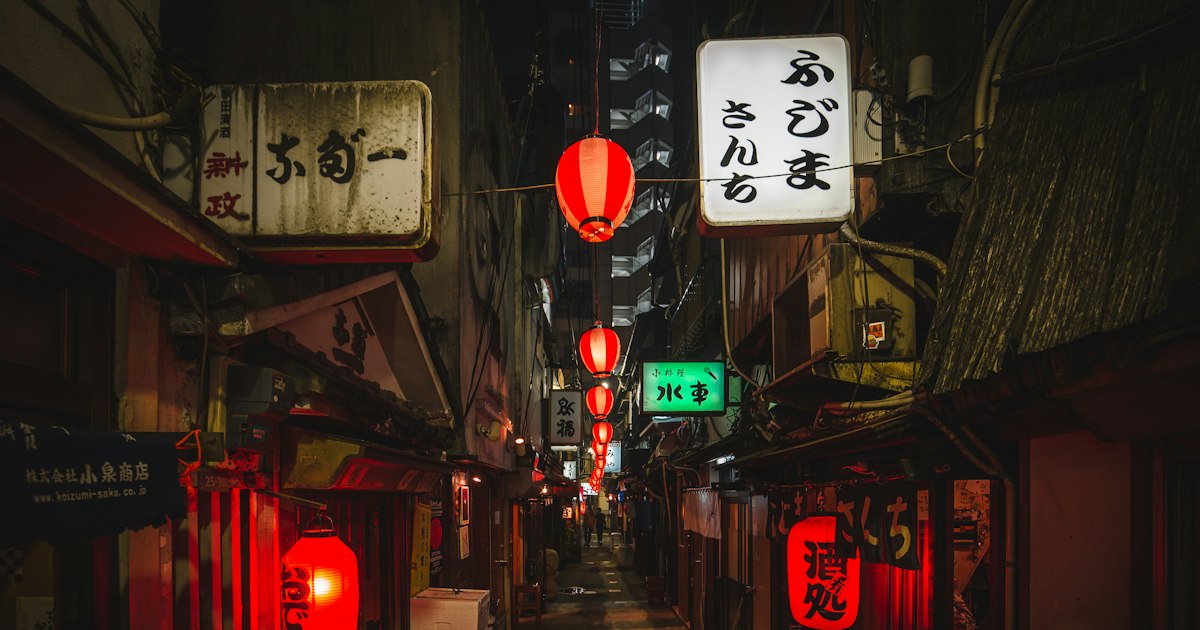
Photo by Denys Nevozhai on Unsplash
Before craft beer, before highball booms, there was Hoppy — a malty, beer-flavored soda invented in postwar Tokyo as a cheap stand-in for the real thing. Locals still drink it the original way: poured over shochu in a frosted mug, in a backstreet izakaya where the stools spill out onto the sidewalk. It’s one of the cheapest, most atmospheric drinking experiences in the city, and almost no foreign visitors know how to order it correctly. Here’s what Hoppy is, where it comes from, and where to actually go drink it.
What Is Hoppy, Exactly?
Hoppy is a hop-flavored malt beverage, not a beer — it’s only around 0.8% ABV on its own, closer to a non-alcoholic cousin of beer than a drink that will get you tipsy by itself. It was developed in 1948 by the Tokyo drinks maker Kokka Jozo, right after the war, when real beer was expensive and heavily taxed. The idea was simple: make something that tasted and foamed like beer, sell it cheap, and let drinkers add their own alcohol. It caught on fast with laborers and factory workers in Tokyo’s old downtown (shitamachi) neighborhoods and never really left.
There are two versions: White Hoppy (the original, pale and crisp) and Black Hoppy (kuro), a darker, maltier version closer to a low-alcohol stout. Most izakaya carry both, and it’s worth trying one of each if you’re drink-hopping.
How Hoppy Is Actually Served
This is the part that trips people up. Hoppy doesn’t come as one drink — it comes as two separate items that you combine yourself:
- Naka (“inside”) — a shot of shochu, served in a mug, usually with ice.
- Soto (“outside”) — a small bottle of the Hoppy soda itself, poured over the shochu at the table.
The standard ratio is roughly one part shochu to five parts Hoppy, sometimes called “Gokugo” (5:1), though regulars who want it stronger order “Rokugo” (6:1 shochu-heavy) and ask staff to pour the naka themselves. Once your glass is empty, the trick is to order another naka (around 300–450 yen) rather than a whole new soto bottle — the leftover ice and residual Hoppy in your glass is enough to mix with the fresh shot, so a new bottle isn’t usually necessary until the fizz is gone. Ordering a full round of both every time is a classic rookie move that burns through money fast.
The Shitamachi Connection
Hoppy is inseparable from Tokyo’s old downtown. Kokka Jozo is headquartered in Kinshicho, east of Asakusa, and the drink’s heartland is the cluster of neighborhoods around there — Kinshicho, Asakusa, Tachikawa, and Kita-Senju — where cheap, open-air izakaya culture never really modernized. The most famous strip is Hoppy Street (Hoppy-dori) in Asakusa, a narrow lane of izakayas with tables spilling onto the pavement, a short walk from Senso-ji and the Asakusa ROX shopping building. It’s touristy by local standards now, but it’s still the easiest place for a first-timer to find an English-friendly menu and an authentic retro atmosphere at the same time. If you want the same drinking culture without the crowds, Kinshicho’s station-side alleys and Tachikawa’s izakaya backstreets serve the same drink to an almost entirely local crowd.
Best Places to Try It
Budget: Any stall on Asakusa’s Hoppy Street — look for shops with handwritten laminated menus and plastic stools. A full round of naka plus soto runs about 700–900 yen, cheaper than a pint of draft beer almost anywhere else in Tokyo. Hoppy Nakamura is one of the street’s best-known names and a good anchor point if you want to orient yourself before wandering to quieter neighbors.
Mid-range: Standing bars (tachinomi) around Kinshicho Station mix Hoppy alongside grilled skewers and oden, with slightly higher prices (naka around 400–500 yen) for table seating and a calmer pace.
Splurge-adjacent: A few modern izakaya and retro-revival bars in Shibuya and Shimokitazawa now put Hoppy on craft-cocktail-style menus for 600–800 yen a round, aimed at younger Tokyoites rediscovering it — a good option if you want the flavor without the plastic-stool atmosphere. For a broader look at Tokyo’s beer-drinking neighborhoods generally, the Ebisu beer-hall district makes a good contrast — polished where Hoppy Street is scruffy, but equally rooted in local drinking history.
Hours, Prices, and Getting There
Asakusa’s Hoppy Street stalls typically open early afternoon, around 11am–3pm depending on the shop, and run until 11pm or midnight — many are built for daytime drinking (hiruzake), so don’t assume you need to wait for evening. Take the Ginza, Asakusa, or Tobu Skytree line to Asakusa Station and walk toward Asakusa ROX; the street is tucked just behind the main Nakamise shopping arcade, not directly on it, so it’s easy to miss on a first pass. Many of the older shops are cash-only, so carry coins and small bills — a night of several rounds plus grilled skewers rarely exceeds 2,500–3,000 yen per person.
Common Mistakes to Avoid
The biggest one: assuming Hoppy itself is alcoholic. Ordering just a bottle of Hoppy with no shochu gets you a drink that tastes like beer but won’t do anything — you need to order the naka alongside it. The second mistake is over-ordering soto bottles instead of naka refills, which wastes money and dilutes the flavor. Third, don’t expect English menus outside Asakusa’s main tourist strip; pointing at a neighboring table’s drink and saying “Hoppy, white” (shiro) or “black” (kuro) works fine. Finally, weekends on Hoppy Street get crowded with tour groups by early evening — a weekday visit around 4–6pm gets you the same izakayas with mostly local regulars.
Best Time to Go
Hoppy is a year-round drink, but it earns its reputation in summer, when the low-alcohol, high-fizz format makes it an easy afternoon sipper in the heat — this is also when outdoor seating on Hoppy Street is at its liveliest. In winter, Black Hoppy’s maltier, warming character makes more sense, paired with a hot pot of oden from the same stall. If you’re building a broader old-Tokyo food crawl, Hoppy pairs naturally with autumn classics like grilled sanma, another shitamachi staple that shows up on the same izakaya menus. And if the shochu side of the equation interests you more than the soda, it’s worth knowing that the spirit itself has a completely different, much more serious drinking culture in Kagoshima, where shochu originates — a useful contrast to the cheap, fizzy, Tokyo-only drink Hoppy represents.