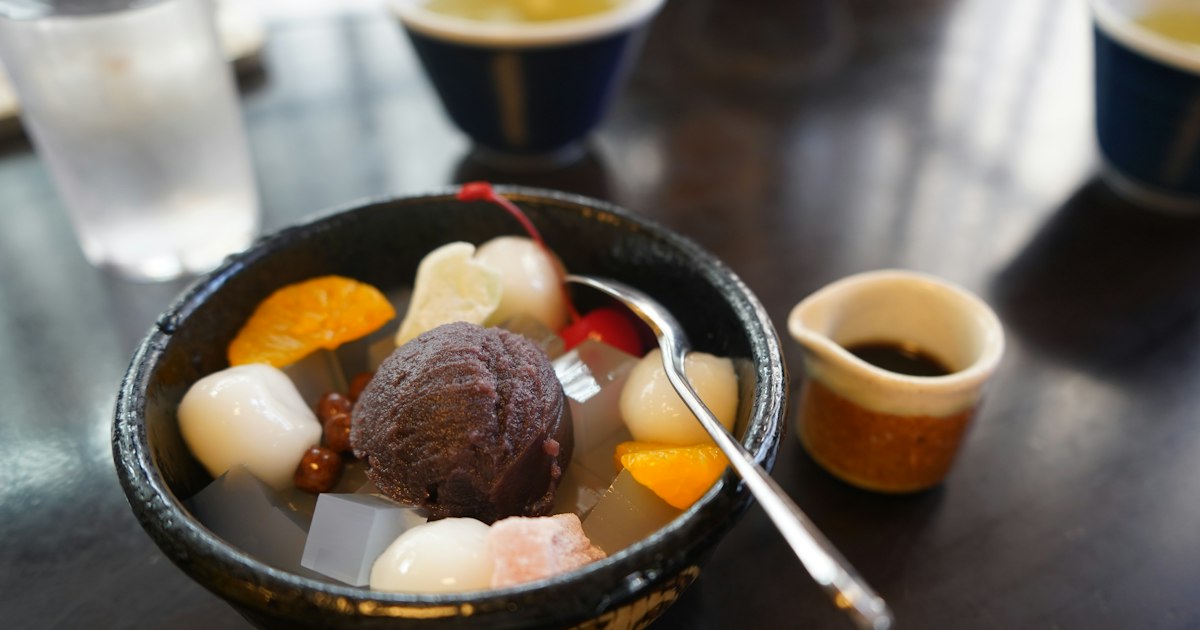
Photo by Yosuke Ota on Unsplash
Long before daifuku and matcha KitKats took over souvenir shelves, youkan (羊羹) was already the gift wagashi of choice in Japan — a dense, jewel-like bar of sweetened red bean paste set with agar. It doesn’t photograph as prettily as a strawberry mochi, but it’s one of the most practical sweets a visitor can buy: it’s shelf-stable, slices neatly, pairs with green tea, and survives a long flight home far better than almost anything else in a Japanese confectionery shop. Here’s how to understand it and where to actually buy it.
What Youkan Actually Is
Youkan is made from anko (sweetened red bean paste, usually azuki), sugar, and kanten (agar, a seaweed-derived gelatin substitute). The mixture is cooked down and set in a rectangular mold, then sliced into thick, glossy pieces. The texture is firm and dense — closer to a stiff fruit jelly or thick pâte de fruit than to the chewy rice-based sweets most visitors already know, like daifuku or sakura mochi. It’s eaten in thin slices, usually with hot green tea, and is one of the oldest confectionery traditions in Japan, with some shops tracing their recipes back over 400 years.
The Three Types You’ll See
Not all youkan is the same, and knowing the difference helps you buy the right one for your trip:
- Neri youkan — the classic, dense “kneaded” style. This is the long-lasting, travel-friendly version, with an unopened shelf life often measured in months at room temperature. This is the one to buy as a souvenir.
- Mizu youkan — a lighter, softer, more watery version served chilled, mostly as a warm-weather treat (though in Hokuriku and Hokkaido it’s traditionally eaten in winter around the kotatsu, which surprises a lot of first-time visitors). It needs refrigeration and spoils within days, so it’s not a good choice to pack for later.
- Kuri youkan — neri youkan studded with whole chestnuts, often sold as a premium autumn/winter gift item.
You’ll also find matcha, white bean (shiro-an), and kuromitsu brown-sugar versions, especially at specialty shops.
Where to Buy It in Tokyo
Toraya is the name most associated with youkan in Japan, with records going back to the late 1500s. The Akasaka main store (Toraya Akasaka Honten, 4-9-22 Akasaka, Minato-ku) is open daily, roughly 9:00–18:00, and is about a 7-minute walk from Akasaka Station (Chiyoda Line) or Nagatacho Station. A single bar of standard neri youkan runs about ¥900–1,300; small gift boxes of three mini bars are around ¥1,600–2,200. Toraya also has counters inside Tokyo Midtown and most major department stores.
Funawa in Asakusa, a short walk from Senso-ji, has been making wagashi since 1902 and is especially known for imo-youkan (a sweet-potato version shaped like classic youkan) alongside standard red bean bars, from around ¥500–900 per piece. It’s open daily, roughly 9:00–20:00, and makes a natural stop if you’re already exploring Asakusa or taking the Tokyo Water Bus from Asakusa to Odaiba.
Eitaro Sohonpo in Nihonbashi (founded 1818) is another long-running option worth seeking out if you’re near Nihonbashi Station, with classic bars priced similarly to Toraya’s.
For one-stop comparison shopping, the depachika (basement food halls) of department stores like Isetan Shinjuku, Mitsukoshi Nihonbashi, or Takashimaya carry several regional youkan brands side by side, typically open 10:00–20:00. It’s the easiest way to sample different makers without crossing town.
Worth the Trip in Kyoto
Kyoto is where a lot of wagashi culture originates, and Toraya itself traces its roots there before opening in Tokyo. If you want a more dedicated experience, seek out Ozasa, a small Kyoto shop famous for mizu youkan sold in limited daily quantities — it regularly sells out and draws a line, so go early (shops like this typically open around 9:00–10:00 and can close once stock is gone). Because mizu youkan needs refrigeration and doesn’t keep, treat this as something to eat in Kyoto, not to carry home.
Budget, Grab-and-Go, and Splurge Options
Youkan scales from convenience-store snack to formal gift, which makes it flexible for different budgets:
- Budget (~¥130–160 each): Morinaga and similar brands sell individually wrapped mini youkan tubes at convenience stores (7-Eleven, Lawson, FamilyMart) and supermarkets nationwide. These are genuinely popular with hikers and commuters as a compact, non-melting energy snack — easy to toss in a daypack.
- Mid-range (~¥900–2,500): A single bar or small boxed set from Toraya, Funawa, or Eitaro makes a solid, presentable souvenir or omiyage for coworkers.
- Splurge (~¥3,000–6,000+): Larger lacquered or seasonal gift boxes with multiple flavors (kuri, matcha, kuromitsu), often sold around New Year or autumn, make an impressive gift for a host or client back home.
If you’re stocking up on shelf-stable Japanese snacks generally, it’s also worth knowing Costco Japan sometimes carries large multipacks of packaged wagashi-style sweets at bulk prices, though selection varies by store and season — don’t make a special trip just for youkan.
Common Mistakes to Avoid
- Buying mizu youkan early in your trip. It needs refrigeration and spoils within days — buy the dense neri youkan instead if you’re carrying it for more than a day or two.
- Assuming it’s mochi. First-timers sometimes expect the chewy texture of daifuku and are thrown off by youkan’s firm, jelly-like bite. It’s meant to be sliced thin and eaten slowly with tea, not bitten into like candy.
- Overpaying at the airport. Narita and Haneda souvenir shops stock boxed youkan (often ¥1,000–3,000) for convenience, but the same or better selection is usually cheaper at the original shop or a depachika — airport prices often run 10–20% higher.
- Using a dry knife to cut it at home. Youkan is sticky; wet the blade with water before slicing for clean, shiny cuts like you see in shop displays.
Packing It for the Trip Home
Unopened neri youkan in its original wrapping is one of the easiest Japanese sweets to fly home with — no refrigeration required, and most boxed versions are vacuum-sealed or individually wrapped with a shelf life of several months. It’s a reliable gift for someone who also likes other traditional red bean sweets, such as monaka or the seasonal rice cakes served during Higan. Just check your home country’s customs rules on bringing in food containing beans or plant material — most processed, sealed confectionery is fine, but a handful of countries (Australia and New Zealand in particular) have stricter agricultural import rules worth a quick check before you fly.