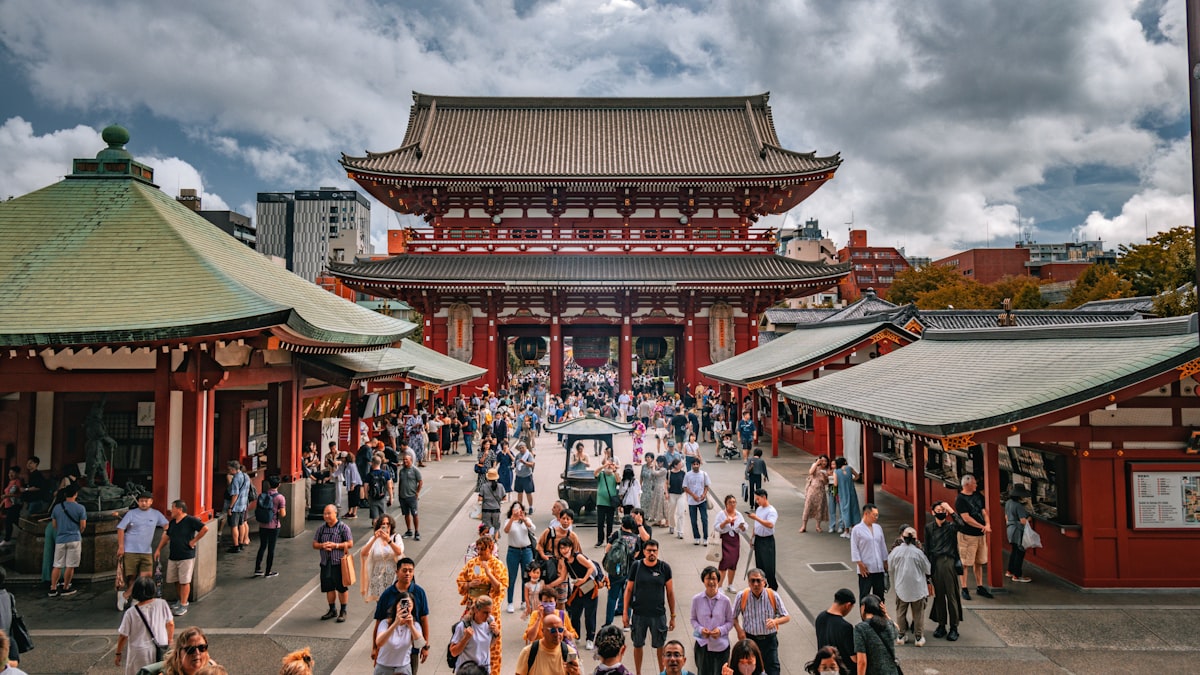
Asakusa is old Tokyo — home to the city’s most famous temple, rickshaws, traditional snacks, and craft shops. It’s the go-to district for a taste of pre-modern Japan. Here’s how to visit.
What to see
- Senso-ji — Tokyo’s oldest and most famous temple, with the giant red Kaminarimon “Thunder Gate” lantern.
- Nakamise-dori — the bustling shopping street leading to the temple, full of snacks and souvenirs.
- Tokyo Skytree — the towering broadcast tower is a short walk/ride away, with observation decks.
- Sumida River — take a scenic river cruise from here toward Odaiba.
Traditional experiences
- Rent a kimono and stroll the old streets — see our kimono & yukata guide.
- Rickshaw ride with an English-speaking puller.
- Street snacks — melonpan, ningyo-yaki, senbei; more in must-try food.
Shopping
- Nakamise-dori for classic souvenirs (fans, chopsticks, yukata).
- Nearby Kappabashi — the kitchenware street for knives and realistic food samples; see Japanese knives.
Getting there & tips
- Asakusa Station (several lines) — grab an IC card.
- Go early morning to see Senso-ji before the crowds and get better photos.
- Great half-day; pair with Skytree or a river cruise. See our Tokyo guide.
What things cost in Asakusa
- Senso-ji itself is free to enter; a rickshaw ride runs JPY 4,000-10,000 depending on length and number of passengers, priced per rickshaw rather than per person, which makes it more economical for pairs.
- Nakamise-dori snacks run JPY 200-500 each — budget JPY 1,500-2,000 to graze your way down the street trying several without committing to a sit-down meal.
- A basic kimono rental for a few hours runs JPY 3,000-6,000, while a full-day higher-end set with hair styling can run JPY 8,000-15,000.
Common mistakes to avoid
- Arriving at Senso-ji at midday — it’s one of the most visited sites in Japan and gets genuinely crowded by 10am; an early-morning visit (before 8am) gives you a completely different, peaceful experience of the same temple.
- Skipping the smaller side streets around Nakamise — the main strip is the most crowded and touristy part of Asakusa; the quieter lanes just off it often have better craft shops and more authentic old-Tokyo atmosphere.
- Not checking Skytree ticket tiers before buying — the lower Tembo Deck is meaningfully cheaper than the higher Tembo Galleria and offers a nearly identical view for most visitors.
Combining with a river cruise
A Sumida River cruise from near Azumabashi Bridge toward Odaiba or Hama-rikyu Gardens gives a completely different view of Tokyo than the street-level Asakusa experience, gliding past the Skytree and under a series of distinctive bridges — a relaxing way to transition from old Tokyo to the modern waterfront without another train ride.
Kappabashi for cooks and collectors
The kitchenware street just north of Senso-ji is worth a dedicated stop even if you’re not shopping for a knife — the shockingly realistic plastic food samples (sampuru), used as restaurant window displays across Japan, make an unusual and genuinely fun souvenir that photographs well and packs better than you’d expect.