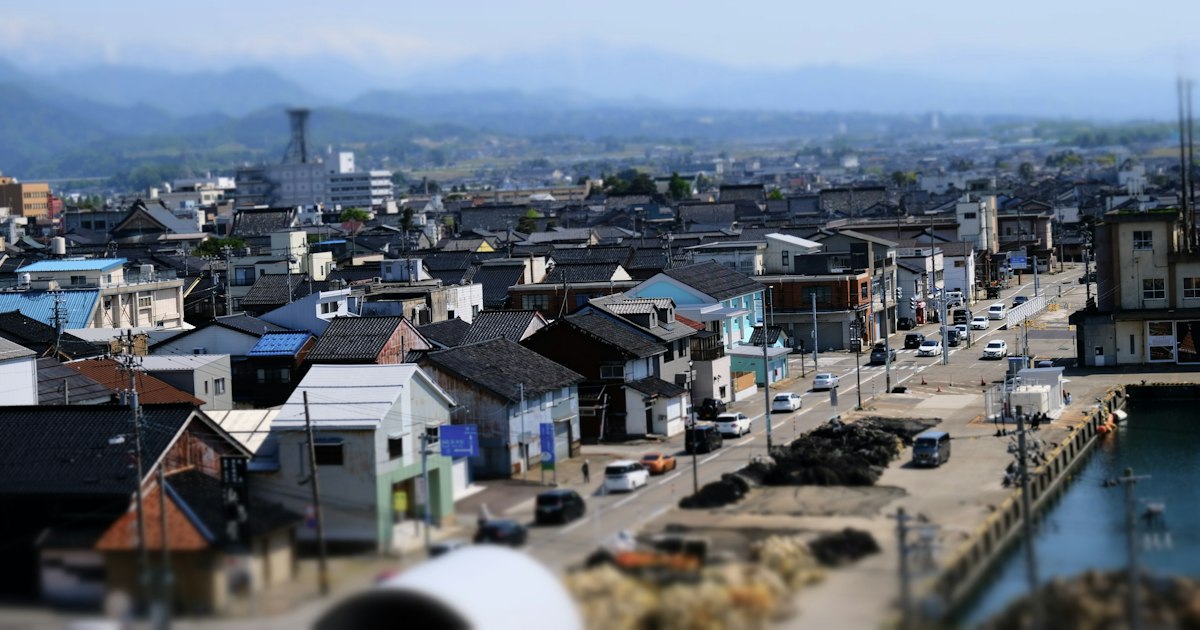
Photo by WANG Tianfang on Unsplash
Most travelers crossing the Alps between Takayama and Nagoya never notice the exit sign for Gujo Hachiman — and that’s exactly why it’s worth taking. This small Gifu castle town is built around snowmelt-fed canals so clear that locals still wash vegetables in them and koi swim in roadside troughs, and for one month every summer it turns into the site of Japan’s longest dance festival, when the entire town fills the streets and dances until sunrise. It’s an easy day trip or overnight stop between the more famous stops on the Takayama–Shirakawa-go circuit, and it rewards the detour with almost none of the crowds.
Why Gujo Hachiman Is Worth the Detour
The town sits at the confluence of the Yoshida and Nagara rivers, and its identity is built entirely around water. Sogi-sui, a spring-fed water source behind a small shrine near the castle base, was one of the first sites in Japan designated among the country’s “100 famous waters,” and it still supplies drinking water for free to anyone who stops with a bottle. Walk the old merchant streets and you’ll pass dozens of hida-gawa — small stone washing basins fed by diverted canal water, where households rinse dishes and vegetables as they have for generations. It’s a genuinely lived-in town rather than a preserved museum piece, which is part of the charm.
Above it all sits Gujo Hachiman Castle, a wooden reconstruction (Japan’s oldest wooden reconstructed castle keep, built in 1933) perched on a forested hill. The climb up is steep but short, and the view over the town’s tiled roofs and river confluence is one of the better castle views in the Chubu region — less crowded and arguably more atmospheric than Himeji Castle, if you’re comparing castle visits on a longer Japan itinerary.
Getting There
Gujo Hachiman doesn’t have its own Shinkansen or JR station, so most visitors arrive by highway bus or car. The simplest route is the Meitetsu or JR bus from Nagoya’s Meitetsu Bus Center to “Gujo-Hachiman IC” or the “Gujo-Hachiman Johoku” bus stop, which takes roughly 80–90 minutes and costs around ¥2,500–3,000 one way. From Gifu City, local buses run less frequently (check Gifu Bus schedules in advance — service thins out considerably on weekdays). If you’re coming from Takayama or Shirakawa-go, there’s a seasonal/limited bus connection, but renting a car for the Hida–Gujo leg of the trip is far more reliable and gives you flexibility for the surrounding gorges and villages. There’s no train station in the old town itself; the nearest railway stop, Gujo-Hachiman Station on the Nagaragawa Railway, is a scenic but slow local line from Mino-Ota, useful mainly if you’re combining it with other Gifu river-town stops.
Once in town, everything is walkable — the castle, the old streets, and Sogi-sui spring are all within a 20–25 minute walk of each other.
Gujo Odori: The All-Night Dance Festival
The reason most Japanese travelers know Gujo Hachiman at all is Gujo Odori, a Bon dance festival that runs on scattered nights from mid-July through early September — roughly 30 nights in total, making it one of the longest-running folk dance festivals in Japan. On ordinary nights, dancing runs from about 8pm to 10:30pm in a rotating set of locations around town, and anyone can join in; the dances are simple enough to pick up by watching for a few minutes, and no costume is required, though a yukata adds to the atmosphere.
The festival’s centerpiece is the Tetsuya Odori (all-night dancing) period, usually four nights in mid-August (around August 13–16, overlapping with Obon), when dancing continues literally until dawn, with musicians on a raised float and thousands of participants circling through the streets in yukata. This is the only night of the year it’s genuinely an all-night event — on the other scheduled nights it ends at a normal hour. If an all-night dance is the specific experience you’re after, confirm the exact dates for the current year with the Gujo Hachiman Tourism Association before booking travel, since the schedule shifts slightly year to year.
Yukata rental shops pop up around town during festival season, generally ¥3,000–5,000 for a same-day rental including obi and geta sandals. If you’re bringing your own and plan on a warm, sweaty night of dancing, a handheld electric fan is genuinely useful gear here — Gifu summers are hot and humid, and dancing until midnight in a yukata without one is miserable.
Best Time to Visit
For the festival itself, mid-August is the obvious window, but it’s also the busiest and hottest time to visit — accommodation in town books out months ahead for the Tetsuya Odori nights, so reserve early or stay in Gifu City/Mino and bus or drive in for the evening. For a quieter visit focused on the water town atmosphere and castle rather than the dancing, April–May (mild weather, fewer tourists) or October–November (autumn color on the hills above town) are more comfortable. Winter is very quiet and some facilities reduce hours, but the clear canals and snow on the castle hill have their own appeal if you don’t mind the cold.
Food and Where to Eat
Gujo is famous within Japan as the birthplace of the plastic/wax food replica industry — several workshops in town let you make your own fake tempura or lettuce keychain for about ¥1,500–3,500, a genuinely fun hour if you’re traveling with kids. For real food, look for hoba miso (miso grilled on a magnolia leaf) and the town’s soba, both common on lunch menus near the old streets. If you want something more universally comforting after a long day of walking, a bowl of ochazuke or a plate of korokke from a small local shop is an easy, inexpensive option — budget ¥800–1,200 for a simple set lunch, or ¥2,000–3,000 for a sit-down dinner with hoba miso and local trout.
Common Mistakes to Avoid
- Assuming every night is an all-night dance. Only the mid-August Tetsuya Odori nights run until dawn; other festival nights wrap up by 10:30pm.
- Not checking bus schedules back out. Local and highway buses to Gujo Hachiman run infrequently outside peak season, and the last bus back to Nagoya or Gifu can be earlier than expected — confirm the return time before you commit to staying for the evening dance.
- Underestimating the heat. August in Gifu’s inland valleys is brutally humid; carry water (Sogi-sui spring water is free and safe to drink) and dress light under any yukata.
- Treating it as a quick photo stop. The town rewards slow wandering — the washing basins, narrow alleys, and castle views are easy to miss if you rush through in under an hour.
Practical Notes
Gujo Hachiman Castle is open roughly 9am–5pm (shorter in winter, extended in peak summer), admission around ¥320 for adults. Most shops and the tourist information office near the old town are open 9am–5pm. There’s no large grocery or convenience chain presence in the old streets themselves, so stock up on snacks or supplies if you’re coming from a bigger city before arriving — if you’re also weighing how much cash and pre-arranged documentation to carry on a multi-stop Japan trip, it’s worth sorting your Visit Japan Web registration before you leave home so entry and tax-free paperwork are already done.