Photo by bady abbas on Unsplash
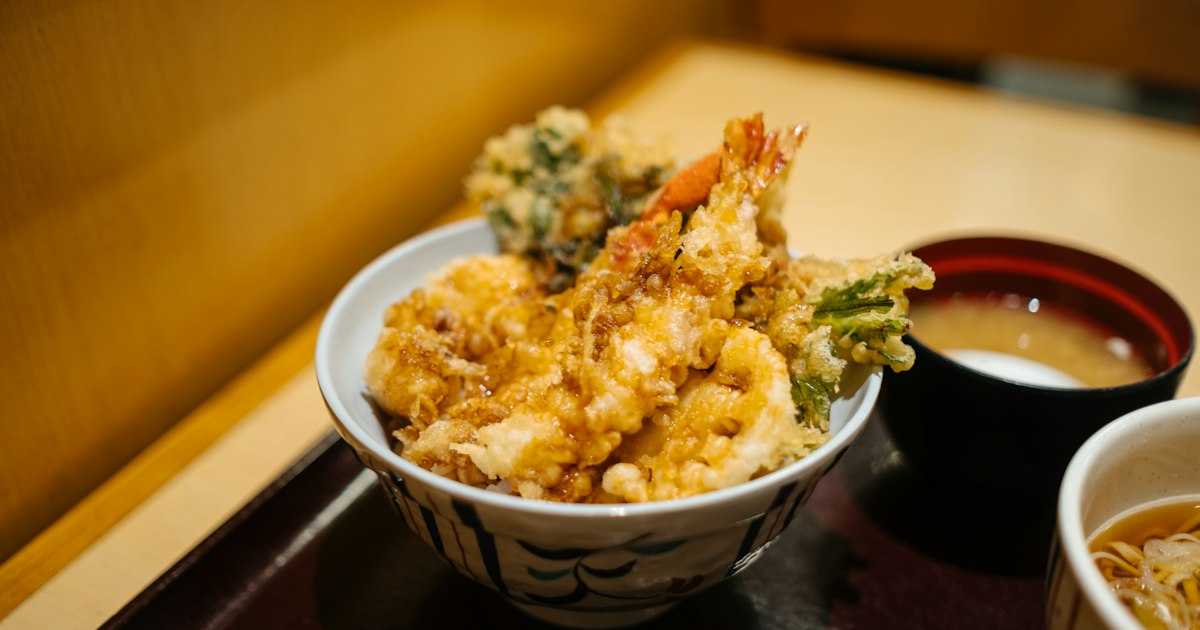
Tempura gets all the glory, but the dish most Japanese people actually crave on a weekday lunch break is tendon — a bowl of rice topped with freshly fried tempura and draped in a sweet-savory sauce called tare. It’s faster than a full tempura course, cheaper than a kaiseki dinner, and just as satisfying. Here’s how to find good tendon at every budget, when to go, and how to avoid the rookie mistakes that make first-timers miss the point of the dish.
What Makes Tendon Different From Tempura
Tempura on its own is usually served with a light dipping sauce called tentsuyu, meant to let the crisp batter stay crisp as long as possible. Tendon flips that logic entirely: the tempura — typically shrimp, kisu (sillago fish), kakiage (a mixed vegetable or seafood fritter), and sometimes anago (conger eel) — is laid over hot rice and finished with a thicker, darker sauce poured directly on top. The batter is meant to soak up some of that sauce, so the texture is softer and richer than standalone tempura. If you order tendon expecting shatter-crisp tempura, you’ll be disappointed; the whole appeal is the contrast between sauce-softened edges and the still-crunchy interior.
Budget Option: Tenya and Fast Tendon Chains
For a quick, reliable tendon, look for Tenya, a nationwide chain with locations in most major train stations and shopping streets in Tokyo, Osaka, and beyond. A basic tendon runs around ¥500-600, and a deluxe bowl with extra toppings like anago or a larger kakiage lands closer to ¥800-900. Most locations are open roughly 11:00 to 22:00, with counter or table seating and ticket-machine or staff ordering — no reservation needed, and turnover is fast even at lunch rush. This is the right choice if you want a satisfying, hot meal between sightseeing stops without planning around it. Other regional chains and standalone diners (often just called “tendon-ya”) offer similar fast-casual setups, so don’t hesitate to walk into one with a lunch sign out front.
Mid-Range: Historic Tendon Specialists in Asakusa
Asakusa is the best neighborhood in Tokyo for tendon with real history behind it. Daikokuya, founded in 1887 near Kaminarimon and Senso-ji, is famous for its distinctively dark, rich tsuyu sauce poured generously over the tempura — a style that’s stayed almost unchanged for over a century. Expect a tendon course in the ¥2,000-3,000 range and a line out the door on weekends, especially around lunch; going right at opening or in the mid-afternoon lull (roughly 14:00-16:00) cuts the wait significantly. Funabashiya, also in Asakusa, is another century-old tempura specialist worth comparing against Daikokuya if you want to taste how sauce style varies between old-guard shops. Both are a short walk from Asakusa Station, served by the Ginza Line, Asakusa Line, and Tsukuba Express. In Shinjuku, Tsunahachi (founded 1923) is a well-known alternative with tendon in a similar ¥1,800-2,500 range, useful if Asakusa isn’t on your itinerary.
Splurge: Counter Tempura Lunch Sets
Some of Tokyo’s highest-end tempura counters — the kind that serve an omakase course for ¥20,000 or more at dinner — offer a simplified tendon-style rice bowl at lunch using the same ingredients and oil, for roughly half the dinner price or less. These lunch sets typically need to be booked in advance or require arriving right at opening, since seating is limited to a dozen or so counter seats. It’s a worthwhile splurge if you want to taste chef-grade tempura technique without committing to a multi-hour dinner course, but go in understanding you’re paying for ingredient quality and frying precision, not bigger portions.
Best Time to Go and Seasonal Ingredients
Tendon is eaten year-round, but the tempura itself shifts with the seasons: kisu and other delicate white fish are best in spring, anago (conger eel) is a summer specialty, and autumn kakiage often incorporates mushrooms like maitake. Lunch is almost always the better value window — many tempura specialists, including the higher-end counters, offer lunch sets that cost noticeably less than the same ingredients served at dinner. If you’re visiting a famous shop like Daikokuya, weekday lunch (avoiding the 12:00-13:00 peak) is your best shot at a short wait.
Common Mistakes to Avoid
- Confusing tendon with tempura teishoku: a teishoku (set meal) serves the tempura on a separate plate with rice, miso soup, and pickles on the side, dipped in tentsuyu. Tendon is the sauce-topped rice bowl version — ask specifically for “tendon” if that’s what you want.
- Waiting too long to eat: tendon is built to be eaten promptly. The sauce continues softening the batter the longer it sits, so a bowl left untouched for photos will taste noticeably soggier by the time you dig in.
- Assuming it’s available everywhere: unlike ramen or onigiri, tendon isn’t a convenience-store staple (though frozen versions exist in supermarket freezers). You’ll generally need a dedicated tempura shop or donburi restaurant.
- Skipping the pickles and miso soup if included: many tendon sets come with a small side of pickles or a miso soup — eat the pickles between bites to cut the richness of the sauce, a trick locals use without thinking about it.
Other Japanese Comfort Foods Worth Trying
If tendon has you interested in Japan’s everyday comfort-food scene beyond sushi and ramen, a few other dishes are worth seeking out on the same trip. Napolitan, the ketchup-based spaghetti served in old-school kissaten cafés, is a similarly nostalgic, home-grown classic. In Okinawa, goya champuru offers a completely different but equally essential regional dish. And if you’re exploring convenience stores during colder months, don’t miss nikuman, the steamed buns sold at the register that have their own small ritual attached to ordering them.