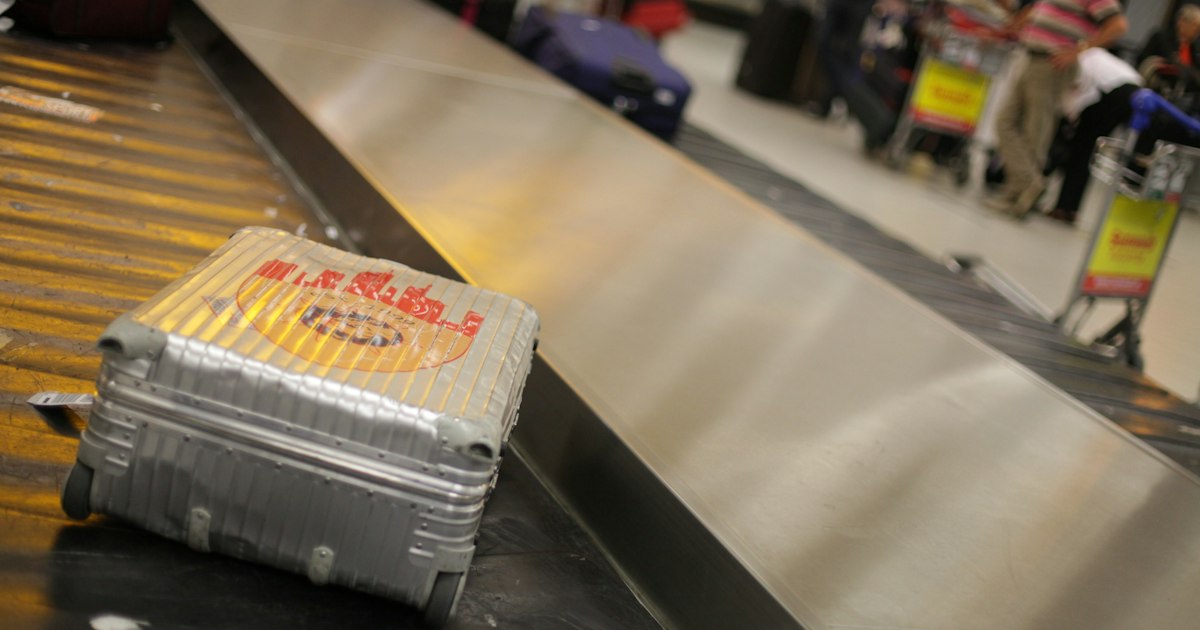
Photo by Dimitri Karastelev on Unsplash
You spent the whole trip buying Japanese snacks, a rice cooker, and three extra suitcases’ worth of souvenirs — and now you’re staring at a check-in agent who’s telling you your bag is overweight. Excess baggage fees on ANA and JAL catch a lot of travelers off guard, mostly because the rules differ depending on where you’re flying from and to, and the fee structures aren’t always intuitive. Here’s what actually matters before you get to the counter.
Weight Concept vs. Piece Concept: Know Which Applies to Your Route
Both ANA and JAL use two different baggage systems depending on your itinerary, and this single fact explains almost all the confusion around their fees.
- Piece concept applies to flights to and from the United States, Canada, and a few other Americas routes. You get a set number of free checked pieces (usually two in economy), each with its own weight and size cap. Go over the piece count, weight, or size, and you pay a flat fee per violation.
- Weight concept applies to most other international routes — Europe, Asia, Oceania, the Middle East. Instead of counting bags, the airline gives you a total weight allowance (commonly 20kg in economy, more in premium cabins), and you can split that across one or two bags however you like. Go over the total weight and you pay for the excess kilos.
Always check your specific route on jal.co.jp or ana.co.jp before you pack, since the allowance printed on your e-ticket is route- and fare-specific, not universal.
ANA’s Excess Baggage Fees
On ANA’s North America flights (piece concept), economy passengers get two free checked bags, each up to 23kg and within 203cm total linear dimension (length + width + height). A third bag typically costs in the range of ¥25,000–¥30,000 (roughly USD 170–200), charged at the airport. If a bag is overweight (23–32kg) or oversized (203–292cm), expect a surcharge of roughly ¥13,000–¥20,000 per bag per violation — and a single bag can rack up both an overweight and oversize charge at once.
On weight-concept routes (Europe, Asia, etc.), ANA economy passengers usually get a 20kg allowance (business class is higher, often 32–40kg). Exceed it and you’re billed per kilogram, with the per-kg rate varying by route — Asian routes tend to run cheaper per kilo than long-haul European ones. As a rough planning figure, budget ¥2,000–¥5,000 per excess kilogram depending on distance.
JAL’s Excess Baggage Fees
JAL’s structure mirrors ANA’s closely, since both follow IATA-style route rules. On North America flights, economy passengers get two free pieces up to 23kg and 203cm each. A third piece runs roughly ¥25,000–¥30,000, and overweight (23–32kg) or oversize (203–292cm) bags add a similar ¥13,000–¥20,000 surcharge per bag. Bags heavier than 32kg generally aren’t accepted at all as standard checked baggage — airport staff may ask you to repack or ship it separately.
On weight-concept routes to Asia and Europe, JAL’s standard economy allowance is also commonly 20kg, with excess weight billed per kilogram at rates that scale with distance. Business and First Class passengers get noticeably more headroom — often 32kg per piece with two or three pieces allowed — so if you’re planning a big shopping trip, cabin class matters as much as the fare price.
Both airlines’ websites have an official baggage calculator tied to your specific booking — always check it rather than relying on general figures, since fees get revised periodically and promotional fares sometimes carry reduced allowances.
How to Weigh and Measure Your Bags Before the Airport
Most hotels and even some convenience stores don’t have luggage scales, so your best bet is a cheap digital luggage scale (sold at Don Quijote, Yamada Denki, or online, around ¥1,000–¥2,000) that you clip onto the handle. For dimensions, remember airlines measure length + width + height combined, not the longest side alone — a bag that looks fine standing up can still exceed 203cm once you add the depth. If you’ve been shopping hard — say, picking up appliances at Yamada Denki or Edion or loading up on groceries at Kaldi Coffee Farm — weigh your suitcase a day or two before departure, not the morning of, so you have time to redistribute or ship items if needed.
Common Mistakes That Trigger Surprise Fees
- Assuming domestic allowances apply internationally. JAL and ANA domestic flights within Japan often allow 20kg with looser enforcement; international legs are stricter and fees are higher.
- Not checking codeshare rules. If you booked through a partner airline (American, United, British Airways, etc.) but fly the actual segment on ANA or JAL, the operating carrier’s baggage rules usually apply — not the ticketing airline’s.
- Packing large suburban-mall purchases without accounting for box weight. A trip to an AEON Mall for ceramics, kitchenware, or bulky souvenirs can add several kilograms you didn’t plan for — pack a flexible, expandable duffel as your second bag so you’re not stuck buying an emergency suitcase at the airport.
- Forgetting connecting flights have their own limits. If your itinerary includes a connection on a different airline or cabin class, each segment can carry a different allowance — check all legs, not just the first.
Smarter Ways to Handle Extra Luggage
Budget option: Ship non-urgent items home via Japan Post’s EMS or a courier like Yamato (takkyubin), which can be cheaper than airline overweight fees for heavy, low-value items like books or kitchen goods — especially the oroshigane graters and other ceramic kitchenware souvenirs covered in our guide to Japanese grater, which are heavy but not fragile-fragile.
Mid-range option: Pre-pay excess baggage online through ANA’s or JAL’s website before departure — both airlines offer discounted rates (sometimes 10–20% off) for pre-purchasing extra weight or pieces online versus paying at the airport counter.
Splurge option: Upgrade to Premium Economy or Business Class on your outbound or return leg. The baggage allowance jump (often to 2 pieces at 32kg each, or 30–40kg total) can be worth more than the fare difference if you’re bringing home serious shopping hauls, and you get lounge access and better seats as a bonus.
Timing Your Shopping Around Baggage Limits
If big purchases are part of your trip — electronics, appliances, or bulk souvenirs — do that shopping with a few days of buffer before your flight, not the night before. That gives you time to weigh everything, decide what to ship versus carry, and avoid a stressful last-minute repack at the check-in counter. It’s also worth noting that most airport excess baggage payments in Japan are credit-card friendly but not always cash-flexible at self-service kiosks, so keep a card with available credit on hand just in case.