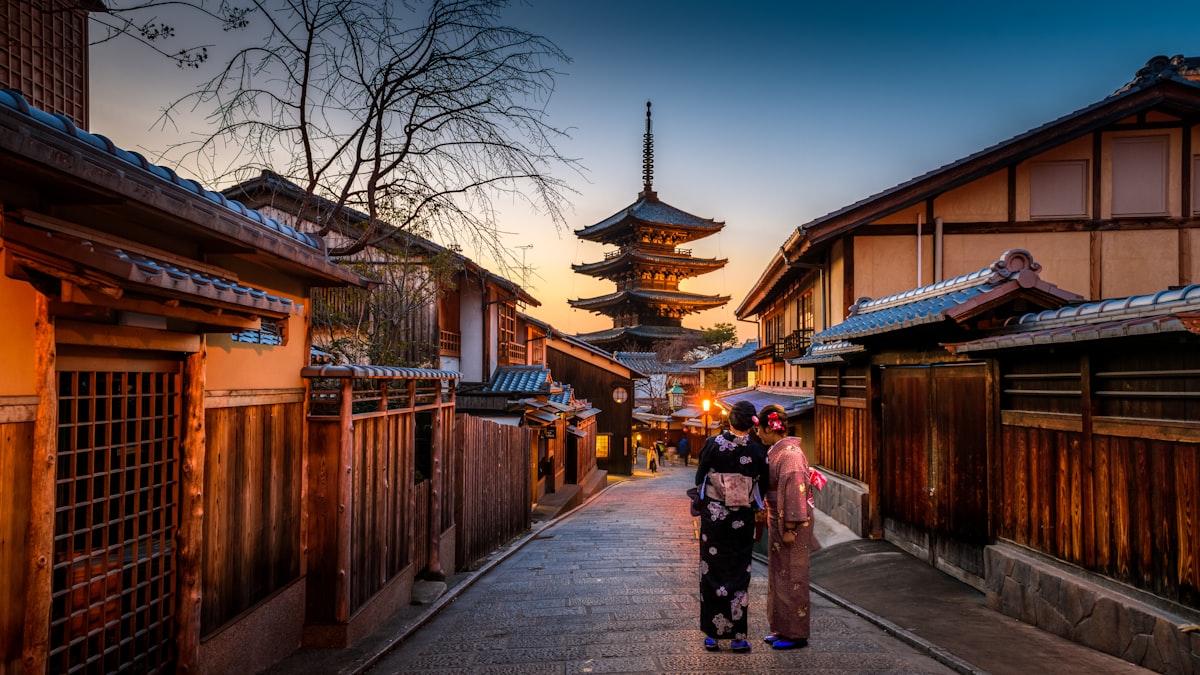
Two days in Kyoto lets you see the essential temples, shrines, and old streets without rushing. Here’s a well-planned 2-day Kyoto itinerary that groups sights by area to save time.
Day 1: East Kyoto (Higashiyama)
- Kiyomizu-dera — the famous hillside temple; go early.
- Sannenzaka & Ninenzaka — preserved sloping lanes of shops and tea houses.
- Yasaka Shrine & Gion — end in the geisha district at dusk; see our Gion & geisha guide.
- Optional: Fushimi Inari (the red torii gates) — magical early morning or evening.
Day 2: Arashiyama & the north/west
- Arashiyama Bamboo Grove and Tenryu-ji temple; go at opening for calm.
- Kinkaku-ji (the Golden Pavilion) — dazzling on a clear day.
- Ryoan-ji — the famous Zen rock garden; see our gardens guide.
Make it smooth
- Group by area — Kyoto’s sights are spread out; buses and trains fill the gaps. Grab an IC card.
- Start early — the top temples get crowded by mid-morning.
- Rent a kimono for Higashiyama photos.
Nearby & next
Add a half-day to Nara or Osaka. See our full Kyoto guide, where to stay, and fit it into a 7-day itinerary.
Budgeting for two days in Kyoto
- Temple entry fees across both days typically total JPY 2,000-3,000 per person if you visit 4-5 paid sites; Fushimi Inari and much of Arashiyama’s grounds are free.
- A kimono rental for a Higashiyama photo walk runs JPY 4,000-8,000 for a basic set, more for higher-end fabrics or hair styling add-ons.
- Bus and train fares across two days of area-hopping run about JPY 1,000-1,500 per person on an IC card; a one-day bus pass (around JPY 700) can pay off if you’re doing several short hops rather than a few longer train rides.
Common mistakes on a 2-day Kyoto trip
- Underestimating Higashiyama’s crowds by mid-morning — Kiyomizu-dera and the lanes below it are genuinely packed by 10am; starting at opening is the difference between a calm and a crowded visit.
- Trying to fit Fushimi Inari into Day 1 on top of a full Higashiyama itinerary — it deserves its own slot, ideally early morning or evening on either day.
- Skipping lunch planning — Nishiki Market and the streets around Gion have good options, but the most famous spots near Kiyomizu-dera can have long waits at peak lunch hours.
Where to eat each day
Day 1 in Higashiyama pairs naturally with a stop at Nishiki Market for a grazing lunch on the way to or from the eastern temples. Day 2 in Arashiyama has good tofu-focused restaurants near Tenryu-ji — a fitting, quiet lunch after the bamboo grove, before the afternoon crowds arrive from tour buses.
Extending to three days
If you can stretch to a third day, Uji’s tea houses and the Byodo-in Phoenix Hall make an easy, low-key add-on that doesn’t require re-planning the rest of the trip — it’s a short hop from central Kyoto and pairs naturally with the green tea theme already present in the city’s cafes.