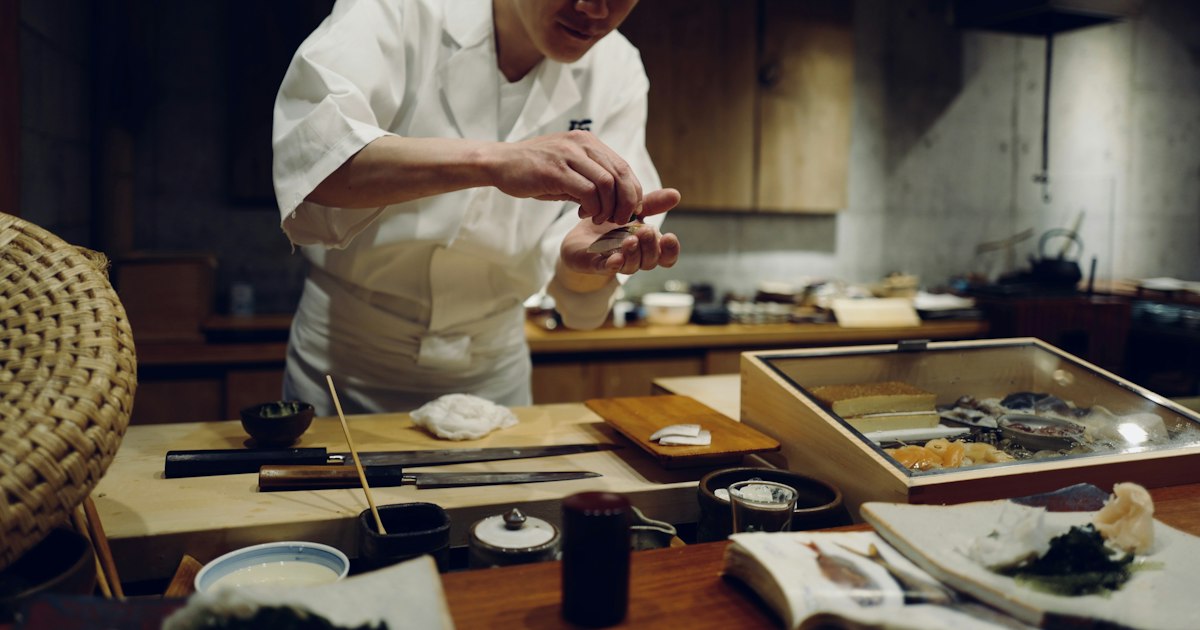
Photo by Thomas Marban on Unsplash
Kaiseki ryori is Japan’s answer to a tasting menu — except it predates the concept by centuries and follows rules the French never thought of. If you’ve only budgeted one truly special meal for your Japan trip, this is the strongest contender: a procession of small, seasonal courses built around what’s fresh that week, served in a sequence designed to move your palate from light to rich and back again. It can also be intimidating to book and expensive to get wrong, so here’s what you actually need to know before you sit down.
What Kaiseki Actually Is
Kaiseki developed out of the tea ceremony’s simple preparatory meal (cha-kaiseki) and merged over time with the more lavish banquet style called honkaku ryori. Today the word covers a fairly fixed course structure: an appetizer (sakizuke), a clear soup (suimono), a sashimi plate (mukozuke), a simmered dish (nimono), a grilled dish (yakimono), sometimes a fried course (agemono), a vinegared or dressed small dish (sunomono/aemono), rice with pickles, miso soup, and a seasonal dessert. A full dinner typically runs 8-12 courses and takes two to three hours. The point isn’t quantity — portions are deliberately small — it’s precision: the ceramics, the seasonal garnish, the knife work on a single piece of fish are all part of the dish.
What It Costs, Realistically
- Budget (¥5,000-¥10,000): Lunch kaiseki at a ryokan or a casual kappo-style counter. Lunch is almost always cheaper than dinner for the same kitchen — often half the price for a shortened course set.
- Mid-range (¥12,000-¥25,000): Dinner at a well-regarded restaurant without a Michelin star, or a ryokan dinner included in a stay. This is where most first-timers land, and it’s genuinely representative of the cuisine.
- Splurge (¥30,000-¥80,000+ per person): Michelin-starred kaiseki in Kyoto or Tokyo, often with sake or wine pairing on top. Some legendary counters (think Kyoto’s old-guard ryotei) run well past ¥50,000 and require an introduction or a hotel concierge’s connections to book at all.
Prices usually exclude drinks, and a 10% service charge is common at higher-end places; tipping is not expected on top of that.
How and When to Book
This is the part visitors underestimate. Good kaiseki restaurants — especially anything with a Michelin mention — take reservations weeks to months ahead, and many don’t accept same-day walk-ins at all. A few practical notes:
- Many restaurants only take bookings by phone, in Japanese. Use your hotel concierge, a reservation platform like Pocket Concierge or TableAll, or a travel agent — don’t assume you can book online in English.
- Expect to be asked about allergies, dietary restrictions, and sometimes your budget range in advance, since the chef often finalizes the menu that morning based on market finds.
- Cancellation policies are strict. A no-show or late cancellation can incur a full charge, since the ingredients were bought specifically for you.
- If a restaurant is fully booked, ask your ryokan — many top-tier ryokan include a kaiseki dinner in the room rate, which is the easiest way to experience it without a separate reservation battle.
Best Season and Timing
Kaiseki is built around shun — the peak moment of an ingredient’s season — so the “best” time to eat it is simply whenever you’re visiting, since the menu changes to match. That said, spring (March-May, around cherry blossom season) and autumn (October-November, peak foliage) are when menus lean most dramatically into seasonal theatrics — bamboo shoots and cherry leaves in spring, matsutake mushroom and persimmon in autumn — so a kaiseki dinner pairs naturally with a hanami trip to a spot like Yoshino’s cherry blossoms. Winter kaiseki in regions known for hot pot and fugu (blowfish) is its own distinct pleasure if you’re traveling December-February.
Where to Try It
Kyoto is the spiritual home of kaiseki, with the highest concentration of multi-generation ryotei and a style (Kyo-kaiseki) that leans delicate and vegetable-forward, often showcasing Kyoto’s famous tofu and seasonal mountain vegetables. Tokyo has more variety, including modern chefs who blend kaiseki structure with French or Italian technique. Beyond the big cities, a ryokan stay almost anywhere — from a hot spring town to somewhere remote like Yunomine Onsen — will usually include a kaiseki dinner built around that region’s specific ingredients, whether it’s fresh-caught fish, local wagyu, or mountain vegetables, which is often a better value introduction than a formal Kyoto ryotei.
Etiquette and Common Mistakes
- Don’t rush the pace. Courses are timed to arrive at a specific temperature and moment; asking to speed things up or box up leftovers defeats the point, and boxing food to go is rarely offered.
- Eat sashimi and delicate items in the order presented, not however you’d normally sequence a meal — the chef has a reason for the order.
- Don’t over-season. Dishes arrive seasoned as intended; dousing everything in soy sauce, especially the simmered or grilled courses, is considered a minor faux pas and can insult the kitchen.
- Dress neatly. You don’t need a suit, but flip-flops, tank tops, or beach wear will get you a polite refusal at higher-end places.
- Mention allergies and dislikes when booking, not at the table — the menu is often shopped and prepped the day before based on what you tell them in advance.
- Don’t assume English menus or staff. Smaller, more traditional counters may have neither; a translation app helps, but part of the experience is trusting the chef’s choices rather than customizing.
What to Expect at the Table
You’ll typically be seated at a counter (for a more intimate, chef-facing kappo style) or in a private tatami room. Sake pairing is common and often excellent — ask for an omakase (chef’s choice) pairing if you’re not familiar with regional sake styles. Photography is usually fine for personal use, but ask before photographing other diners or using flash, since many kaiseki rooms are designed around soft, deliberate lighting. If you’re seated on tatami, you may be removing your shoes, so factor that in if you’re self-conscious about socks — much like visiting a traditional tokoya barbershop, this is a slower, ritual-driven experience that rewards patience over efficiency. Meals end with rice, pickles, and a light dessert (often seasonal fruit or a small wagashi), not a heavy finale — don’t expect a Western-style dessert course.
Kaiseki rewards planning more than any other meal you’ll have in Japan, but it’s also one of the few dining experiences that genuinely changes how you think about food afterward — less about being full, more about noticing. Book it early, trust the chef, and don’t rush the rice.