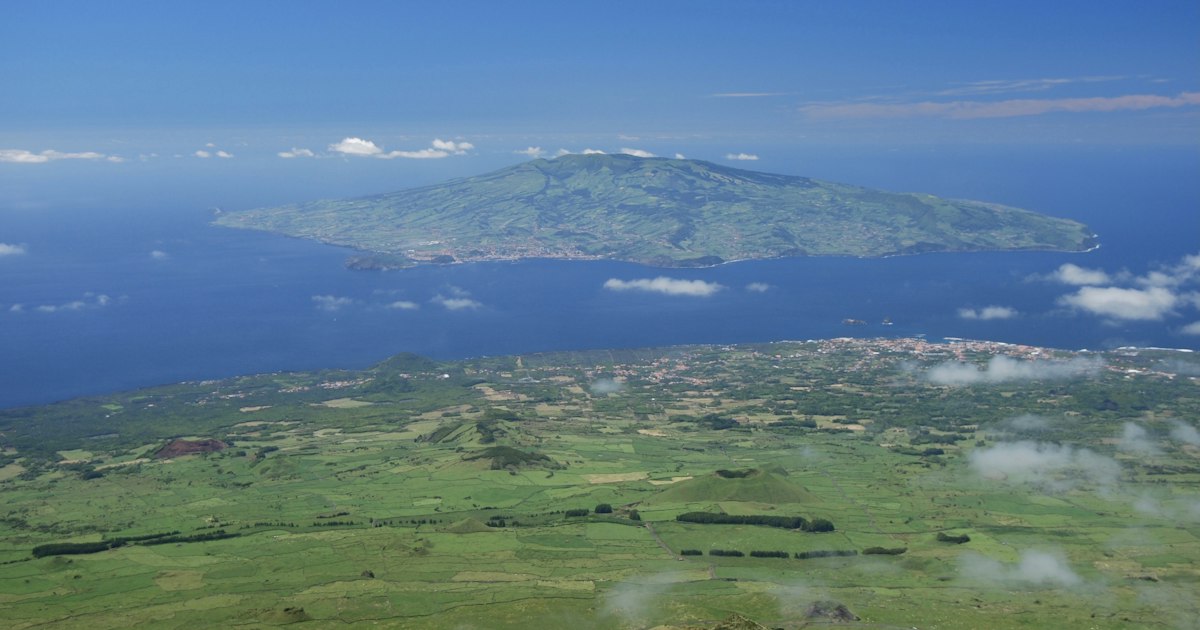
Photo by Gherardo Sava on Unsplash
Aogashima is, on paper, part of Tokyo. In reality, it’s a volcano rising out of the Pacific roughly 360 km south of the capital, home to fewer than 170 people, a double caldera you can walk inside, and a reputation as one of the hardest-to-reach inhabited places in Japan. If you’ve seen the aerial photo — a green ring within a ring, a smaller cone smoking gently inside a larger crater — and want to go see it yourself, this guide covers exactly how, what it costs, and why you should never plan this as a single-day trip.
What Makes Aogashima Worth the Trouble
Aogashima is a “double volcano”: the entire island is the rim of a large outer caldera formed by an eruption in 1785, and inside that caldera sits a second, smaller cone called Maruyama. You can walk a loop trail around and partly up Maruyama in about 60–90 minutes, free of charge, with no permit needed. The payoff is the view from the Fujimi Observation Platform near the village, which looks straight down into the crater — one of the only places in Japan where you can see an entire volcanic structure, inner cone and all, from above ground level. If you’re already drawn to Japan’s volcanic landscapes, it’s a very different experience from somewhere like Kirishima in Kyushu, which pairs its volcanic terrain with shrines and onsen villages — Aogashima is rawer and far more isolated, with almost no tourist infrastructure at all.
Step 1: Tokyo to Hachijojima
You cannot reach Aogashima directly from central Tokyo. Every route goes through Hachijojima, another Izu island about 290 km south of Tokyo. Two options:
- Fly: ANA operates several flights a day from Haneda Airport (about 45–55 minutes). Walk-up fares run high (¥25,000–35,000 one-way), but booking a discounted advance fare 1–2 months out can bring it down to roughly ¥10,000–15,000.
- Ferry: Tokai Kisen runs an overnight ferry from Tokyo’s Takeshiba Pier, departing around 22:30 and arriving on Hachijojima around 09:00–10:00 the next morning. Second-class fare is about ¥9,000–10,000 one-way. It’s slower but much cheaper, and it’s the only option if the flight is full or weather grounds it.
Once on Hachijojima, many travelers rent a car or scooter to fill the hours between connections — the island has its own volcano, hot springs, and coastline worth a half-day. If you’re comparing rental options for island-hopping legs like this, the general guidance in our EV rental guide on apps and charging logistics applies here too, though most Hachijojima rental counters still offer plenty of gasoline cars and scooters.
Step 2: Hachijojima to Aogashima — Helicopter or Boat
This is the leg that makes Aogashima notorious. There are exactly two ways to cover the last 65 km, and both are weather-dependent.
- Helicopter (Toho Air Service): A 9-seat helicopter flies once daily between Hachijojima and Aogashima, taking about 20 minutes. One-way fare is roughly ¥19,000–20,000. Seats are limited and sell out — book through the Toho Air Service website or by phone as far in advance as possible, ideally weeks ahead for weekends and holidays. This is the reliable option: it flies in conditions that ground the ferry.
- Ferry (Aogashima Maru): The boat takes about 3 hours and costs roughly ¥7,000–8,000 one-way. The catch: Aogashima has no proper harbor, just a small crane-assisted landing that only operates in calm seas. Cancellation rates are high — commonly cited at somewhere around 40–60% of scheduled sailings, especially outside midsummer. If the ferry is canceled, you either wait a day or scramble for a helicopter seat.
Practical advice: book the helicopter for at least one direction of your trip, treat the ferry as a bonus if it runs, and never schedule a flight home from Tokyo on the same day you’re trying to leave Aogashima.
Best Time to Visit
Late spring (April–May) and autumn (October–November) offer the calmest seas and clearest caldera views, with daytime temperatures that are comfortable for the Maruyama hike. Avoid August and September if you can — that’s peak typhoon season for the Izu and Ogasawara islands, and your odds of getting stuck (in either direction) rise sharply. Winter is generally mild by Tokyo standards but windier, which still affects the ferry more than the helicopter.
What to Do Once You’re There
Aogashima’s main attraction after the caldera hike is Hingya, a geothermal steam area at the base of the village where vents of volcanic steam are piped into communal cooking boxes. Rent a basket for a small fee (around ¥200) and cook your own eggs, corn, or sweet potatoes using nothing but the volcano’s heat — bring your own ingredients from the one general store in the village, since there’s no convenience store on the island. Beyond that, the village itself is small enough to walk end to end in under an hour, and the shochu distillery (the island produces its own sweet-potato shochu) is worth a stop if it’s open.
Where to Stay and Eat
Lodging is limited to a handful of minshuku (family-run guesthouses) with a combined capacity of maybe 20–30 rooms total on the entire island. Expect to pay ¥7,000–10,000 per person per night, usually including dinner and breakfast, since there are no restaurants open for casual dining in the evening. Book directly by phone or through the Aogashima Village tourism site months ahead for weekends — there is no overflow capacity if you arrive without a reservation. Bring enough cash for your whole stay; card payment is unreliable and there is no ATM on the island.
Common Mistakes to Avoid
- Booking it as a day trip. Build in at least one buffer day on either side of your Aogashima leg. Ferry and even helicopter flights cancel for weather, and there’s no way to force a departure.
- Skipping travel insurance or refundable fares. Given the cancellation risk, flexible tickets for the Hachijojima–Tokyo legs are worth the extra cost.
- Assuming you can buy supplies there. Pack snacks, any medication, and cash — the one shop has limited stock and keeps short hours.
- Forgetting sun and wind protection. The Maruyama trail has almost no shade, and coastal wind can be strong even on clear days.
Aogashima rewards patience more than any other Tokyo-area destination. Get the logistics right — book the helicopter early, pad your schedule, and travel light on expectations for amenities — and you’ll have one of the most singular landscapes in Japan almost entirely to yourself.