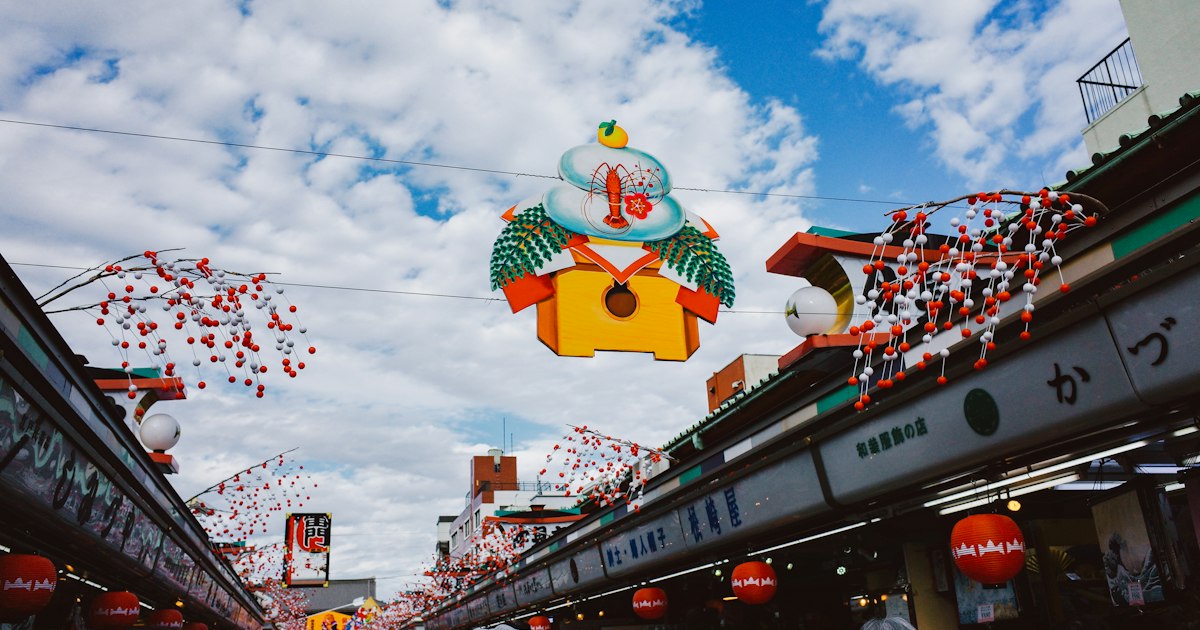
Walk into almost any Japanese home, shrine entrance, or shop counter between late December and early January and you’ll spot it: two round white discs stacked one on top of the other, topped with a small orange. That’s kagami mochi (鏡餅, “mirror rice cake”), one of Japan’s oldest New Year decorations, and one of the easiest souvenirs for a visitor to actually buy and take home. Here’s what it means, when it goes up and comes down, and where to find one that fits your budget.
What Is Kagami Mochi, Exactly?
The two stacked mochi rounds represent the old and new year (or, in some readings, the sun and moon), and the whole arrangement is treated as a temporary home for the New Year deity, Toshigami. The bottom disc is larger than the top one. Sitting on top is usually a daidai, a bitter Japanese orange whose name is a pun on “generations” (代々), symbolizing continuity of the family line. Fancier versions add a folded sheet of white paper (shide) or red-and-white paper, a frond of bitter fern, and a small wooden or paper stand called a sanpo. Most mochi sold in stores today are not fresh — they’re vacuum-sealed to prevent the mold that plagued households for centuries, or in cheaper sets, solid plastic replicas that never touch food at all.
When to Display It (and the Dates to Avoid)
Kagami mochi typically goes up alongside other New Year decorations, from around December 26 to 28. December 28 is considered the luckiest day because 8 (hachi) is an auspicious number in Japanese numerology. Two dates are deliberately avoided: December 29, because “29” can be read as “double suffering” (niju-ku), and December 31, because putting decorations up for only one night before New Year’s Day is seen as disrespectful, almost like a rushed, insincere gesture. The decoration then stays up until Kagami Biraki (“mirror opening”), traditionally January 11 in most of Japan (Kanto region), though parts of Kansai, including Kyoto and Osaka, do it on January 4, and some regions hold off until January 20. If you’re planning a December trip around New Year, this is a nice seasonal companion to Japan’s nengajo New Year postcards and the oseibo gift-giving season, since all three traditions cluster in the same few weeks and shops lean hard into the displays.
Where to Buy One: Budget, Mid-Range, and Splurge
You’ll find kagami mochi everywhere from late November through December, but selection thins out fast after December 28, so shop early if you want a good choice.
- Budget (¥110–¥550): 100-yen shops. Daiso, Seria, and Can Do stock small, fully plastic kagami mochi sets in their seasonal section starting in early-to-mid December. These are purely decorative — the “mochi” is solid resin — but they’re light, durable, and easy to pack in a suitcase. Good for a mantelpiece souvenir rather than an authentic ritual object.
- Mid-range (¥1,000–¥2,500): Supermarkets. Chains like AEON, Ito-Yokado, Life, and Seijo Ishii sell boxed sets that combine a plastic shell (shaped and painted to look exactly like the real stack) with a small vacuum-sealed real mochi tucked inside the base, plus a plastic daidai and paper trimmings. These let you display the “mirror” look while still having genuine mochi to eat later. Look for them near the New Year goods aisle, often next to the osechi (New Year feast) pre-order forms.
- Splurge (¥3,000–¥15,000+): Department store basements and traditional confectioners. The depachika (basement food halls) of stores like Takashimaya, Isetan, or Daimaru carry sets with genuine hand-made mochi, a real daidai or yuzu, a proper wooden sanpo stand, and washi paper trim. Specialty wagashi (traditional sweets) shops and rice shops in old shopping streets — Nishiki Market in Kyoto and the Tsukiji outer market in Tokyo both carry seasonal versions in December — sell the most authentic versions, sized for a home altar rather than a shop lobby.
If you want a display stand on its own, Kappabashi, Tokyo’s kitchenware wholesale street, sells sanpo stands and lacquered trays year-round that work for kagami mochi or other seasonal offerings.
How It Ends: Kagami Biraki
The New Year decoration isn’t meant to be thrown away — it’s meant to be eaten, which is the whole point of the ritual. On Kagami Biraki, the dried, rock-hard mochi is broken apart, traditionally with a small wooden mallet, never cut with a knife. Blades are considered taboo here because cutting symbolizes “severing ties,” a bad omen for a decoration that just hosted a deity. The broken pieces are then toasted or simmered into dishes like zenzai or oshiruko (sweet red bean soup with mochi) or deep-fried into kaki mochi crackers. Eating it is meant to bring good health for the coming year.
Common Mistakes Tourists Make
- Buying only the all-plastic version and expecting to eat it. The cheap 100-yen shop sets are display-only resin. If you want the full ritual experience, buy a supermarket or department store set with a real mochi insert.
- Cutting the mochi with a knife. Even for a souvenir you plan to actually eat, breaking it by hand or with a small mallet keeps you in the spirit of the tradition.
- Setting it up on December 29 or 31. If timing matters to you (or to a Japanese host you’re staying with), aim for December 28.
- Confusing it with the sake-barrel “kagami biraki.” Celebratory events where a wooden sake barrel lid is smashed open with mallets share the same name and “mirror opening” idea, but it’s a separate custom, often seen at weddings, store openings, or sumo events — not the same object as the rice-cake decoration.
- Throwing it away uneaten. Treating food as disposable decor runs against the tradition’s whole logic; even a small symbolic bite at Kagami Biraki is better than binning it.
Bringing One Home
The plastic display versions travel well in a suitcase and clear customs without issue anywhere, since there’s no actual food involved. Real mochi is trickier: fresh or vacuum-sealed rice cakes are food products, and bringing them into countries with strict agricultural import rules (including parts of the US, Australia, and the EU) can be a problem, so check your destination’s customs rules before packing a real one. For most visitors, the practical move is a plastic decorative set for the shelf back home, paired with a fresh one bought from a supermarket to actually experience Kagami Biraki while you’re still in Japan. Either way, it’s a compact, inexpensive way to take home a piece of a New Year tradition that most tourists never even notice happening around them.