Walk through almost any Japanese fish market, summer festival, or old shopping arcade and you’ll eventually catch the smell: soy sauce hissing and caramelizing over charcoal, the slightly sweet char of grilling seafood. That’s ikayaki (イカ焼き) — grilled squid — one of the most widely sold and least understood street foods in Japan, because the name covers two genuinely different dishes depending on where you order it. Here’s how to tell them apart, where to eat the best versions, and what to budget.
What “Ikayaki” Actually Means — Two Dishes, One Name
The first style, and the one most visitors picture, is a whole squid — body and tentacles — skewered on two bamboo sticks to keep it flat, grilled over charcoal or a griddle, and basted repeatedly with a soy sauce glaze (sometimes with butter added). This is the version sold at summer festival yatai stalls and fish market stands. It costs roughly ¥500–900 depending on squid size and region.
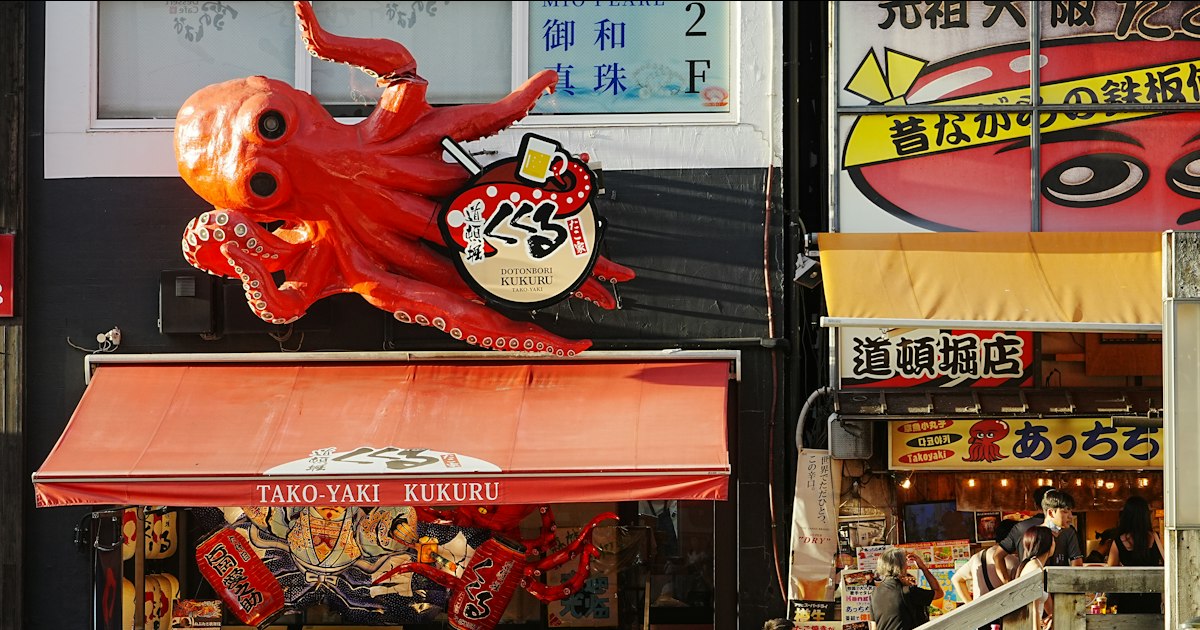
The second style is specific to Osaka’s Dotonbori entertainment district: squid pressed flat under a heavy weighted griddle plate until it’s thin, crisp-edged, and almost jerky-like, then cut into strips and brushed with a sweet-savory sauce. It’s closer to a savory squid cracker than a seafood skewer, and it’s sold from small walk-up windows along the canal for around ¥400–600 a portion. If you ask for “ikayaki” in Osaka expecting the skewer style, this is what you’ll likely get instead — order from a market or festival stall if you want whole grilled squid there.
Hakodate: Japan’s Squid Capital
No city in Japan markets itself around squid harder than Hakodate in Hokkaido, where surume ika (Japanese flying squid) is the local icon. At the Hakodate Morning Market (Hakodate Asaichi), most stalls open around 5am and wind down by early-to-mid afternoon, so this is a breakfast activity, not a dinner one. Beyond grilled skewers, look for ika odori — squid so fresh it visibly twitches when soy sauce is poured over the cut flesh, a genuine nerve reflex rather than a trick. Market stalls sell grilled squid skewers for around ¥700–1,000, and sit-down counters nearby serve full squid courses, including sashimi and ikameshi (squid stuffed with rice), for ¥2,000–4,000. Squid catches are strongest from early summer through autumn, which lines up well with peak tourist season, though markets sell it year-round using frozen stock in winter.
Omicho Market, Kanazawa
Kanazawa’s Omicho Market is smaller and more locally oriented than Hakodate’s, with most shops trading roughly 9am to 5pm (some close one day midweek, so check before a special trip). Squid here comes from the Noto Peninsula, and you’ll find it grilled whole on skewers at several stalls for about ¥700–900, often alongside grilled scallops and crab legs sold the same way. If you’re building a food-focused day around Omicho, it’s worth pairing the market visit with a proper sit-down meal of jibuni, Kanazawa’s signature duck and wheat-gluten stew — the two couldn’t be more different in style, but together they cover the casual-to-refined range of the city’s food scene in one day.
Dotonbori, Osaka, and the Pressed Squid Style
Dotonbori’s canalside stalls run late into the evening, which makes the pressed-squid style a good late-night snack to eat while walking rather than a sit-down meal. It travels well too — unlike the soft, juicy skewer style, pressed ikayaki holds up for twenty or thirty minutes without going soggy, so it’s a reasonable thing to buy and eat on a train platform. If you’re routing through Osaka as part of a wider Kansai trip, remember that not every Tokaido Shinkansen service stops there at convenient times — it’s worth reading up on the difference between Nozomi, Hikari and Kodama trains before booking, especially if you’re using a rail pass that doesn’t cover the fastest Nozomi services.
Festival Stalls and Iki Island
Outside the big cities, the most atmospheric place to eat ikayaki is a matsuri (festival) yatai row during summer, roughly July through August, when neighborhood and shrine festivals fill streets with charcoal grills. Expect to pay ¥500–800 per skewer, cash only, with a short wait during peak evening hours. Squid is also central to the food culture of smaller fishing communities — Iki Island off Nagasaki is known regionally for its squid alongside sea urchin, and if you’re already island-hopping in that part of Kyushu, it’s a quieter, less touristy place to eat grilled squid straight off the boat than any mainland market.
Common Mistakes and Timing Tips
- Showing up too late at markets. Hakodate and Omicho are morning-to-early-afternoon operations; many stalls sell out or close by 2–3pm.
- Assuming all ikayaki is the same dish. If you specifically want whole grilled squid on a skewer, say so — in Osaka especially, “ikayaki” more often means the pressed, flattened version.
- Eating it the moment it’s handed to you. Soy sauce glaze stays scalding hot on the grill surface well after the squid itself has cooled; give it thirty seconds.
- Expecting cards or IC transit cards to work. Most yatai and market squid stalls are cash-only, so carry coins and small notes — see our guide to currency exchange options in Japan if you’re arriving low on yen.
- Overpaying for “jumbo” skewers at tourist-heavy stalls. Price should scale with squid size, but some stalls near major stations charge a premium simply for foot traffic — market stalls one street back are usually cheaper for the same quality.
Budget, Mid-Range and Splurge
At the budget end, a single festival or market skewer runs ¥500–900 and is a complete snack on its own. For a mid-range experience, pair a grilled squid skewer with one or two other grilled seafood items at the same market stall — scallop, crab leg, or shellfish — for a ¥2,000–2,500 grazing lunch. For a splurge, book a seafood-focused izakaya or restaurant in Hakodate or coastal Hokuriku that serves a full squid course: live sashimi (ikezukuri), grilled tentacles, and squid ink dishes together typically cost ¥3,500–6,000 per person but showcase textures and freshness you simply won’t get from a street skewer.
Ikayaki rewards travelers who treat it as a market food rather than a restaurant dish — eat it standing up, close to where it was caught, and as early in the day as your itinerary allows.