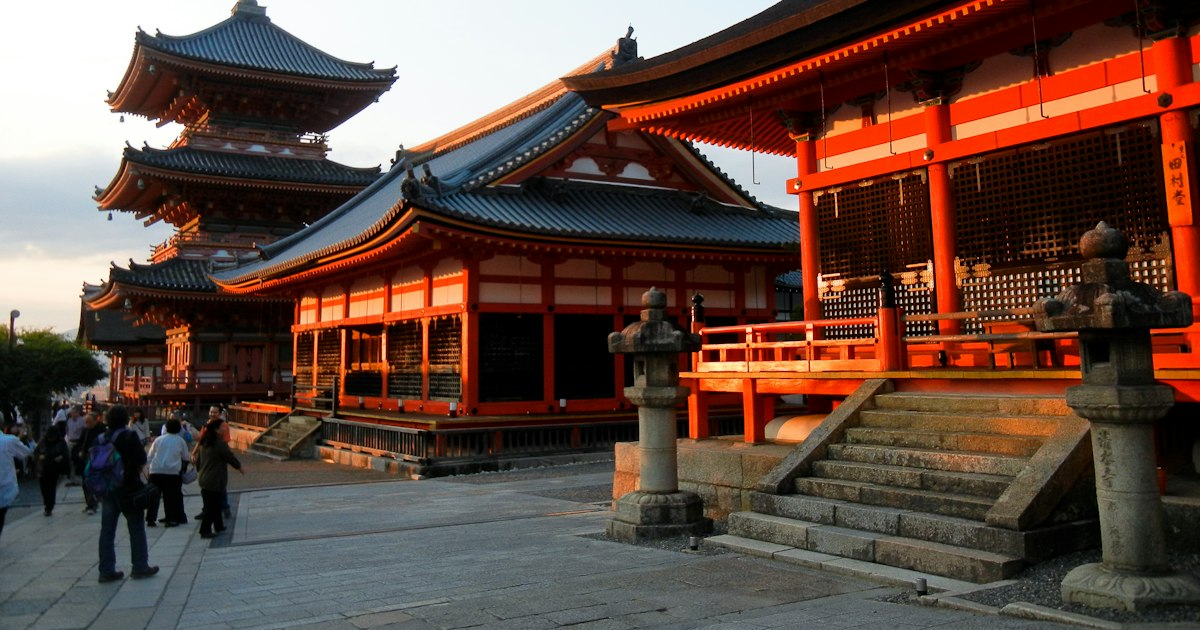
Photo by Griffin Quinn on Unsplash
If you’ve ever stood in front of Kiyomizu-dera or Todai-ji and found yourself suddenly surrounded by hundreds of teenagers in matching uniforms, clipboards in hand, you’ve met shugaku ryoko — Japan’s school trip season. It’s not a one-off event; it’s a predictable, recurring wave that hits Kyoto and Nara’s most famous sites hard enough to reshape your whole visit if you don’t plan around it. Here’s what’s actually happening, when it happens, and how to still have a great day at the temples.
What Is Shugaku Ryoko?
Shugaku ryoko (修学旅行) is the multi-day class trip that nearly every Japanese middle school and high school takes at least once, usually in the second or third year of junior high and the second year of high school. Kyoto and Nara are the classic destinations because they’re the heart of pre-modern Japanese history and culture — exactly what the national curriculum wants students to see in person. Groups travel by chartered bus or reserved train cars, stay in large ryokan or hotels built for group bookings, and spend their days rotating through temples, shrines, and museums in tightly scheduled blocks.
A huge part of the itinerary is “han-betsu jishu kenshu” (班別自主研修) — small groups of 4-6 students navigate a set route on their own, worksheet in hand, with no teacher supervision. This is why you’ll see clusters of students moving independently rather than one giant marching column; it’s also why they’re often eager to stop and talk to foreign visitors, which we’ll get to below.
When the Season Actually Hits
There are two main windows, and they’re consistent year to year because schools deliberately avoid the rainy season (mid-June to mid-July) and the brutal midsummer heat:
- Late April through June — the biggest window, peaking in May and the first half of June, timed to mild weather before the rains set in.
- September through November — a second wave, heaviest in October and into early November, overlapping with autumn foliage season.
Within those windows, trips run Monday through Friday almost exclusively — schools don’t travel on weekends. That single fact is the most useful thing to know: a Tuesday in late May at Kiyomizu-dera can feel like a festival, while the following Saturday can feel almost normal.
Where You’ll Feel It Most
Not every site is affected equally. The ones that sit on every school’s checklist get hit the hardest:
- Kiyomizu-dera (Kyoto) — open 6:00 AM–6:00 PM, admission ¥500. Its wooden stage and the approach streets (Sannen-zaka, Ninen-zaka) become a slow shuffle by mid-morning on peak days.
- Kinkaku-ji (Kyoto) — open 9:00 AM–5:00 PM, admission ¥500. The single-direction walking path means a large group ahead of you controls your pace.
- Fushimi Inari Taisha (Kyoto) — free, open 24 hours. Less schedule-dependent since there’s no entry gate, but the first few hundred meters of torii gates still bottleneck badly by late morning.
- Todai-ji and the Great Buddha Hall (Nara) — open 7:30 AM–5:30 PM April–October, 8:00 AM–5:00 PM November–March, admission ¥600. This is arguably the single most school-trip-saturated site in the country.
- Nara Park — free and always open, but the deer-feeding areas near Todai-ji get chaotic when hundreds of students buy shika senbei (deer crackers, ¥200 a pack) at once.
How to Beat the Crowds
The fix isn’t avoiding Kyoto and Nara in these months — that’s overkill, since you’d be cutting out ideal weather and, in autumn, the best foliage of the year. The fix is timing within the day:
- Budget move: Arrive at opening, or close to it. Kiyomizu-dera’s 6:00 AM opening is a gift — school groups rarely arrive before 9:30 or 10:00, since they’re usually eating breakfast at their hotel first. The same logic works for Fushimi Inari: walk the lower gates by 7:30 AM and you’ll have them nearly to yourself.
- Mid-range move: Shift your schedule rather than your sites. Visit the big-name spots in the first two hours after opening or after 4:00 PM, and save midday for quieter alternatives like Kyoto’s eastern backstreets, a museum, or a sit-down lunch.
- Splurge move: Some temples and ryokan run early-access or after-hours experiences during peak seasons — special night illumination events at Kiyomizu-dera and Kodai-ji happen in spring and autumn specifically because the organizers know daytime crowding is at its worst. These cost extra (often ¥400–¥600 on top of standard admission) but buy you a genuinely different, quieter experience of the same site.
- If you have flexibility, shift sightseeing days to the weekend and save weekday mornings for things like shopping, museums, or day trips that aren’t on the school-trip circuit.
Getting There Without the Bus Jams
School groups travel almost entirely by chartered bus, and during peak months the parking areas near Kiyomizu-dera and the roads into Nara Park genuinely clog with them. If you’re coming from Tokyo, the Shinkansen to Kyoto sidesteps all of that — just be aware that the trains themselves sometimes carry a reserved school-group car during these windows, so don’t be surprised if one car on your train is unusually loud. Budget travelers using an overnight highway bus from a hub like Basta Shinjuku should book early in May, June, and October, since school-related charter demand pushes up competition for regular seats too.
Once in Kyoto, getting to Nara is simple: the JR Nara Line’s rapid trains take about 45 minutes from Kyoto Station (around ¥710), or the Kintetsu Nara Line covers it in roughly 35–45 minutes depending on the train type. Either way, try to catch an earlier train — school groups typically move between Kyoto and Nara mid-morning, so an 8:00 AM departure beats a 10:00 AM one.
The Upside: Students Want to Talk to You
Here’s the part most first-time visitors don’t expect: those self-guided student groups often have an assignment to interview a foreign tourist in English — sometimes with a worksheet, sometimes just a few rehearsed questions and a photo. It’s genuinely charming, and saying yes for two or three minutes costs you almost nothing. If the language gap feels like too much, a translation gadget like those covered in our Pocketalk guide can smooth over the harder questions, though most of these exchanges work fine with simple English and a lot of smiling.
Common Mistakes to Avoid
- Scheduling your only Kyoto/Nara day on a weekday in peak season with no time buffer. If a tour or timed reservation is involved, build in extra walking time between sites.
- Assuming all temples are equally crowded. Smaller, less famous temples a short walk from the big names are often completely calm even in peak weeks.
- Not checking whether it’s a weekday. This single factor matters more than the specific month.
- Treating student interview requests as a scam or hassle. They’re a school assignment, not a sales pitch — there’s no catch.
Shugaku ryoko season isn’t something to dodge entirely — it’s a predictable rhythm you can plan around. Go early, go late, and expect a few friendly interruptions in between.