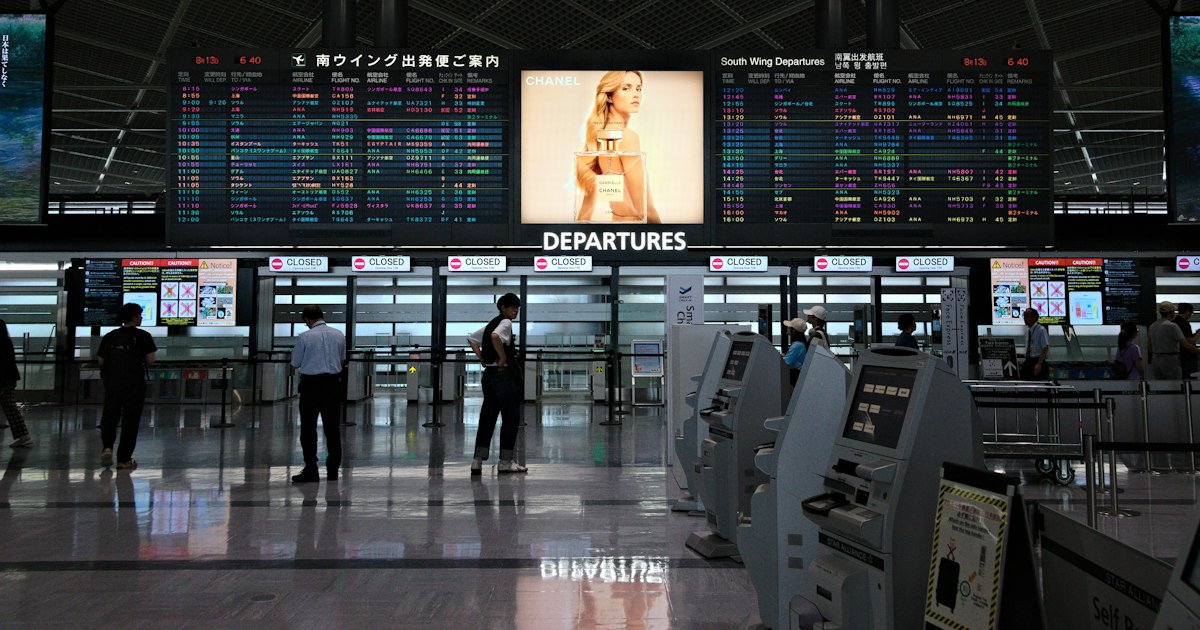
If your Japan trip costs a little more than the ticket price suggested, you’re not imagining it. Since January 7, 2019, every traveler leaving Japan by plane or ship has paid a 1,000 yen “International Tourist Tax” (国際観光旅客税), usually folded invisibly into your airfare. It’s small, it’s mandatory, and almost nobody notices it until they go looking. Here’s what it actually is, who doesn’t have to pay it, and how to make sure it doesn’t catch you off guard at the airport.
What the Departure Tax Actually Is
The Sashutsu Kokusai Kankō Ryokaku Zei, officially translated as the International Tourist Tax, is a flat 1,000 yen charge levied on anyone departing Japan by air or sea, regardless of nationality. It applies equally to foreign tourists and Japanese citizens. The revenue funds tourism infrastructure: multilingual signage, free Wi-Fi expansion at airports and stations, automated gates, and promotional campaigns for Japan’s tourism industry. It’s a modest but steady funding stream — the Japan Tourism Agency has used it to pay for things like the facial-recognition immigration gates now common at Narita and Haneda.
Unlike a sales tax or hotel tax, you don’t pay this separately at a counter. It’s built into the cost of your international air or ferry ticket, collected by the airline or ferry operator and remitted to the government. So in nearly all cases, you’ve already paid it the moment you bought your ticket — you just didn’t see a line item for it.
How It Shows Up on Your Ticket
Airlines bundle the 1,000 yen into the “taxes, fees and charges” section of your fare breakdown, often listed under a code like “YQ” or simply folded into a lump “tax” figure alongside other charges such as the passenger service facility charge (which varies by airport — Narita and Haneda both charge their own separate facility fees on top of this tax). If you pull up your e-ticket receipt and look at the fare construction, you may see a notation like “JP ¥1000” buried in a list of a half-dozen other codes. Most travelers never dig this deep, and there’s no need to — the airline handles collection and payment to the government automatically as part of standard ticketing.
Because it’s baked into the ticket price, you won’t be asked to pay cash at a departure tax counter the way travelers might expect in some Southeast Asian countries. There’s no physical tollbooth to clear before your flight. The only place this tax becomes visible is in your fare breakdown, and even then, it’s rarely itemized clearly enough to spot without knowing what to look for.
Who Is Exempt
A handful of groups don’t pay the tax:
- Children under 2 years old at the time of departure.
- Transit passengers who arrive in Japan and leave again within 24 hours without clearing immigration (a true airside connection).
- Crew members on duty.
- Passengers forced to leave Japan involuntarily due to circumstances like flight cancellations caused by the airline or severe weather, where the departure wasn’t the traveler’s choice.
If you’re flying in and straight back out on a layover under 24 hours without going through immigration, you generally won’t be charged. But once you’ve entered Japan properly — even for a single night — you’ll pay the tax on the way out, just as everyone else does.
Common Mistakes and Confusion Points
The most frequent misunderstanding is travelers expecting to pay this in cash at the airport, the way departure taxes work in countries like Cambodia or (historically) Thailand. In Japan, there’s nothing to pay at the gate — if you’re confused about a “departure tax counter,” you’re thinking of a different country’s system, or possibly an older travel guide. Japan abolished any such cash-collection setup; this is purely a ticket-embedded charge.
Another common mix-up: confusing this tax with Japan’s consumption tax refund on shopping (the duty-free system for goods bought during your trip) or with departure procedures like security and immigration lines. The 1,000 yen tax has nothing to do with your shopping purchases, and it doesn’t require you to show any receipt or stamp at departure. If you’re also planning to claim tax-free shopping refunds before your flight, budget extra time at the airport for that separate process — it’s unrelated to the departure tax but often confused with it by first-time visitors juggling multiple “tax” concepts at once.
Some travelers also assume the tax applies per-trip rather than per-departure, but it’s charged every single time you leave Japan internationally — so a traveler who flies to South Korea for a weekend and returns to Japan, then flies home later, pays it on both outbound legs from Japan.
Does It Actually Affect Your Budget?
At roughly 1,000 yen (about 6-7 USD depending on exchange rates), this isn’t a tax that will derail a travel budget — it’s closer to the cost of a coffee at a convenience store. But it’s worth knowing about for two practical reasons. First, if you’re comparing fares across booking sites and one quote looks suspiciously lower than another for the same route and dates, double-check whether taxes and fees are fully included — occasionally discount aggregators display base fares before taxes, and the final checkout price will include this charge along with airport facility fees. Second, if you’re budgeting precisely for a long trip with multiple international legs out of Japan (for example, a trip that includes a side excursion to South Korea or Taiwan and back), remember each departure from Japan adds another 1,000 yen, which adds up slightly if you’re counting every yen for a tight multi-country itinerary.
If you’re already tracking your yen carefully for cash-heavy purchases elsewhere in Japan — tax-free souvenir shopping, regional specialty goods, or paying for things where cards aren’t accepted — it helps to understand when cash beats cards in Japan so you’re not caught short at the airport on departure day.
What to Do Before You Fly Out
In practice, there’s very little action required on your part. You don’t need to find a kiosk, fill out a form, or carry exact change. The tax is handled entirely through your ticket purchase. That said, a few habits make departure day smoother:
- Check your e-ticket fare breakdown before your trip if you’re curious — look for a Japan-specific tax code in the receipt PDF your airline or travel agent sent you.
- Arrive at the airport with your usual buffer for international departures (most airlines recommend 2-3 hours for international flights from Narita or Haneda), since this tax doesn’t add any extra processing step to immigration or security.
- If you’re also claiming a consumption tax refund on purchases, do that at the dedicated tax refund counter before checking in — it’s a separate line from anything related to the departure tax.
- Don’t budget emergency cash specifically for this tax; it’s already paid. Save your remaining cash for last-minute purchases at airport shops instead.
Whether you’re heading home after exploring geisha districts in Kanazawa’s Higashi Chaya district, island-hopping around Iki Island near Fukuoka, or catching a bus back to Tokyo through Basta Shinjuku before your flight, the departure tax is one line item you can safely ignore on the day itself — it’s already been handled. The only real value in knowing about it is understanding your fare breakdown and not mistaking it for a cash fee you need to hunt down at the gate.