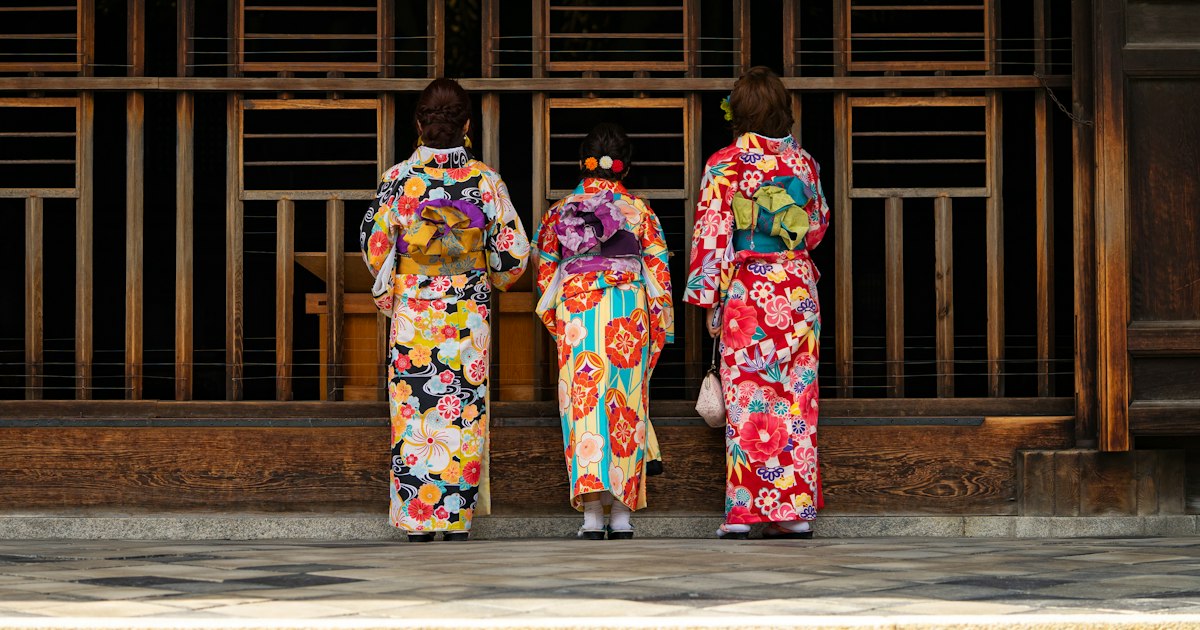
Photo by Damian Hutter on Unsplash
If you’ve only ever heard of buying secondhand kimono at Tokyo’s Oedo Antique Market or Kyoto’s Toji temple flea market, you’re missing most of the market. Those monthly markets are fun, but they’re outdoors, weather-dependent, and only happen on specific dates. For a reliable, year-round, try-before-you-buy experience, Japan has something better suited to tourists: a network of dedicated used-kimono chain stores that operate like regular retail shops, with fixed locations, fitting rooms, and staff who can help you figure out sizing. The best-known of these is Tansu-ya, but it’s not the only option worth knowing about.
Why Recycle-Kimono Shops Beat the Flea Market for Visitors
Flea markets are genuinely great for atmosphere and rock-bottom prices, but they have real drawbacks if you’re on a short trip: vendors often don’t speak English, there’s no changing room, items aren’t always cleaned, and you’re at the mercy of whatever happened to be trucked in that day. Chain recycle shops solve all of this. Garments are inspected, laundered or dry-cleaned, and tagged with condition notes. You can try things on, ask staff to help with the obi (sash) and layering, and come back the next day if you change your mind. For a first-time kimono buyer, that hand-holding is worth more than saving an extra thousand yen at a market stall.
Tansu-ya: The Chain to Know
Tansu-ya (たんす屋) is Japan’s largest used-kimono retail chain, with branches scattered across Tokyo (including Kichijoji, Asakusa, and Jiyugaoka), as well as Kyoto, Osaka, Yokohama, and other cities. The business model is straightforward: Tansu-ya buys back kimono, obi, and related accessories from households that no longer need them — often inherited pieces — cleans and inspects them, then resells at a fraction of the original price. Because kimono were historically expensive, custom-made garments meant to be worn for decades, the secondhand stock includes genuinely high-quality silk pieces alongside everyday cotton ones.
Expect a shop floor organized by garment type and formality level: casual komon and tsukesage kimono on one rack, formal houmongi and furisode (for unmarried women, heavily patterned with long sleeves) on another, men’s kimono and haori jackets usually in a smaller corner. Staff are used to walk-in browsers and, at larger branches, can usually manage basic English or simple Japanese works fine with pointing and calculators. Most branches open around 11:00 and close between 19:00 and 20:00, though hours and regular closing days vary by location, so check the specific branch’s signage or call ahead rather than assuming all stores match.
Other Chains and Vintage Spots Worth Checking
Tansu-ya isn’t alone. A few other names to watch for while you’re shopping:
- Oshare Kura — a recycle-kimono chain with a similar buyback model, often slightly more budget-oriented, with locations in Tokyo and the Kansai region.
- Chicago — the famous Harajuku vintage clothing store isn’t kimono-only, but its basement floor is well known among both tourists and locals for secondhand kimono, obi, and haori sold at approachable prices, sometimes discounted further by weight or bulk during sale periods. There’s also a Chicago branch in Osaka’s Amerikamura vintage and street-fashion district, which is worth combining with a browse through that neighborhood’s other secondhand clothing shops.
- Ichiroya and other online recycle-kimono sellers — useful if you want to research typical pricing and styles before you fly, though buying unseen online removes the fitting advantage that makes physical shops worthwhile for first-timers.
- Local kimono recycle shops near temples and shopping arcades — cities like Kyoto and Kanazawa have independent secondhand kimono shops tucked into older shopping streets; they’re less predictable in stock but sometimes have better prices on antique pieces than the big chains.
What Things Actually Cost
Pricing varies a lot by fabric, age, and formality, but here’s a realistic range to set expectations:
- Budget (¥1,000–¥5,000): everyday cotton yukata, simple polyester komon, basic obi, and haori jackets with light wear. This is where most casual souvenir buyers land.
- Mid-range (¥5,000–¥20,000): silk komon and tsukesage in good condition, nicer obi, men’s formal kimono sets.
- Splurge (¥20,000–¥80,000+): furisode, houmongi, and antique silk kimono with hand-painted or embroidered detail, especially pieces from well-regarded weaving regions. Rare antique textiles at specialty shops can run higher still.
Remember that a full outfit involves more than the kimono itself — you’ll likely also want an obi, an obi-jime cord, an obi-age scarf, a nagajuban underlayer, and tabi socks if you intend to actually wear it rather than display it. Chain shops sell these as separate line items, and a complete starter set often lands in the ¥8,000–¥15,000 range even when the kimono itself was cheap.
Best Season and Timing to Shop
Used kimono shops are open year-round, but a few timing quirks are worth knowing. Stock tends to be freshest in spring (after New Year cleanouts bring in inherited garments) and in early autumn (ahead of wedding and coming-of-age-ceremony season, which pushes families to sell older formal pieces). Summer is the best time specifically for yukata and cotton pieces, since chains stock up for the season and often run sales once Obon in mid-August passes. If your main goal is a light, easy-to-wear yukata for a summer festival, shopping in June or July gets you the widest selection; shopping in late August can get you clearance pricing on the same stock.
Sizing, Fitting, and What to Bring
Kimono sizing works differently from Western clothing — garments are measured by body length (mitake) and sleeve length (yuki) rather than S/M/L, and a kimono that’s technically “too long” is normal, since excess fabric is folded and tucked at the waist (ohashori) when worn. This means secondhand kimono are more size-flexible than they look on the hanger, but very petite or very tall visitors should still try before buying. Wear something you can change out of easily, and don’t hesitate to ask staff for help — most are happy to demonstrate basic tying even if you’re not purchasing lessons.
Common Mistakes to Avoid
- Buying the kimono but skipping the obi and underlayers, then discovering at the hotel that you can’t actually put the thing on without them.
- Assuming all silk kimono are machine-washable — most need specialty kimono cleaning (arai-hari), which isn’t available outside Japan, so budget for professional care or stick to washable polyester pieces if you plan to wear it often back home.
- Overlooking small stains or odors under shop lighting — ask to inspect collar and underarm areas, the most common wear points on used kimono.
- Not asking about antique vs. modern cut — antique kimono (pre-1950s) tend to run narrower in the body and shorter in the sleeve than modern reproductions, which matters if you’re buying for everyday wear rather than display.
- Packing it flat in a suitcase without the traditional folding method — ask the shop to fold it properly (tatamu) before wrapping; it prevents new creases from forming on the trip home.
Whether you end up at a Tansu-ya branch, the Chicago basement in Harajuku, or a quiet recycle shop down a Kyoto side street, the real advantage over the flea market is simple: time to think, a place to try things on, and staff who’ve handled this exact question from a thousand visitors before you.