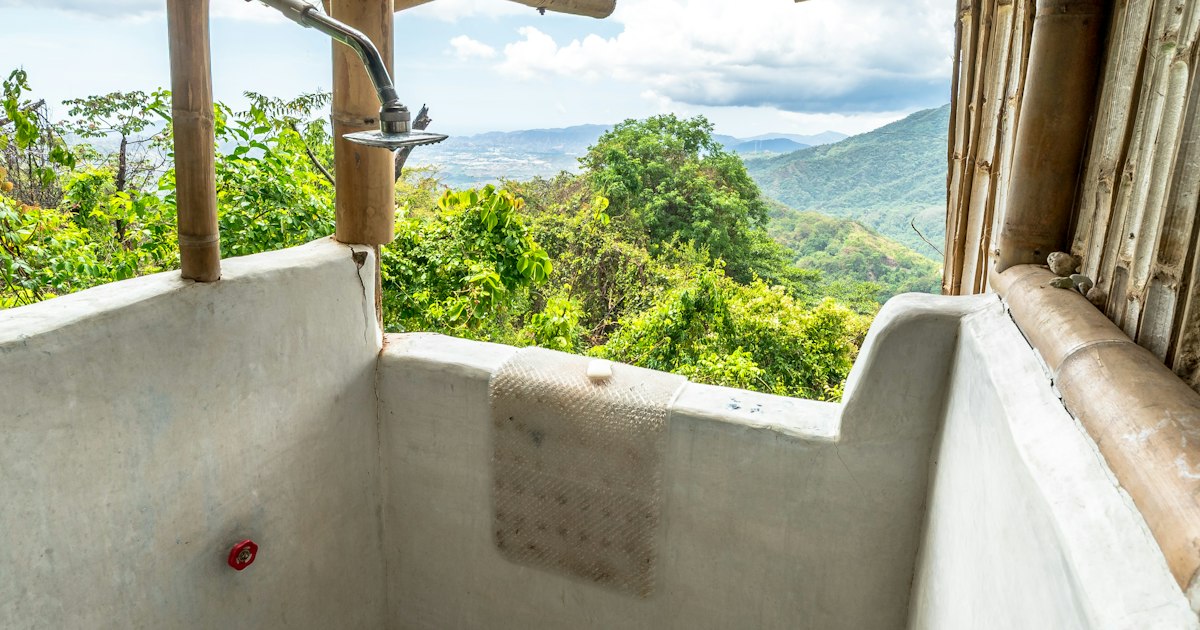
Photo by Marc Wieland on Unsplash
Japan’s communal onsen are a beautiful tradition, but they’re not for everyone. Maybe you have tattoos that many bathhouses still turn away, maybe you’re traveling with young kids or a partner and want to soak together, or maybe the idea of being naked in a room full of strangers just isn’t your thing. The good news is that you don’t have to skip hot springs entirely. A huge number of ryokan and onsen hotels offer kashikiri buro — literally “rental bath” — a private bathing room you reserve for your own exclusive use, usually in 45- to 60-minute slots. Here’s how the system actually works and how to book one without overpaying or showing up at the wrong time.
What exactly is a kashikiri buro?
A kashikiri buro is a small, private bath — sometimes indoor, sometimes a rotenburo (open-air bath) with a garden or mountain view — that’s locked and reserved for one party at a time. Unlike the main communal baths (daiyokujo), you don’t need to worry about tattoo policies, nervous kids splashing near strangers, or language barriers over bathing etiquette. Many are large enough for two to four people, making them popular with couples, families, and friends who want to soak together rather than split up by gender, which is how most communal baths are organized.
There are two common formats. Some ryokan have a handful of dedicated kashikiri rooms separate from the main baths, bookable in time slots throughout the day. Others simply let you reserve the entire communal bath for a window when it’s normally closed to the public, often late at night or early morning. Either way, the mechanics are similar: you sign up for a slot, you get the room to yourselves, and you lock the door from inside while you’re in there.
How to book: in-room, front desk, or online
Three main booking methods exist, and it’s worth knowing all three before you arrive:
- Pre-booked with your stay: Some ryokan include a free kashikiri session as part of a room package, especially at higher-end properties. This is usually confirmed when you book your stay or upon check-in.
- Reserved at check-in: The most common method. A sign-up sheet or digital tablet at the front desk lists available time slots for that evening and the next morning. Slots fill up fast at popular ryokan, so ask about kashikiri availability the moment you check in, not after dinner.
- In-room reservation system: Larger properties sometimes use a phone extension or in-room tablet where you dial a code to book directly from your room.
If you’re booking your accommodation yourself rather than through a travel agent, search listings for the terms “kashikiri buro,” “private onsen,” or “family bath” (kazoku-buro) — these are the keywords Japanese booking sites use, and many international booking platforms now translate them directly.
What it costs: budget, mid-range, and splurge
Pricing varies widely by region and property tier:
- Budget (free–¥1,500 per slot): Many mid-range ryokan include one or two kashikiri sessions per stay at no extra charge, especially if you book directly. Some simple hot spring inns charge a small flat fee of around ¥1,000–¥1,500 for a 45-minute slot regardless of party size.
- Mid-range (¥2,000–¥5,000 per slot): This is the most common pricing bracket, typically for 45–60 minutes, charged per room rather than per person. Hakone, Kinosaki, and Kusatsu properties frequently fall in this range.
- Splurge (¥6,000–¥15,000+, or a private in-room bath): Top-tier ryokan often build a private rotenburo directly into select guest rooms, so the “booking” is really just reserving that room type when you reserve your stay. These rooms cost significantly more per night but remove the time-limit pressure entirely — you can soak whenever you like, as often as you like.
Note that many onsen towns also charge a small local bathing tax on top of your room rate — if you’re budgeting for a hot spring trip, it’s worth reading about Japan’s onsen bathing tax (nyuyokuzei) so the extra charge on your final bill doesn’t surprise you.
Best times to book and how long you get
Slots are usually sold in 45-minute or 60-minute blocks, run back-to-back from around 3pm (after rooms open) until as late as midnight, then again from early morning (around 6am) until breakfast. The two most popular windows — right after check-in before dinner, and first thing after waking up — book out fastest, so grab one of those if you want convenient timing, or take an off-peak slot (late evening or right at opening) if you’d rather have a longer, less rushed soak without anyone waiting outside the door.
Seasonally, kashikiri rooms with outdoor views are at their best in late autumn (November) for foliage and in winter (December–February) for snow-rimmed baths with steam rising off the water — both are peak demand periods, so book your ryokan stay, and your bath slot, well in advance.
Common mistakes to avoid
- Not booking early enough. Kashikiri slots are limited — often just 4-8 per day at a given property — and the best times go first. Ask at check-in, not after you’ve unpacked.
- Overstaying your slot. Another guest is often waiting right after you. Rinse and dress with a few minutes to spare rather than right at the buzzer.
- Bringing soap or shampoo into the tub water. Even in a private bath, the same onsen rule applies everywhere in Japan: wash and rinse completely at the shower station before entering the tub. The bathwater is shared conceptually with the next guest, and keeping it clean matters.
- Assuming kashikiri means swimwear is fine. Nearly all kashikiri baths still follow the no-swimsuit, bathe-naked convention, same as communal onsen — the “private” part refers to who’s in the room with you, not a looser dress code.
- Forgetting to lock the door. Slide the “in use” sign or lock the latch from inside; this is what signals to staff and other guests that the room is occupied.
A good option if you’re nervous about communal bathing
If tattoos, modesty, or simply being new to the onsen tradition are holding you back from trying a hot spring at all, kashikiri buro is the easiest on-ramp. You get the full experience — the mineral-rich water, the ritual of washing first, the quiet soak — without the social pressure of a shared space. It’s a popular choice for first-time visitors easing into Japanese bathing customs the same way many ease into other traditions, the way someone might try on a secondhand kimono before committing to buying one new, low-pressure, and on their own terms.
If you’re planning a hot spring getaway as part of a broader Hakone itinerary, pair your soak with a cultural stop like the Hakone Open-Air Museum earlier in the day, then return to your ryokan in the afternoon to book that evening’s kashikiri slot before dinner — that’s the sweet spot many repeat visitors aim for.
The bottom line
Kashikiri buro turns Japan’s onsen culture from something you might feel you have to opt out of into something you can comfortably opt into, on your own terms. Ask about availability the moment you check in, expect to pay anywhere from nothing to around ¥5,000 for a standard 45–60 minute slot, and treat the bathing etiquette exactly as seriously as you would in a communal bath. Do that, and a private soak becomes one of the most relaxing parts of any Japan trip — not a hurdle to work around.