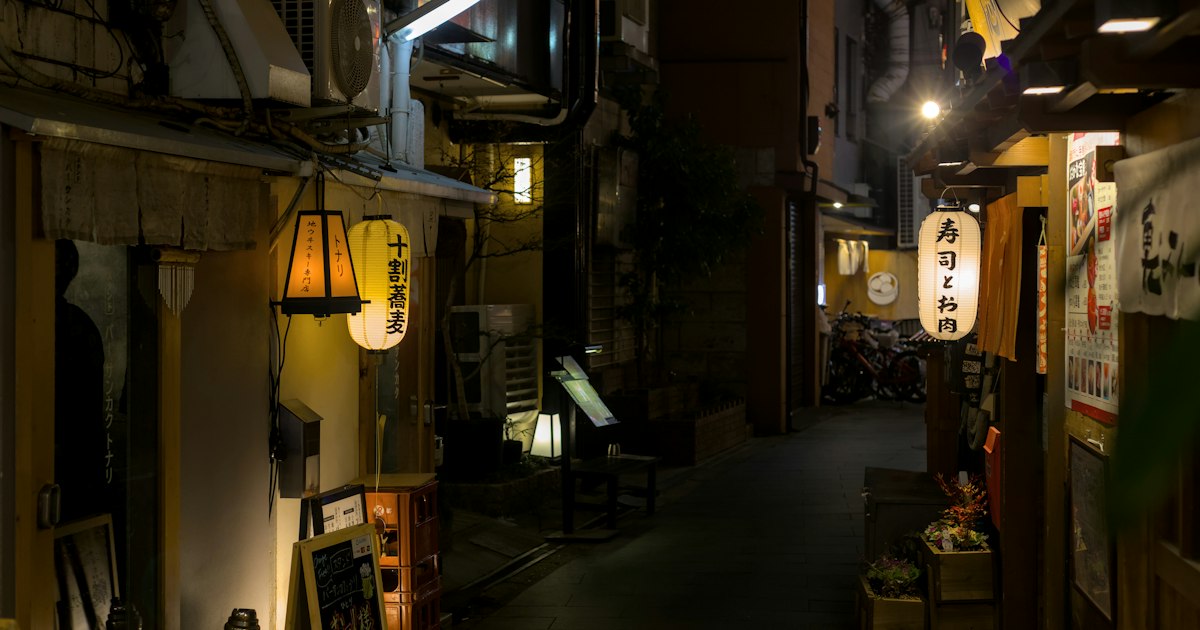
Most visitors ride the elevator up Umeda Sky Building, snap a photo of the Floating Garden Observatory, and head straight back to the station. Few of them realize that a short ride or walk away sits one of Osaka’s best-kept neighborhoods for slow mornings: Nakazakicho, a grid of pre-war wooden houses turned into coffee shops, bakeries, and secondhand boutiques. It’s not literally behind the tower, but it is the low-key counterpart to it — the neighborhood you duck into when you want Osaka without the observation-deck crowds.
Where Nakazakicho Is, and Why It Survived
Nakazakicho (中崎町) sits in Kita-ku, on the northeast side of Umeda, roughly 1.5km from Umeda Sky Building on the opposite side of the station complex. What makes it unusual is architectural: this small pocket of Osaka escaped the WWII firebombing that leveled most of the surrounding city, so it still has intact nagaya — narrow, single-story wooden row houses from the Taisho and early Showa eras. Since the early 2000s, independent owners have been renting these houses cheaply and turning them into one- or two-table cafes, galleries, and zakka (miscellaneous goods) shops rather than knocking them down. That’s the whole appeal: you’re wandering through actual old Osaka, not a reconstruction of it.
Getting There
The easiest route is Osaka Metro’s Tanimachi Line to Nakazakicho Station, one stop from Higashi-Umeda (itself connected to the main Umeda/Osaka Station complex by underground passageways — budget 5-10 minutes for that walk alone, since the underground network beneath Umeda is genuinely confusing). Exit 2 or 3 puts you directly in the cafe district. Alternatively, it’s a flat 15-20 minute walk from Osaka/Umeda Station through the Ogimachi area, which is a pleasant way to arrive if the weather’s decent. If you’re coming from Umeda Sky Building itself, plan for a 20-25 minute walk or a short taxi (around ¥900-1,200) rather than assuming it’s next door — the two are often paired in itineraries but aren’t adjacent.
What to Actually Do There
There’s no single “sight” in Nakazakicho — the activity is cafe-hopping and browsing. A typical visit looks like: one coffee stop, a wander through two or three vintage clothing or zakka shops, maybe a used bookstore, and a second coffee or dessert stop before heading out. Shops are tiny, often fitting 10-15 customers, and many are run solo by the owner, so service is slow by design — that’s part of the charm, not a flaw. If you also like Osaka’s fashion districts, pair this with Amerikamura, which has a completely different, louder street-fashion energy — the two make a good contrast if you’re spending a full day exploring Osaka’s secondhand scene. Nakazakicho also has a handful of used-clothing shops that stock older kimono and yukata alongside Western vintage; if that’s a specific interest, it’s worth reading up on Japan’s recycle-kimono shop chains first so you know what grading and pricing to expect before you start comparing what you find locally.
Prices and Opening Hours
Budget roughly ¥500-700 for a drip coffee, ¥800-1,200 for a toast or pancake set, and ¥1,000-1,500 for a lunch plate at the sit-down cafes. Vintage clothing runs anywhere from ¥1,000 for small accessories to ¥5,000+ for standout jackets or dresses; zakka items (stationery, ceramics, small housewares) are generally ¥500-3,000. Most cafes open between 11am and noon and close around 6-8pm — this is not a nightlife district, so don’t plan an evening visit expecting much to be open. Closing days vary shop by shop (some close Mondays, others Wednesdays or Tuesdays), with no neighborhood-wide pattern, so if there’s a specific cafe you want to visit, it’s worth checking its own social media or Google listing the morning of your visit rather than assuming it’s open.
Best Time to Go
Because the appeal is indoor cafes and narrow pedestrian alleys rather than outdoor scenery, Nakazakicho works well as a rainy-day or extreme-heat backup plan for an Osaka itinerary — the old houses are shaded and the cafes are air-conditioned. That said, spring and autumn make the walking between shops more pleasant. Weekday mornings (opening time through early afternoon) are noticeably quieter than weekend afternoons, when the most photogenic cafes can have a short wait for a table. Two to three hours is enough to cover the core streets at a relaxed pace; treat it as a half-day add-on paired with Umeda Sky Building or Osaka Station City, not a full-day destination on its own.
Budget, Mid-Range, and Splurge Options
Budget travelers can do a full visit — one coffee, one light snack, browsing only — for under ¥1,500. Mid-range visitors adding a proper lunch plate and a dessert stop should expect ¥3,000-4,000 per person. The closest thing to a splurge here isn’t food, it’s vintage clothing: a well-preserved secondhand leather jacket or a designer piece from one of the better-curated shops can run ¥8,000-15,000, which is still considerably less than you’d pay for the equivalent in Amerikamura or Tokyo’s vintage districts, since Nakazakicho’s shops lean more toward everyday secondhand than curated resale.
Common Mistakes to Avoid
- Assuming it’s next to Umeda Sky Building. It’s a 20+ minute walk in the opposite direction from the station; budget transit time accordingly rather than trying to squeeze both into a tight window.
- Going on a whim without checking a specific cafe’s closing day. With no neighborhood-wide rest day, the one shop you came for might be shuttered.
- Not carrying cash. Many of the smallest cafes and vintage shops are cash-only or have low-value card minimums; keep ¥3,000-5,000 in small bills on hand.
- Treating it as a checklist. There’s no must-see landmark — rushing between shops defeats the point. Slow down, and don’t be afraid to skip a shop if it’s crowded and come back later.
- Underestimating how residential it is. Outside the main cafe streets, Nakazakicho is quiet housing; keep noise down and be mindful that you’re walking through someone’s actual neighborhood, not a shopping arcade. Public restrooms are scarce on these back streets, so plan around a cafe visit or a konbini — see this guide to finding a public restroom in Japan if you need options on the move.
Nakazakicho won’t give you a single dramatic photo the way Umeda Sky Building’s observatory does, but it’s the better neighborhood for actually slowing down in Osaka — and at these prices, an afternoon there costs less than the tower’s admission ticket.