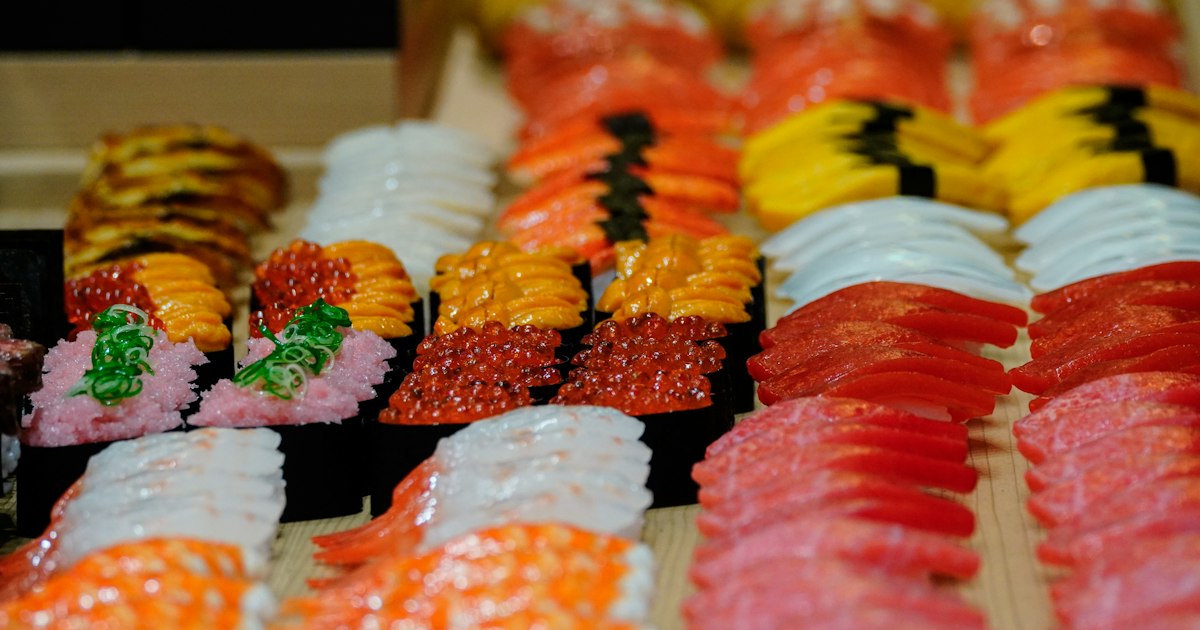
Photo by KJ Gonzales on Unsplash
If you’ve only ever had the small pink “sweet shrimp” (amaebi) draped over a nigiri in a Japanese restaurant abroad, botan ebi will reset your expectations. It’s bigger, deeper orange, and has a soft, almost custardy sweetness that makes most visitors assume it’s been doctored with sugar — it hasn’t. Botan ebi (牡丹海老, literally “peony shrimp,” named for the flower-petal pattern of its shell) is a deep-sea prawn pulled from cold trawling grounds off Toyama Bay and Hokkaido, and it’s one of the better reasons to plan a detour to either region. Here’s what it actually is, when to eat it, and where to go without overpaying.
Botan Ebi vs. Amaebi: What’s the Difference?
Menus in Japan often use “amaebi” (甘えび, sweet shrimp) as a catch-all, which causes confusion. True amaebi (Pandalus eous) is smaller, pale pink, and farmed/caught more widely, including frozen imports from Russia and Canada that show up on conveyor-belt sushi year-round. Botan ebi (Pandalus nipponensis) is a distinct, larger species — adults can reach 15-20 cm — with a richer, almost briny-sweet flavor and a texture that genuinely melts rather than just being soft. It’s caught by deep trawling at depths of 200-500 meters, mainly off Toyama Prefecture and in Hokkaido’s coastal waters (Rumoi, Nemuro, and the Okhotsk side), which keeps supply limited and prices higher than standard amaebi.
A simple tell on a menu or at a market stall: if it’s labeled specifically “botan ebi” and priced noticeably higher per piece than the house amaebi, it’s the real thing. If everything on the tank or tray is just “amaebi,” ask before assuming you’re getting the premium version.
Best Season and Timing
Toyama Prefecture enforces a closed fishing season for botan ebi roughly from December through March to protect spawning stock, so the fishery reopens around April 1 and runs through November. That makes spring through autumn the reliable window for fresh, local catch in Toyama — winter menus will mostly be frozen or sourced from Hokkaido instead. Hokkaido’s botan ebi fishery isn’t on the same strict calendar and lands catch across more of the year, though quality and volume are generally best from late spring into early autumn when the water is colder and the shrimp are heavier with roe. If you’re visiting in deep winter, don’t rule it out — just ask whether what’s on offer is fresh or frozen, since both regions will serve frozen stock honestly if you ask.
Where to Eat It in Toyama
Toyama is the pilgrimage destination for botan ebi obsessives, and it’s an easy add-on to a Hokuriku Shinkansen itinerary — Tokyo to Toyama Station takes about 2 hours 10 minutes on the Kagayaki and costs roughly ¥12,000-13,000 one way.
- Budget: Local kaiten-zushi (conveyor belt) chains native to Toyama, such as Sushi Kuine (すし食いねぇ!), run plates of botan ebi nigiri for around ¥300-500 per piece — pricier than their standard amaebi plates, but still far cheaper than a sit-down sushi counter, and the quality bar in Toyama is unusually high for a chain.
- Mid-range: Fish markets with attached eateries, like Himi Kaisen Issa or the port market in Shinminato (reachable from Toyama Station via the Toyama Light Rail), sell botan ebi kaisendon (seafood rice bowls) for about ¥2,000-3,500, often with the shrimp served alongside Toyama’s other two local treasures, shiroebi (white shrimp) and buri (yellowtail).
- Splurge: A proper sushi-ya counter in Toyama City will work botan ebi into an omakase course priced from roughly ¥10,000-20,000, serving the body as sashimi or nigiri and sometimes deep-frying the head and shell separately as a crisp, salty garnish — ask for this if it isn’t offered, since it’s a shame to waste it.
Where to Eat It in Hokkaido
Hokkaido spreads botan ebi across several morning markets, which makes it one of the easiest premium seafoods to try without a reservation.
- Sapporo’s Nijo Market and the nearby stalls sell botan ebi sashimi sets and donburi bowls from about ¥1,500-3,000, and several counters will let you build a custom kaisendon and add botan ebi à la carte by weight or piece.
- Hakodate’s morning market (Hakodate Asaichi) has multiple “catch your own” squid stalls alongside straightforward sashimi vendors; botan ebi plates run roughly ¥1,000-2,500 depending on size and season.
- Kushiro’s Washo Market, home of the build-your-own “katte-don” bowls, is a good spot to pair botan ebi with uni or salmon roe for a custom bowl in the ¥2,500-4,000 range.
If you’re building a Hokkaido trip around seafood like this, it’s worth pairing a seafood-heavy evening with a slower, quieter night afterward — a private onsen room (kashikiri buro) is an easy way to book a soak without sharing a bath after a long day of market-hopping.
How to Order It (and Avoid Overpaying)
At markets where seafood is priced by weight or by the piece rather than on a fixed menu, ask the price before the vendor starts preparing your order — “ikura desuka?” (いくらですか, “how much?”) said while pointing works fine, and most stall owners dealing with tourists are used to this. Prices can swing quickly based on size, and a particularly large specimen may cost two or three times a standard one. At sushi counters, botan ebi is almost always priced per piece on a separate, higher tier than regular amaebi, so if you’re watching a budget, ask the price of a single piece before it’s included in an omakase course.
The most common visitor mistake is skipping the head. Many stalls and restaurants will deep-fry the shrimp head and shell into a crunchy, salty snack (sometimes offered free, sometimes for a small extra charge) — it’s a different experience entirely from the raw body and worth asking for even if it’s not listed. The second common mistake is assuming every “sweet shrimp” on a menu is botan ebi; if the price looks like standard amaebi, it probably is.
Pairing It With the Rest of the Meal
Botan ebi’s richness holds up well against a simple cup of chilled sake rather than anything sweet or heavily flavored — most market restaurants and sushi counters in both regions offer a local junmai by the glass for ¥500-800. If you’re rounding out a seafood-focused meal with something lighter, Toyama and Hokkaido counters often also serve agedashi dofu as a simple, non-seafood side that won’t compete with the shrimp’s flavor. And if regional specialty food is becoming a theme of your trip, it’s worth comparing botan ebi’s deep-sea sweetness against something entirely different, like Nagasaki’s soy-braised kakuni pork belly — a useful reminder of how differently “comfort food” is defined from one end of Japan to the other.
Whether you reach it via a short Shinkansen hop to Toyama or build it into a longer Hokkaido itinerary, botan ebi is one of the few dishes in Japan where the premium price is genuinely tied to geography and season rather than marketing — which is exactly why it’s worth timing your visit around.