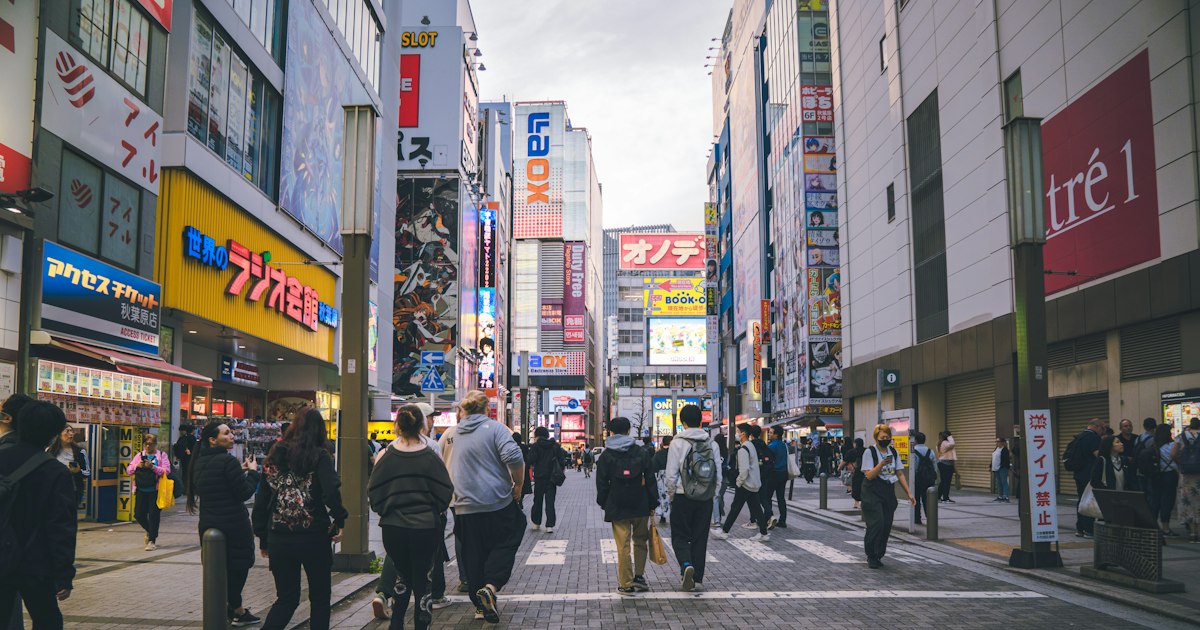
Photo by Alexandre Valdivia on Unsplash
If your phone dies, gets stolen, or simply can’t hold an eSIM for Japan’s prepaid data plans, you don’t have to wait until you’re home to fix it. Japan has a well-developed market for “SIM-free” (SIMフリー) handsets — phones sold unlocked from the factory, with no carrier contract attached — and tourists can walk into a shop and walk out with a working phone the same afternoon. Here’s how to do it without overpaying or buying something that won’t actually work once you leave Japan.
Why “SIM-free” matters more than it sounds
In Japan, phones are sold two ways: carrier-locked (tied to NTT Docomo, SoftBank, or au, even if later unlocked) and SIM-free, which are unlocked from day one and sold specifically for use with any SIM card, including prepaid tourist SIMs and eSIMs. If you’re buying a replacement phone as a visitor, you want SIM-free — it’s the only type guaranteed to accept a foreign SIM when you fly home, and it avoids the carrier-unlock paperwork that locked phones sometimes require. Look for the word “SIMフリー” or “SIM free” on the box or price tag; it’s usually printed in English as well.
Where to buy: the big electronics chains
Bic Camera and Yodobashi Camera are the two names to know. Both have flagship stores in Tokyo — Bic Camera’s Yurakucho/Ginza store and Yodobashi’s Akiba (Akihabara) flagship — that stock a genuinely wide SIM-free lineup: iPhone SE and standard iPhone models, budget Android handsets from Sharp (AQUOS wish, often under 30,000 yen), Rakuten’s own Rakuten Hand, and Motorola and Xiaomi models that are rarer outside Japan. Hours are generous: Yodobashi Akiba runs 9:30am–10pm daily, and most Bic Camera flagships run roughly 10am–9pm, so there’s no rush to get there early. Staff at these flagship locations are used to foreign customers and usually have at least basic English; smaller neighborhood branches may not, so if English support matters, head for the big-city flagship rather than the closest branch — the same size-dictates-selection logic applies here as with Daiso’s Harajuku flagship versus a neighborhood branch: a small local Bic Camera or Yodobashi branch might carry two or three SIM-free models, while the flagship carries dozens.
Joshin and Edion are the same category of chain, strong in Osaka and western Japan if you’re not routing through Tokyo.
Budget route: Akihabara’s secondhand market
If you just need something functional until you’re home, Akihabara’s secondhand electronics strip is the cheapest legitimate option. Janpara (ジャンパラ) has several branches around Akihabara Station selling used SIM-free and unlocked smartphones, often with a short in-store warranty (commonly 30 days), starting from around 5,000–15,000 yen for older Android models and 15,000–30,000 yen for a used iPhone in decent condition. Condition grading (A/B/C, visible on the price tag) tells you how cosmetically worn the unit is — battery health is the thing to ask about, since older secondhand phones can have degraded batteries even if the screen looks new. Geo and Hard Off secondhand stores, found in most mid-size Japanese cities, carry a smaller but similarly priced selection outside Tokyo.
Mid-range and splurge: new unlocked handsets
For a straightforward mid-trip replacement, a new SIM-free iPhone SE (around 59,800 yen for the entry storage tier) or a current-generation SIM-free Android from Sharp or Google (Pixel models typically land in the 80,000–130,000 yen range depending on generation and storage) are the safest, least fussy choices — full warranty, current software, no battery-health guessing game. Apple Stores in Japan (Ginza, Shibuya, Omotesando) sell the full current iPhone lineup SIM-free at the same price as Bic Camera and Yodobashi, with the advantage of staff who can set up Apple ID and eSIM transfer on the spot. If you want the newest flagship Android, the Yodobashi Akiba and Bic Camera Yurakucho flagships are more likely to have it in stock than a smaller branch.
What to check before you buy
- Band compatibility: Japanese SIM-free phones sold for the domestic market generally support the global bands used by major US, UK, EU, and Australian carriers, but double-check your home carrier’s required bands against the model’s spec sheet before paying, especially for budget Android models aimed purely at the Japanese market.
- eSIM support: If you plan to use an eSIM once home, confirm the model has an eSIM slot — some budget Japan-market Android phones are physical-SIM only.
- Language setting: New Japanese retail phones usually boot in Japanese; store staff can switch the system language to English before you leave, but it’s worth asking them to do it in-store rather than discovering menus you can’t read later.
- Tax-free purchase: Electronics over 5,000 yen (pre-tax) qualify for Japan’s consumption-tax exemption for tourists with a valid passport, which saves 10% at major chains like Bic Camera and Yodobashi — bring your passport, not a photocopy.
Common mistakes to avoid
The biggest one is buying a carrier-locked phone by accident because it was cheaper — always confirm “SIM free” verbally or on the tag, since locked and unlocked versions of the same model sit side by side on shelves. The second is skipping the battery check on a secondhand purchase; ask the Akihabara shop to show you the battery health percentage if the unit has one, and walk away from anything under roughly 80% unless the price reflects it. The third is assuming every staff member speaks English outside the big Tokyo/Osaka flagships — smaller regional branches of Bic Camera, Yodobashi, or Joshin may have only Japanese-speaking staff, so translation apps are worth having ready regardless of which store you visit.
Timing and practical tips
There’s no seasonal angle here — electronics stock is stable year-round — but weekday mornings right after opening are quieter than weekend afternoons at the Akihabara and Shibuya-area flagships, which matters if you want unhurried English help. If your trip itinerary already has you shipping souvenirs or bulky purchases home separately, the same stores that sell SIM-free phones can usually arrange international shipping for the box too, which is handy if you’re also carrying other awkward-sized purchases — the general packing-and-shipping logistics are similar to what’s covered for shipping other bulky goods like a full-size koinobori set home. And if you’re already stopping into a camera chain for a phone, it’s worth knowing the same stores — Bic Camera and Yodobashi in particular — are also where film photographers go mid-trip to buy more rolls and get them developed fast, so one stop can cover more than one gadget emergency.