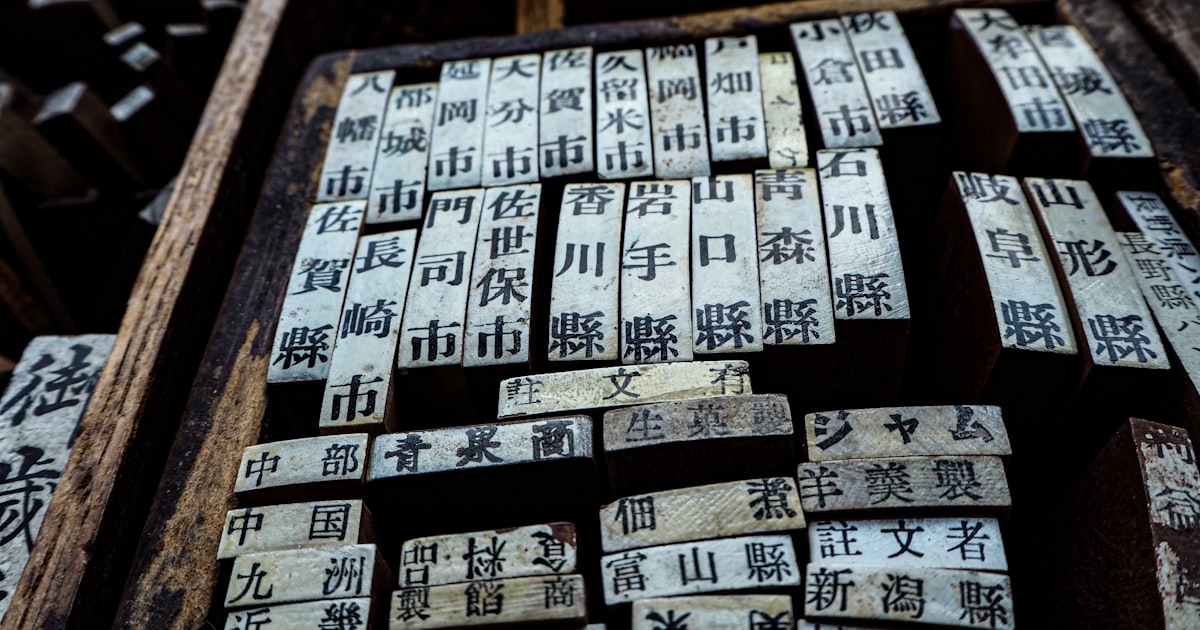
Photo by kaori kubota on Unsplash
In Japan, a hanko (also called an inkan or hanko-ya) is the small carved stamp people use instead of a signature — on bank forms, apartment leases, and even parcel deliveries. For visitors, it’s also one of the most personal souvenirs you can bring home: a stamp carved with your own name, in kanji or a phonetic Japanese script, that you can press into a notebook, letters, or a piece of art. Unlike a T-shirt or a keychain, no two hanko come out exactly alike, and the process of getting one made is itself a small cultural experience.
What a Hanko Actually Is (and Isn’t)
Hanko come in a few tiers of formality. A jitsuin is a legally registered seal used for major contracts like buying property; a ginkoin is registered specifically with a bank; a mitomein is the everyday casual stamp used for signing for packages or approving internal office documents. As a tourist, you’ll be ordering something closer to a mitomein — a decorative, personal stamp rather than a legally registered one. That’s fine: you’re not going to need it to buy a house, you’re buying it as a keepsake, a gift, or a fun way to personalize stationery and art prints, similar to how travelers pick up other hand-finished crafts like furoshiki wrapping cloth or Kutani porcelain.
How Your Name Becomes a Hanko
Japanese hanko traditionally carry kanji, so shops that cater to foreign visitors offer a few options for non-Japanese names. The most common is phonetic transliteration into katakana — “Sarah” becomes サラ, “Michael” becomes マイケル — carved either vertically or in a circular arrangement inside the stamp face. Some shops will also help you choose kanji that approximate the sound of your name or carry a meaning you like (this is more of a novelty exercise than a formal naming, since most foreign names don’t map cleanly onto kanji readings). A few higher-end carvers also offer classical seal-script (tensho) versions of your name, which look more like traditional Japanese hanko but take longer and cost more. Decide before you go which route you want, since it affects both price and turnaround time.
Materials and Budget
Price depends almost entirely on material and whether the carving is done by machine or by hand:
- Budget (roughly ¥1,000–3,000): Machine-engraved stamps in plastic, acrylic, or basic wood. Many souvenir stalls near temple approaches offer these ready in 15–30 minutes.
- Mid-range (roughly ¥3,000–10,000): Boxwood (tsuge) or buffalo horn (suigyu), hand-finished or hybrid machine-plus-hand-touch carving. This is the sweet spot most visitors choose — durable, a nice grain or sheen, and still same-day or next-day in many shops.
- Splurge (¥10,000–30,000+): Crystal, agate, titanium, or fully hand-carved traditional seal script by an established craftsperson, often presented in a lacquered box with an ink pad. These can take several days to a few weeks if the shop is a genuine specialist rather than a tourist-facing kiosk.
One material to be cautious about: ivory. Ivory hanko are still sold in Japan, and older, established seals in ivory are part of the domestic tradition, but importing ivory products into most other countries — including the US, EU, UK, and Australia — is illegal or heavily restricted under CITES rules, and customs will confiscate it. Unless you’ve specifically confirmed your home country’s rules, skip ivory and choose horn, wood, or crystal instead.
Where to Get One Carved
You don’t need to hunt for a hidden workshop — hanko carving is a normal retail service in both Kyoto and Tokyo:
Kyoto: The Teramachi-Shijo covered shopping arcade (a short walk from Kawaramachi Station on the Hankyu line, or reachable by city bus from Kyoto Station) has several long-established stationery and seal shops among its stalls, some of which have served Kyoto’s traditional calligraphy and craft trade for generations. It’s an easy add-on if you’re already exploring central Kyoto’s shopping streets.
Tokyo: Asakusa is the most tourist-friendly option — several shops along and just off Nakamise-dori and the surrounding lanes near Sensoji Temple offer while-you-wait carving aimed specifically at foreign visitors, with English menus showing katakana name samples. Ginza’s older stationery district also has hanko specialists that lean more traditional and formal, useful if you want a higher-quality piece rather than a quick souvenir. Large craft and lifestyle stores such as Loft or Hands (in Shibuya, Shinjuku, and other major stations) also run in-store or counter engraving services and are a reliable fallback if you can’t find a dedicated hanko shop nearby.
Most hanko shops keep fairly standard retail hours, roughly 10:00 or 11:00 to 19:00 or 20:00, and many close for a few days around New Year (January 1–3), when much of Japan’s retail and craft trade shuts down. Confirm hours before a special trip, especially for smaller, one-person workshops.
Timing: Don’t Leave It to Your Last Day
Machine-engraved wood or plastic hanko in a tourist area are usually ready within 15 minutes to an hour — genuinely a walk-in, walk-out purchase. But anything hand-finished, in horn or crystal, or done in traditional seal script, can take anywhere from a few hours to several days depending on the shop’s backlog. If you want a higher-end piece and you’re travelling during a busy season (cherry blossom season in late March–April, Golden Week in early May, or autumn foliage in November), order it as early in your trip as possible rather than on your final day in Japan — a delay of even one day can mean missing your flight home with the piece still on the workbench.
Common Mistakes to Avoid
- Ordering on your last day. Build in a buffer of at least a day or two for anything beyond the instant machine-carved souvenir tier.
- Assuming it works as an official signature at home. A tourist hanko is a keepsake, not a registered legal seal — don’t rely on it for anything requiring a certified signature.
- Buying ivory without checking customs rules first. See above — it’s a real risk, not a hypothetical one.
- Picking a script you can’t read. If you choose classical seal script over plain katakana, ask the shop to show you a proof or rubbing before they finalize the carving — the stylized characters can be hard to verify otherwise.
- Not asking about the ink pad. A hanko needs its own red ink pad (shuniku) to use — some shops include a small one, others sell it separately for a few hundred yen. Confirm before you leave the shop.
After You Get Home
Store wood or horn hanko away from direct sunlight and humidity swings, which can crack or warp the material over time — the same care you’d give any hand-carved wooden souvenir. Keep the ink pad separate in a sealed bag so it doesn’t stain your luggage. Many travelers end up using their hanko less as a signature substitute and more as a personal mark for postcards, journals, or gift wrapping — a nice pairing if you’ve also picked up a woodblock print or two from a shop like the ones covered in our guide to buying ukiyo-e, since a small stamped mark in the corner makes a thoughtful, low-key way to sign off on a gift.