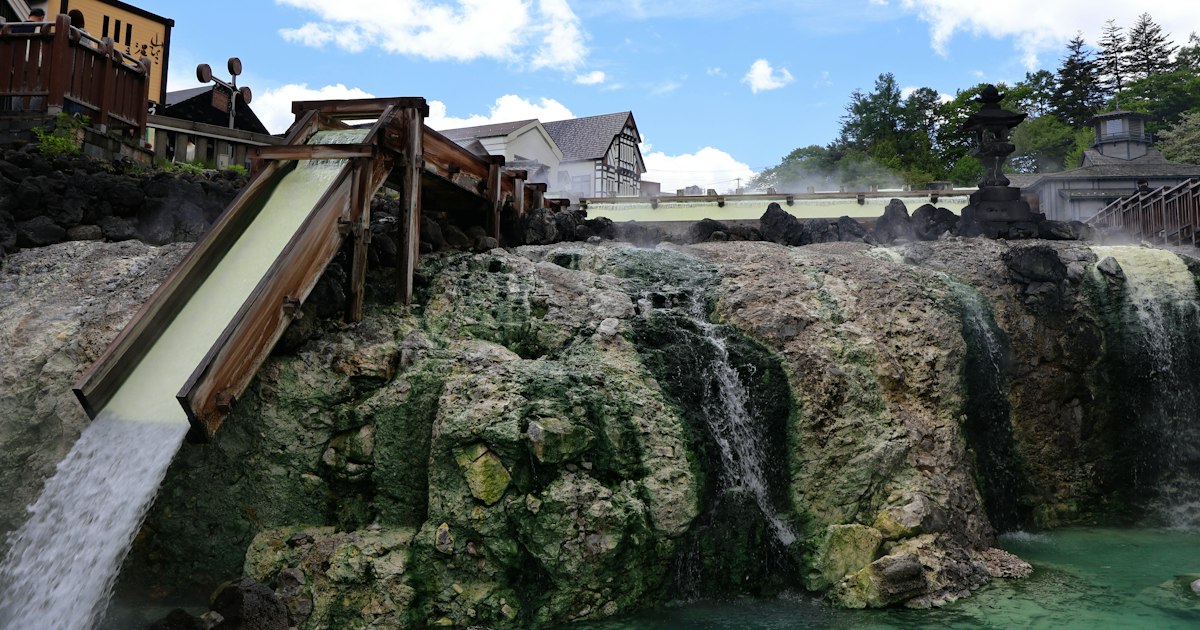
Photo by waa towaw on Unsplash
Most Japanese onsen come with strict rules: no swimsuits, no tattoos (or cover them up), and definitely no shouting across the water at your kids. Hakone Yunessun breaks every one of those conventions on purpose. It’s a hot spring theme park where you wear a swimsuit, slide down waterslides between soaks, and can climb into a pool of red wine or coffee instead of plain mineral water. For visitors who find traditional onsen etiquette intimidating, or families traveling with children who can’t manage a quiet nude bathhouse, it’s one of the easiest ways to experience Hakone’s hot springs without the usual anxiety.
What Is Hakone Yunessun?
Yunessun opened in 1999 in the hills above Hakone-Yumoto and has two separate facilities under one roof. The first, also called Yunessun, is the swimsuit zone: a mix of outdoor and indoor pools, water slides, and a rotating lineup of novelty baths filled with wine, coffee, green tea, sake, or even a recreated Dead Sea bath, all using real onsen water piped from Hakone’s hot spring sources rather than plain heated tap water. The second facility, Mori no Yu, is a traditional Japanese bathhouse on the same grounds — gender-separated, no swimsuits allowed, towel modesty only. Many visitors do both in a single visit, treating Mori no Yu as the calm, quiet counterpart to Yunessun’s theme-park energy.
If you’ve read about Japan’s more unusual bathing traditions, like the giant mixed-bathing hall at Sukayu Onsen or the stamp-collecting bathhouse circuit at Shibu Onsen, Yunessun sits at the opposite end of the spectrum — less about ritual and history, more about spectacle and play.
Getting There from Tokyo
From Shinjuku, take the Odakyu Romancecar limited express to Hakone-Yumoto Station, a ride of roughly 85 minutes. From there, Yunessun is about 4 km up the valley toward Kowakidani. You have two options: hop on a Hakone Tozan Bus heading toward Togendai or Gora and get off at the “Yunessun” stop (around 15 minutes, a few hundred yen), or take a taxi, which runs about 1,500–2,000 yen one way. Yunessun also runs its own free shuttle bus from Hakone-Yumoto Station at scheduled times — check the current timetable at the station or on Yunessun’s website when you arrive, since the schedule changes with the season. If you’re staying in the Gora or Togendai direction already on a Hakone Freepass itinerary, you’ll pass right by on the Tozan bus route anyway.
Tickets, Hours, and What’s Included
Pricing is split by zone. As a rough guide, expect around ¥2,900 for adults and ¥1,600 for children (ages 4–12) for Yunessun-only admission; Mori no Yu-only runs about ¥1,900 for adults and ¥1,000 for children; and a combined ticket covering both facilities is roughly ¥4,100 for adults and ¥2,000 for children. These figures shift periodically, so confirm current rates on the official Yunessun site before you go — theme park pricing in Japan is revised more often than shrine or museum admission.
Yunessun’s swimsuit zone typically operates from 9:00 to 19:00 (last entry around 18:00), while Mori no Yu usually opens later and closes later, around 11:00 to 20:00. Hours contract in winter and on the facility’s periodic maintenance closure days, which rotate through the year — always check the calendar on the official site, since showing up on a closure day is one of the most common disappointments visitors report. Swimsuits and towels can be rented on-site for a few hundred yen each if you forget to pack them; lockers require a coin deposit (returned when you retrieve your bag), so carry some ¥100 coins.
The Bathing-Suit Zone vs. Mori no Yu
The swimsuit zone is genuinely playful: expect families with kids on the slides, groups posing in the coffee or wine baths for photos, and an outdoor infinity-style pool with views over the surrounding hills. The novelty baths (wine, green tea, coffee, sake) rotate seasonally and aren’t all available year-round, so don’t plan a visit around one specific bath without checking first.
Mori no Yu, by contrast, is a standard Japanese onsen experience — separate baths for men and women, no clothing, wash before entering the communal tub, and a much quieter atmosphere with indoor and outdoor rotenburo-style pools. If you’ve never bathed nude in a Japanese onsen before, this is a gentler, English-sign-friendly introduction compared to a traditional ryokan bath.
Best Time to Visit
Summer (July–August) is peak season for the outdoor pools and slides, and also the most crowded — arrive at opening if you want short lines. Winter is arguably the more memorable time for the themed baths: soaking in a hot wine or coffee bath while snow dusts the hills around Hakone is a genuinely distinctive experience, and the outdoor pools stay heated even when the air temperature drops. Weekday visits, especially outside Japanese school holidays and Golden Week (late April–early May), are noticeably quieter than weekends year-round. Avoid visiting right after it rains if you can — some outdoor areas get slick, and photo-ops in the novelty baths are a big part of the appeal.
Common Mistakes to Avoid
- Bringing a swimsuit to Mori no Yu. It’s not allowed there — swimsuits are strictly for the Yunessun zone.
- Assuming tattoos are banned. Unlike most traditional onsen, Yunessun’s swimsuit zone generally allows visible tattoos, which makes it a reliable fallback for travelers turned away elsewhere. Mori no Yu follows traditional rules, so tattoo cover stickers may still be required there — check current policy at the entrance.
- Underestimating the time needed. Between the two facilities, changing rooms, and multiple baths, plan for at least 3–4 hours, not a quick stop.
- Expecting every novelty bath to be running. Coffee, wine, and sake baths rotate and sometimes close for cleaning or seasonal changeover — don’t build your whole visit around one.
- Not checking the closure calendar. Yunessun closes for maintenance on scattered days throughout the year; confirm before you build it into a tight Hakone itinerary.
Budget, Mid-Range, and Splurge Options
On a budget, buy the Yunessun-only ticket and skip Mori no Yu — it covers the slides, pools, and novelty baths that make the park famous. For a mid-range day, get the combined ticket so you can finish with a quiet traditional soak in Mori no Yu after the kids have worn themselves out on the slides. If you want to turn it into a splurge, pair your Yunessun visit with a night at a Hakone ryokan with a private in-room onsen — several properties in the Kowakidani and Gora areas are a short bus or taxi ride away, letting you contrast the theme-park energy of Yunessun with a more traditional, serene bathing experience the same evening.
If you’re driving into Hakone with children rather than relying on trains and buses, it’s worth reviewing Japan’s child car seat rules for rental cars before you go, since enforcement and rental company policies can catch visiting families off guard.