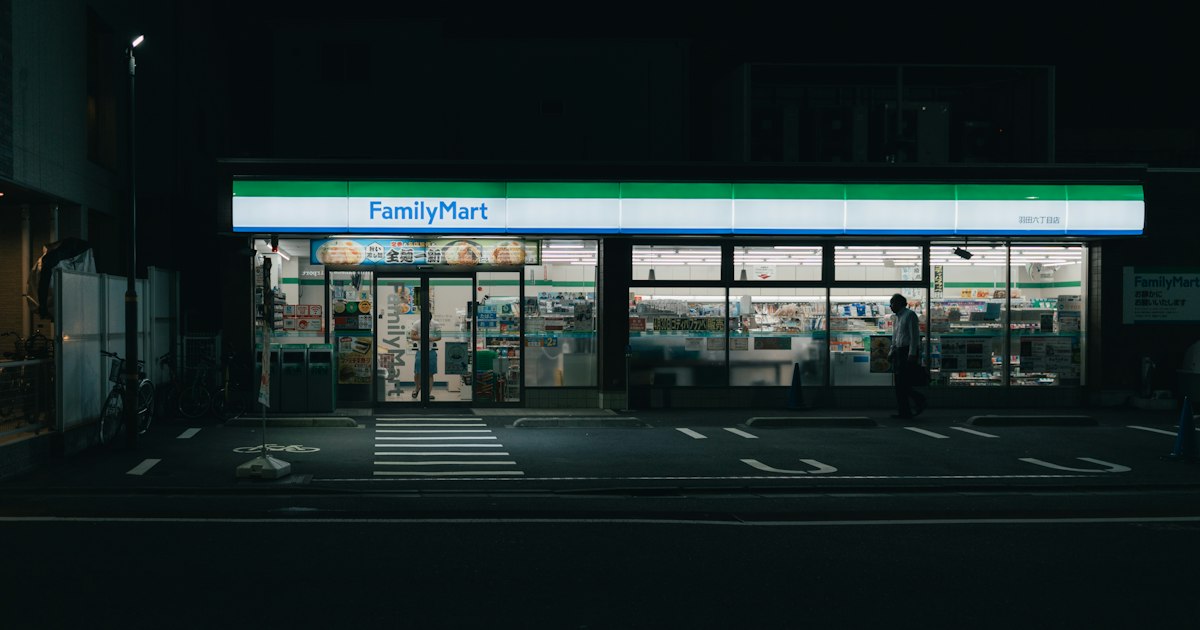
Photo by Frank Huang on Unsplash
Walk into almost any 7-Eleven, Lawson, or FamilyMart in Japan between October and March and you’ll notice a steaming glass case near the register, bubbling with little mesh baskets of daikon, eggs, and fish cakes. That’s oden, and right next to it is usually a warming case or countertop fryer turning out fresh karaage and fried chicken. Both are convenience store institutions, both are absurdly cheap, and both come with a small ordering ritual that trips up a lot of first-time visitors. Here’s how to actually do it.
What’s in the oden pot, and what it costs
Oden is a broth of dashi, soy, and mirin in which various ingredients simmer all day, soaking up flavor. At the three major chains you’ll typically find:
- Daikon (radish) — around ¥120–140, the most popular item and worth getting first since it’s usually been in the pot longest
- Tamago (boiled egg) — around ¥120–130
- Chikuwa and hanpen (fish cakes) — ¥90–130
- Konnyaku (konjac jelly) — ¥80–100
- Fukuro (fried tofu pouch stuffed with mochi) — ¥140–160
- Rolled cabbage or beef tendon skewers at the pricier end, ¥180–250
A satisfying mixed cup of four or five items runs roughly ¥500–700. Items are priced individually and rung up per piece, not by weight, so there’s no danger of a surprise bill — just point to what you want.
The actual ordering ritual
This is the part that confuses people. Oden isn’t self-serve in most stores — you don’t reach in with your own tongs. Instead:
- Grab an empty paper or plastic cup/tray from the stack next to the case (sizes are usually small, medium, large).
- Point at the items you want through the glass and tell the staff member how many of each — “daikon hitotsu” (one daikon) works fine, or just hold up fingers while pointing.
- The staff member fishes the items out with the store’s tongs and places them in your cup, then seals it with a lid.
- Pay at the register along with anything else you’re buying — oden is rung up together with your other items, not separately.
Some rural or late-night locations do let you self-serve with tongs provided — look for a small sign or just watch what the person ahead of you does. When in doubt, wait for staff; grabbing items yourself without asking is the single most common faux pas foreign visitors make at the oden case.
Fried chicken: the other hot case
Next to or near the oden pot (or in a dedicated warmer by the register in warmer months when oden disappears) sits the fried chicken. Each chain has its signature:
- Lawson’s Karaage-kun — bite-sized nuggets sold in a small bag, around ¥230–270, available in regular, red pepper (spicy), and cheese flavors
- FamilyMart’s Famichiki — a single large fillet-shaped piece, around ¥220–250
- 7-Eleven’s fried chicken — varies by region, often sold as “nanban” or seasoned karaage, ¥200–280
These are cooked fresh throughout the day in a fryer or warmer behind the counter, not pre-packaged — ask “atatakai desu ka?” (is it hot?) if a batch looks like it’s been sitting, and staff will usually tell you when the next batch comes out. Peak freshness tends to be right after lunch (around 12:30–1pm) and again in the early evening (6–8pm) when commuter traffic picks up.
Best timing and season
Oden is a cold-weather food: most stores stock it from late September or October through March, with the case disappearing entirely by late spring. If you’re visiting in summer, don’t expect to find it — the hot case gets swapped for cold noodles and ice cream instead. Fried chicken, by contrast, is sold year-round and is actually a great hot-weather grab since it travels well.
Convenience stores are almost universally open 24 hours, so there’s no “closing time” to worry about, but the oden pot is typically freshest and most fully stocked in the evening (restocked around 5–7pm) after simmering most of the day. Very late at night (after 1am) the selection thins out as popular items like daikon and eggs sell through.
Budget, mid-range, and splurge combos
- Budget (~¥300–400): two oden items (daikon + konnyaku) plus a small onigiri from the shelf
- Mid-range (~¥700–900): a mixed oden cup (daikon, egg, chikuwa, fukuro) plus a Karaage-kun bag and a canned drink
- Splurge (~¥1,200+): a large oden cup with the pricier beef tendon or rolled cabbage, a Famichiki, and a seasonal dessert — still cheaper than almost any sit-down meal in Japan
Pair any of these with a cold drink from the fridge case — if you’re curious about the ion/sports drinks sitting next to the soda, our guide to Pocari Sweat, Aquarius and OS-1 breaks down which is which.
Common mistakes to avoid
- Touching the oden with your hands or the wrong tongs. Always point and let staff serve it, unless it’s clearly marked self-serve.
- Trying to pay for oden separately from other items. It all goes through the same register transaction — no need to pay at the hot case itself.
- Assuming cash is required. Nearly all convenience stores accept IC cards and contactless payment now; if you’re relying on Suica or Pasmo for small purchases like this, our guide on IC card tap-to-pay at station kiosks is useful background on how these cards work beyond train fares.
- Expecting oden in summer. If you’re traveling in July or August, look to the fried chicken case or other regional convenience-store snacks instead.
- Not asking for a spoon. Oden broth is meant to be sipped — staff will usually include a small plastic spoon automatically, but it’s fine to ask “supuun kudasai” if it’s missing.
The convenience store hot case is one of the most underrated food experiences in Japan — cheap, fast, and available on nearly every corner. If you enjoy hunting down regional convenience-store and street-food specialties, it’s worth comparing notes with other hyper-local snacks like Hokkaido’s imo mochi or a proper sit-down version of Japanese comfort food like gyukatsu when you want to upgrade from the conbini counter to a table.